Pollinator Parkways
The WaterWise Pollinator Parkway project is an efficient way to tackle a common problem in Bend: water from irrigation spilling onto roads from parkway landscape strips.
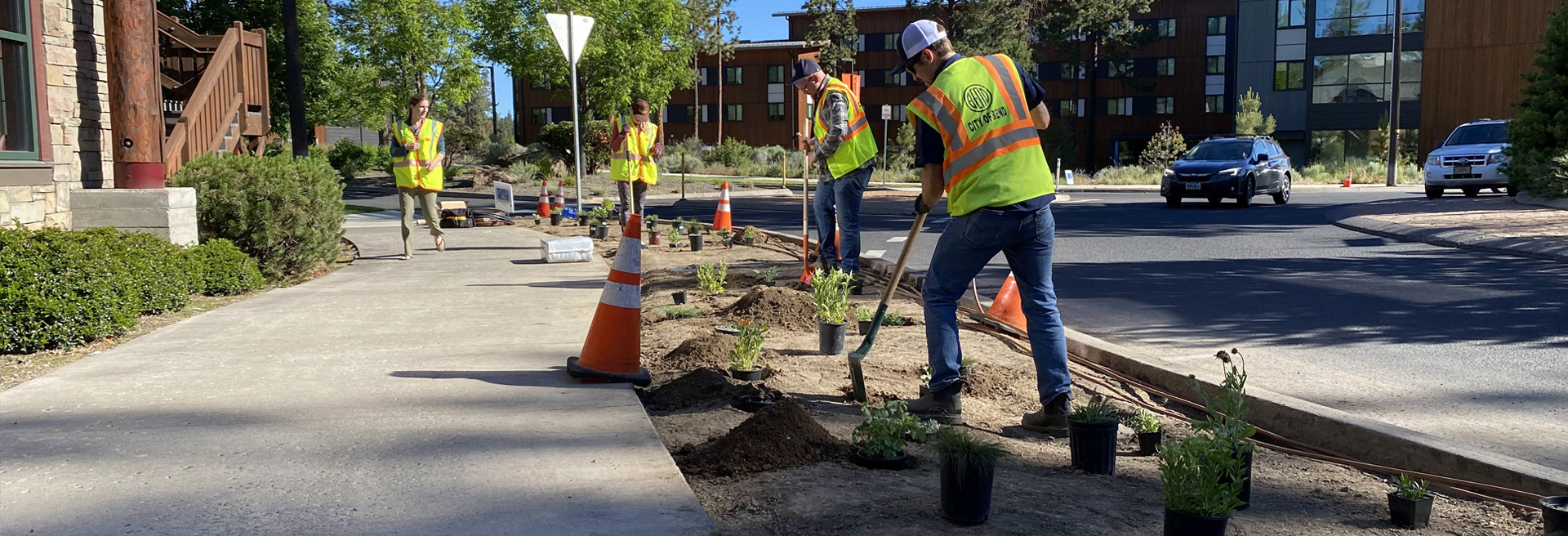
Landscape strips are those narrow patches of land between the street and sidewalk that are tough to water without causing waste. By converting to a WaterWise Pollinator Parkway (see steps below), we can stop this water waste and help our collaborative partner Pollinator Pathway Bend. This group wants to build a chain of gardens with plants that help bees, butterflies, and other insects across our community.
Pollinators are crucial for our environment. Ninety percent of our plants and trees rely on them to survive, and they are responsible for one out of every three bites of food we eat. While bees do a lot of the work, butterflies, moths and hummingbirds also play a big role in pollinating plants. You can support these important creatures by creating a native pollinator habitat in your yard and inviting them in.
Steps to a Do-It-Yourself Pollinator Parkway
The following provides easy-to-follow steps to create a Do-It-Yourself Pollinator Parkway. For more detailed instructions and information, please visit our partner’s website:
Design, Planning, and Layout
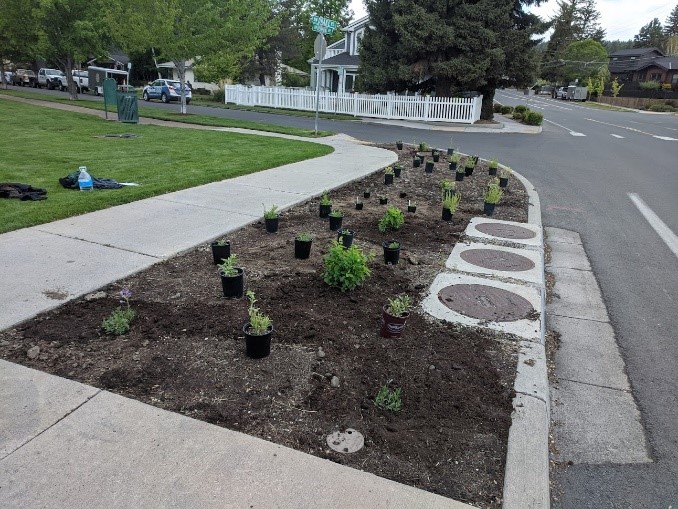
Parkway strips are home to various utilities and are part of the public right of way. Planting packages will cover 25-30% of every 300 square feet, balancing beauty and access.
What is a Planting Package?
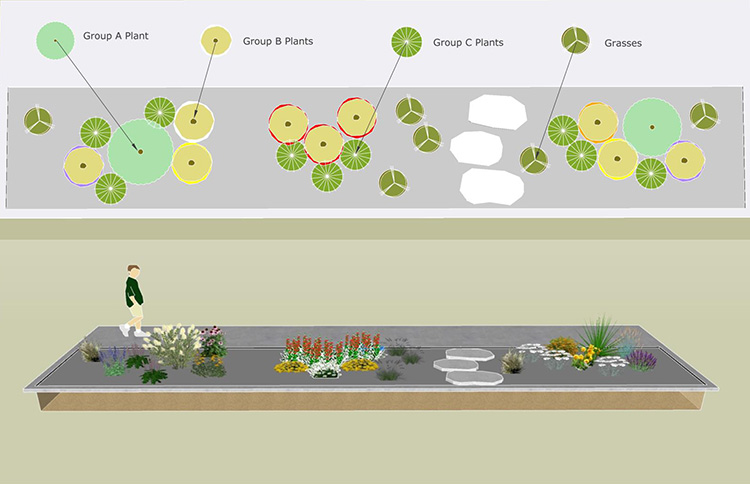
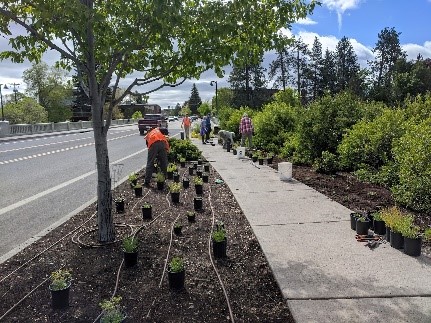
A planting package is a recommended combination of plants designed to cover 50% of a 300-square-foot parkway strip. Planting packages provide a simple way to create attractive, functional parkway strips while meeting City guidelines. Each package balances aesthetics with practical needs like utility access, visibility, and pedestrian safety.
- Group A plants: Largest species, used as focal points.
- Group B plants: Medium-sized species, arranged outward from the center.
- Group C plants: Low-growing species, placed near edges to maintain clear sight lines.
- For denser plantings: Try larger groupings of individual species.
Mature plants shouldn’t block sight lines for pedestrians and vehicles, and there must be access to sidewalks and walkways.
Here are some additional helpful resources for Design, Planning, and Layout:
- Pollinator Parkway Plant List
- Pollinator Parkway Bloom Chart
- How to Create Pollinator-Friendly Habitat (courtesy of Pollinator Pathway Bend)
Removing Sod and Creating a Subgrade
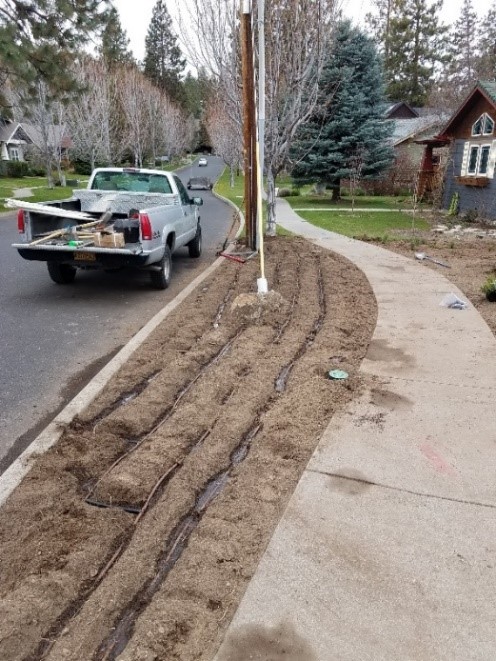
Before digging, call 811 to check for underground utilities. Removing sod and creating a subgrade can be tough but is essential for the project. For larger areas, a powered sod cutter is easiest. Be ready to remove and recycle a lot of material. Around tree roots, sod removal may need to be done by hand to avoid damage.
An alternative is the lasagna method, which composts the turf in place and improves soil structure. This method takes more time and should be started a season before planting.
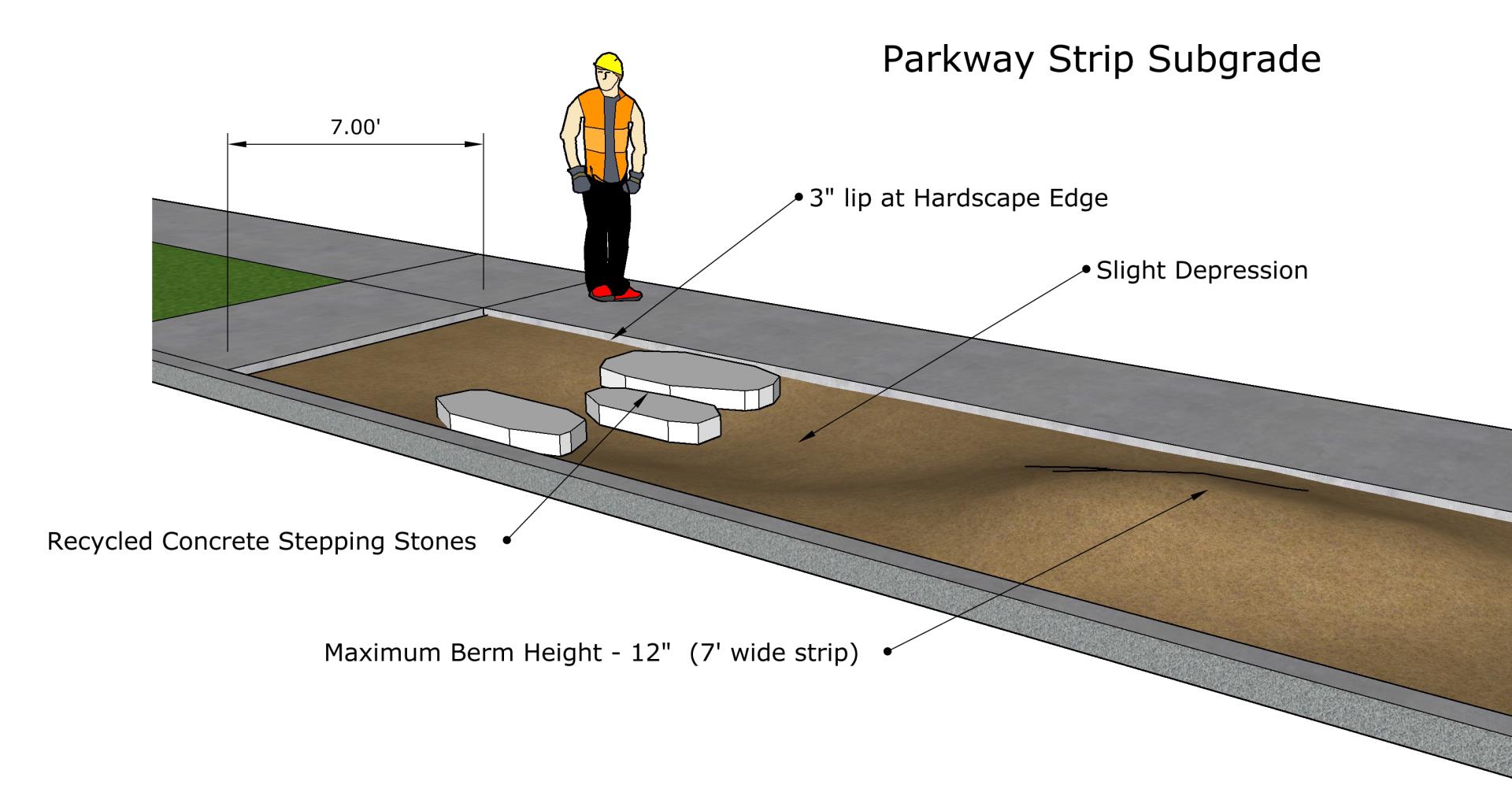
The subgrade should be 2-3 inches lower than the surrounding sidewalk and curb line. Avoid steep slopes, but gentle sloping can add visual interest and prevent stormwater from entering the road. Native plants do well in Central Oregon soils, but parkway strips may need soil improvement due to compaction and contamination.
Converting to Drip Irrigation
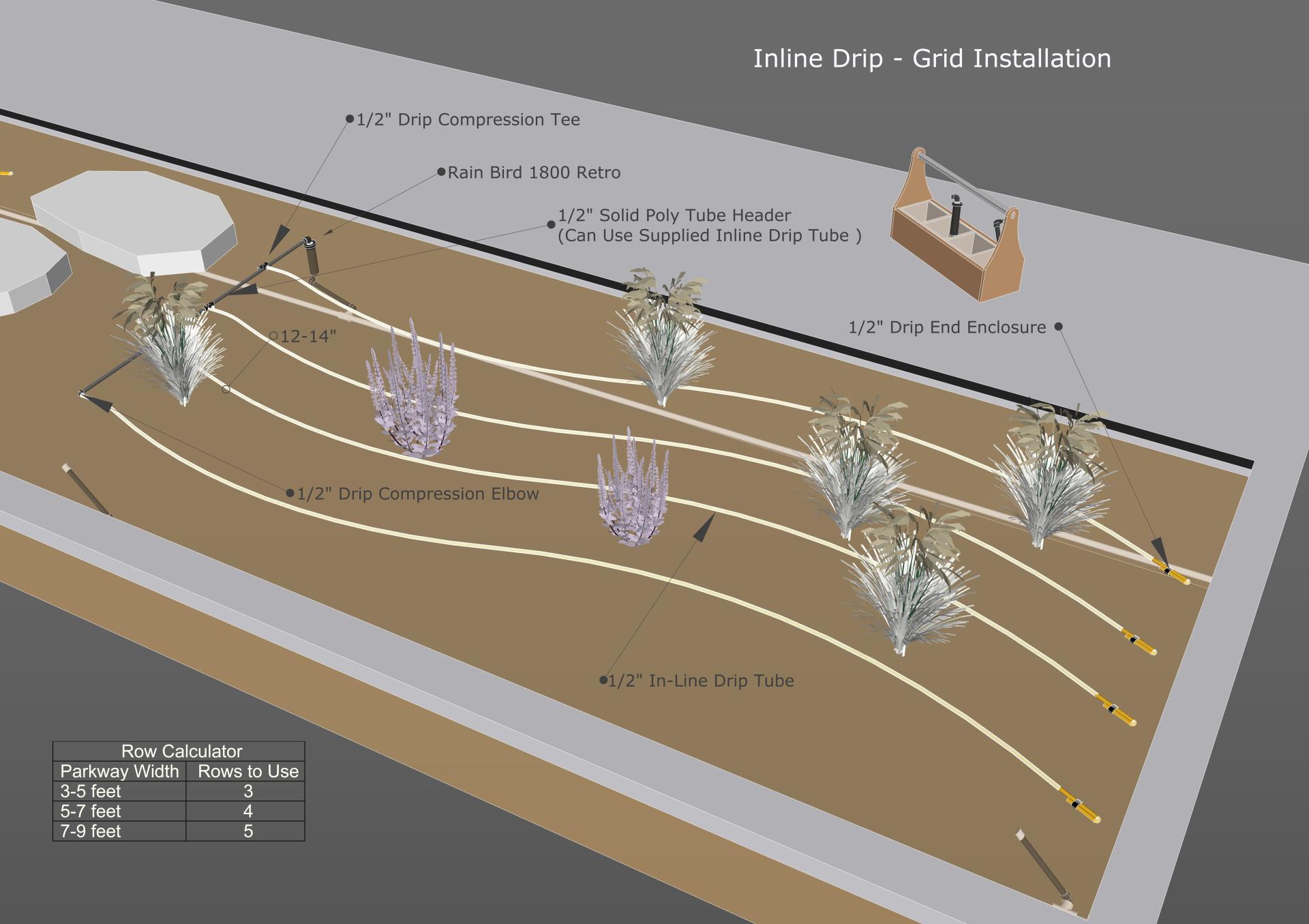
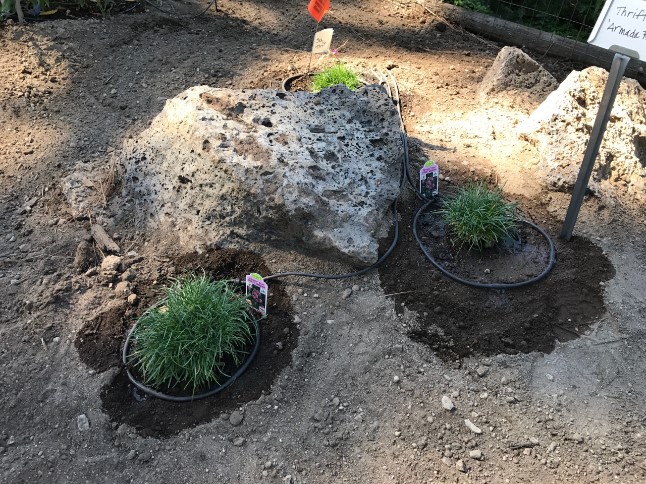
Switching to drip irrigation is smart for a Pollinator Parkway. It’s efficient, conserves water and reduces waste. Drip irrigation applies water directly to the root zone, benefiting even the toughest plants. Conversion kits are available and should include pressure regulation and filtration to prevent clogging. Choose between point source and inline drip irrigation. Point source is great for lower planting density, while inline drip works well for higher density plantings.
Planting and Growing In
To plant, dig a hole two to three times the size of the plant container. If needed, mix compost into the soil. Fill the hole with water and let it drain before planting. Place the plant so its crown is slightly above the surrounding grade. Backfill and tamp lightly to remove voids. Form a small basin around the plant and water thoroughly.
Adding mycorrhizal fungi can improve drought resistance and nutrient uptake. These beneficial fungi form a symbiotic relationship with plant roots, helping them absorb more water and nutrients.
Care
Maintain Nesting Habitat
Cleaning up the garden in fall can be a tough habit to break. But leaving plants untrimmed helps protect them from cold winter temperatures, provides shelter for birds and small mammals, and supports stem-nesting bees. In spring, you can trim the stems to heights between 8 and 24 inches to accommodate these bees. They will lay eggs and overwinter, emerging as adults the following spring. So, let those stems stand for at least two springs. Leave the leaves, save the stems, and embrace bare ground. Let nature overwinter as it intended. You can still rake leaves off your grass but keep them in a pile in a corner of your yard. Please don’t shred them, as they may contain butterfly or moth eggs and provide a warm blanket for bumblebee queens nesting under the soil.
Open Ground for Native Bees
Seventy percent of native bees nest in the ground and need access to the soil surface. Leave patches of bare ground and avoid using bark dust and mulch. If you see small holes in the soil near plants or bunchgrasses, you might spot a bee entering or exiting its nest.
Go Organic
Pesticides can harm pollinating species. Insecticides kill not only pests but also beneficial insects. Herbicides leave residues that can be harmful to pollinators and reduce the number of plants available for them to forage.
Photo Gallery
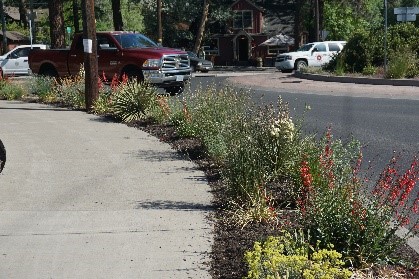
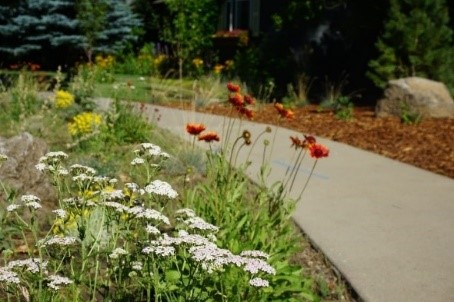
The WaterWise Program extends a special thanks to Basey Klopp and the Pollinator Pathway organization. Their vision and support made the WaterWise Pollinator Parkway project possible. The Pathway team provided invaluable pollinator-friendly plant choices and informational text for this web page.