Hazards
Bend faces a range of natural and human-caused hazards that can impact our community’s safety, health, and property, such as wildfires and winter storms, as well as infrastructure failures and hazardous material spills.
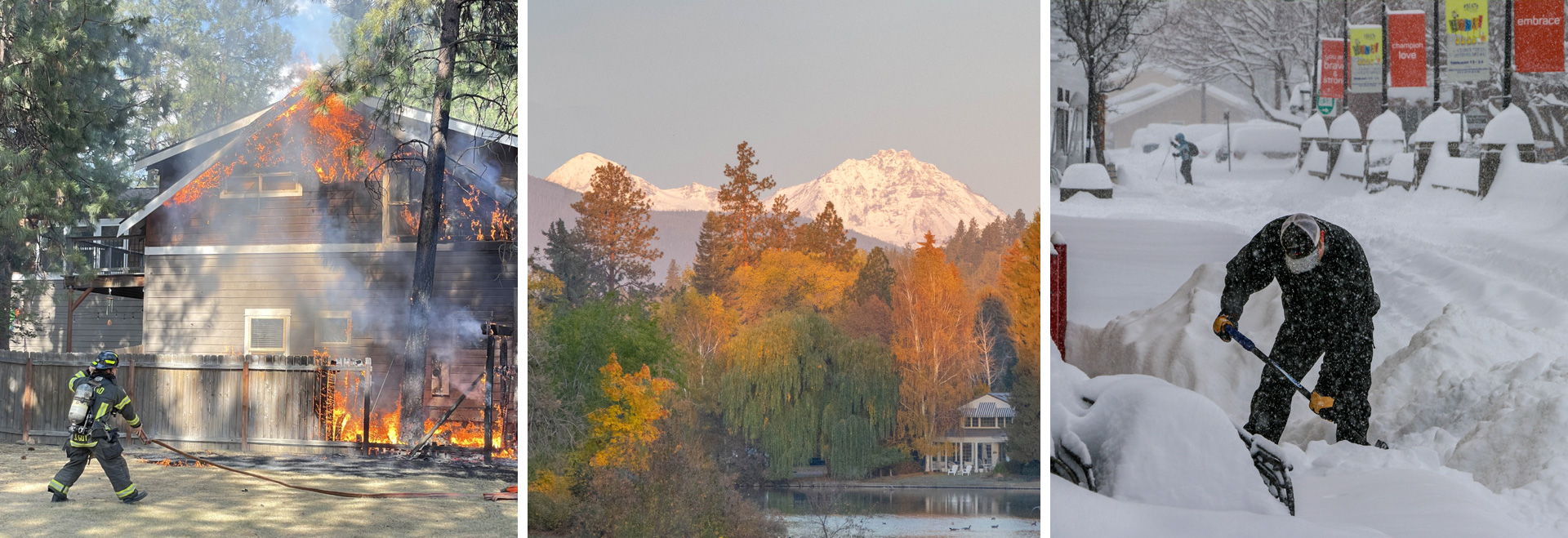
A comprehensive list of significant hazards that are a threat to our area is provided below. Each item includes helpful information about what the hazard is, how it might affect us, and what steps we can take to stay safe.
For more in-depth details, the Deschutes County Multi-Jurisdictional Natural Hazard Mitigation Plan is a valuable resource. It covers the history, risks, and possible impacts of each natural hazard in our region. The plan also outlines goals and actions that help reduce the effects of future disasters and keep our community strong.
Natural Hazards
A drought happens when there’s a long stretch of time with less rain or snow than usual. This can lead to problems with water supply. In Central Oregon, droughts often show up during the summer, but sometimes they can last for several years. The more severe the drought, the bigger the impact—and it can also raise the risk of wildfires.
Before a Drought: Be Ready and Save Water
You can make a big difference by using water wisely every day. Here are some simple ways to help:
- Don’t waste water. Try to reuse water when you can.
- Fix leaky faucets. Even a small drip can waste over 2,700 gallons a year!
- Check your plumbing for leaks and repair them quickly.
- Install faucet aerators to reduce water flow without losing pressure.
Insulate water pipes to keep them from breaking and to save hot water. - Choose water-efficient appliances when it’s time to replace old ones.
- Be WaterWise. Plant smart: use native or drought-tolerant plants that need less water once they’re established. Group plants with similar water needs together.
- Think about collecting rainwater if it’s allowed in your area.
- Reach out to your local water provider for tips and tools to help you save water.
During a Drought: Use Every Drop Wisely
When a drought is happening, it’s even more important to cut back on water use. Here are some easy ways to help:
- Take short showers. Turn off the water while you lather up.
- Don’t let the water run while brushing your teeth, shaving, or washing your face.
- Only run the dishwasher when it’s full, and use the “light wash” setting.
- Catch cold water while waiting for it to heat up—use it to water plants or clean.
- Check your soil before watering. If it’s still moist, you can wait.
- Use a broom or leaf blower instead of a hose to clean sidewalks or driveways.
- Don’t leave sprinklers or hoses running unattended.
- Let your lawn go brown if needed—focus on saving trees and large shrubs.
- Use a car wash that recycles water.
- Follow the guidance of officials when curtailment is activated.
And remember, your local water provider is a great resource for more help and information.
Helpful Resources
An earthquake happens when energy that’s been building up underground is suddenly released. This usually occurs along cracks in the earth called faults. Bend has several faults running beneath the city. Most earthquakes are small, but sometimes they can be strong enough to shake the ground hard. That shaking can cause landslides, ground cracking, and damage to buildings, which can affect the whole community.
Before an Earthquake: Get Prepared
There are simple things you can do now to help keep your home and family safe:
- Secure large items like your water heater, fridge, furnace, and gas appliances to the wall.
- Place heavy objects on lower shelves and fasten shelves, mirrors, and large pictures to the wall.
- Brace tall or top-heavy furniture so it doesn’t tip over.
- Store breakables like glass and bottled food on low shelves or in cabinets that latch shut.
- Anchor ceiling lights so they don’t fall.
- Make sure your home is anchored to its foundation.
- Use flexible pipe fittings to help prevent gas or water leaks.
- Find safe spots in each room—like under a sturdy table or next to an inside wall—and practice going there during a drill.
- Hold family earthquake drills and remember the rule: Duck, Cover, and Hold On!
During an Earthquake: Stay Calm and Stay Put
- Duck, Cover, and Hold On!
- Try not to move around too much. Stay where you are unless it’s unsafe.
- Stay indoors until the shaking stops and it’s safe to go outside.
- Get under a sturdy table or piece of furniture to protect yourself from falling objects.
- Instead of a doorway—get under a table, where you will be safer.
After an Earthquake: Be Cautious
- Watch out for aftershocks. These smaller quakes can still cause damage.
- Open cabinets carefully—items may have shifted and could fall.
- Stay away from damaged areas unless emergency crews ask for help.
- Listen to the radio or TV for updates and instructions from local officials.
Helpful Resources
- FEMA Earthquake Safety Checklist
- HAZVU Hazard Viewer – Map geologic hazards in your area
- Oregon Public Broadcasting’s “Unprepared” Documentary
- Oregon Department of Geology and Mineral Industries
- U.S. Geological Survey (USGS) Earthquake Hazards Program
- U.S. Geological Survey (USGS) Earthquakes for Kids
- U.S. Geological Survey (USGS) National Earthquake Information Center
A volcano is an opening in the earth’s surface where magma, ash, gases, and rock can escape from deep underground. Volcanoes can stay quiet for hundreds of years, so the risk isn’t always obvious. But if a volcano like Newberry or one in the Cascades were to erupt, Bend could experience falling ash or even lava flows.
Ash can cause respiratory effects, eye symptoms, and skin irritation to people, and it can cause big problems for buildings, roads, power, water systems, farms, and airplanes. Lava flows are extremely hot and can destroy anything in their path by burning, knocking over, or surrounding it.
Before a Volcanic Eruption: Get Ready
Here are some smart steps to take ahead of time:
- Add goggles and disposable breathing masks for each family member to your emergency kit.
- Keep a spare air filter for each vehicle.
- Make an evacuation plan with a main route and a backup route.
- Be ready for other hazards that can come with volcanoes, like landslides, rockfalls, earthquakes, fires, and ashfall.
During a Volcanic Eruption: Stay Safe
- Follow evacuation orders from local officials right away.
- Stay away from river valleys and low-lying areas, especially those downwind or downstream from the volcano.
- If you’re indoors and not in the path of lava or debris:
- Close all windows, doors, and vents.
- Bring vehicles and outdoor items inside if possible.
- Bring pets indoors.
- If you’re caught outside:
- Try to get indoors quickly.
- If rocks are falling, curl into a ball and protect your head.
- If you’re near a stream, watch for mudflows and move to higher ground.
- To protect yourself from falling ash:
- Stay indoors unless your roof is at risk of collapsing.
- Clear heavy ash from flat roofs and gutters.
- Wear long sleeves and pants, goggles, and glasses instead of contacts.
- Use a dust mask or a damp cloth over your nose and mouth.
- Keep all doors, windows, and vents closed.
- Avoid running your car unless necessary—ash can damage engines.
- If you must drive, go slowly (under 35 MPH) and change air filters in a covered area.
After a Volcanic Eruption: Be Cautious
- Wait for the all-clear from local authorities before going outside.
- Use text messages or social media to check in with loved ones—phone lines may be busy.
- Avoid driving in heavy ash unless absolutely necessary.
- If you have breathing issues like asthma, stay away from ash and poor air quality.
- Don’t climb on your roof to remove ash unless you know how to do it safely.
- Wear protective clothing and a mask when cleaning up. Children should not help with cleanup.
Helpful Resources
- USGS Volcano Notification System (VNS) – Sign up for alerts
- Oregon Department of Geology and Mineral Industries– Volcano Hazards
- Oregon State University – Volcano World
- U.S. Geological Survey Cascades Volcano Observatory
- Volcanic Ash: What It Can Do and How to Prevent Damage
- Ready.gov – Volcanoes
- What to Do if a Volcano Erupts
A wildfire is a large, fast-moving fire that can spread through forests, grasslands, and even neighborhoods. These fires can start from natural causes like lightning or from human activity. Once a wildfire starts, it can grow quickly—especially when it’s windy, hot, and dry. Fires can even “jump” across roads or rivers when embers are carried by the wind.
Wildfires are a natural part of Central Oregon’s ecosystem, but they can also be dangerous to people, homes, and communities. There are three main types of wildfires: interface fires (where wildland meets homes), wildland fires, and firestorms (very intense fires).
Before a Wildfire: Get Prepared
You can take steps now to help protect your home and family:
- Own Your Zone – Learn how to prepare your property: Wildfire Preparedness
- Pack your evacuation kit.
- Identify the evacuation routes out of your neighborhood.
- Harden your home – Make it more resistant to embers and flames:
- Fix or replace loose roof shingles or tiles.
- Cover attic vents with metal mesh (no larger than 1/8 inch).
- Screen under-eave vents to keep embers out.
- Visit State of Oregon Building Codes Division: Wildfire Hazard Mitigation for more information.
- Create defensible space – Clear flammable materials from around your home:
- Clean leaves and debris from gutters, roofs, and decks.
- Remove dead plants and items under decks or within 10 feet of your home.
- Keep firewood, propane tanks, and other flammable items at least 30 feet away.
- Be Firewise – Plant fire resistant plants. Keep your lawn green and trimmed. If it’s dry, cut it down.
- Don’t let yard waste pile up—dispose of it regularly.
Learn more at www.firewise.org.
During a Wildfire: Stay Alert and Act Fast
- Stay informed – Follow updates from local fire and police departments, Emergency Management Dashboard.
- Get ready to evacuate – Grab your emergency kit and load it into your vehicle.
- If you have time:
- Move outdoor furniture and flammable items away from your home.
- Close all windows, doors, vents, and pet doors to keep embers out.
- Hook up garden hoses and fill pools, tubs, or large containers with water.
- Leave early – Don’t wait for an official evacuation order. Leaving early helps keep roads clear for emergency crews and keeps you safe.
After a Wildfire: Be Cautious
- Wait for the all-clear – Only return home when officials say it’s safe.
- Check for damage – Wear gloves and safety glasses while inspecting your property.
- Start cleanup – Remove debris and hazards when it’s safe to do so.
- Take photos – Document any damage for insurance purposes.
- Save receipts – Keep records of cleanup and repair costs.
- Inspect your home – Check crawl spaces and basements for damage or wet insulation.
- Stay away from downed power lines – Always assume they are live and report them.
- Use chainsaws carefully – Wear safety gear and avoid power lines.
- Contact your insurance agent and local officials for help with repairs and permits.
- Verify contractor licenses through the Oregon State Building Codes Division to avoid scams.
Helpful Resources
A windstorm is a short but powerful event with strong, straight-line winds or gusts over 50 miles per hour. These storms can knock down trees and power lines, damage homes and buildings, and scatter debris. While windstorms can affect all of Deschutes County, they’re especially risky in areas with lots of trees and above-ground power lines.
Before a Windstorm: Get Ready
Taking a few steps ahead of time can help keep you and your family safe:
- Build an emergency kit with enough supplies to last at least two weeks.
- Make a family plan with meeting spots and a way to stay in touch.
- Choose an out-of-state contact—local phone lines may be busy, but long-distance calls or text messages might still go through.
- Secure outdoor items like patio furniture and trash bins so they don’t blow away.
- Trim trees and branches near your home to reduce the risk of damage.
- Know the weather alerts:
- Wind Watch: Conditions are right for strong winds—stay alert and get ready.
- Wind Warning: High winds are happening or expected—take action to stay safe.
- Prepare for power outages:
- Charge your devices.
- Have flashlights, batteries, and a battery-powered or hand-crank radio ready.
- Stock up on non-perishable food and water.
During a Windstorm: Stay Safe
- Go indoors and stay in a sturdy building.
- Move to a small, interior room on the lowest floor—stay away from windows and outside walls.
- Avoid windows and doors—flying glass can cause injuries.
- Follow evacuation orders if given.
- Stay away from downed power lines—they may still be live. Report them to your utility company.
- Drive only if necessary. Watch for debris and fallen trees. Drive slowly and keep your distance from large vehicles.
- Stay informed using a battery-powered or hand-crank radio or your phone.
- Protect your head if you’re caught outside—find a low spot away from trees and power lines.
- Avoid elevators in case the power goes out.
- Use generators safely—never use them indoors. Keep them at least 20 feet from doors, windows, and vents.
- Signal for help with a flashlight, whistle, or bright cloth if needed.
- If you’re in a vehicle:
- Stay inside unless you’re near a sturdy building.
- Park in a safe spot—away from trees, power lines, and anything that could fall.
- If you must drive, hold the wheel with both hands and go slow. Give extra space to trucks and trailers.
After a Windstorm: Be Cautious
- Check your property for damage. Wear gloves and safety glasses.
- Start cleanup when it’s safe. Watch for sharp debris and fallen branches.
- Take photos of any damage for insurance claims.
- Save receipts for repairs and cleanup costs.
- Inspect basements and crawl spaces for water damage or electrical issues.
- Stay away from downed power lines—always assume they’re live.
- Use chainsaws carefully and wear safety gear. Avoid working near power lines.
- Contact your insurance agent and local officials for help with repairs and permits.
- Check contractor licenses through the Oregon State Building Codes Division to avoid scams.
Helpful Resources
A winter storm can last for several days and bring strong winds, freezing rain or sleet, heavy snow, and very cold temperatures. These storms can make it hard—or even dangerous—to travel or go outside. People may get stuck at home without power or heat, and drivers can become trapped in their cars. Walking for help during a blizzard can be extremely risky. Even after the storm ends, the effects can last for days or weeks, especially if there’s flooding or deep snow.
Before a Winter Storm: Get Ready
Here are some smart ways to prepare:
- Add sand, snow shovels, and other snow tools to your emergency supplies.
- Make sure you have enough heating options in case the power goes out.
- Winterize your home by insulating walls and attics, sealing doors and windows, and using storm windows or plastic coverings.
- Get your car ready for winter:
- Check the battery, brakes, oil, and fluid levels.
- Make sure the heater and defroster work.
- Replace worn wipers and keep washer fluid full.
- Understand traction tire and chain laws.
During a Winter Storm: Stay Safe
- Stay informed by listening to the radio, TV, or NOAA Weather Radio.
- Eat well and drink plenty of fluids to stay energized.
- Save your phone battery for important calls or emergencies.
- Take it easy when shoveling snow—stretch first and don’t overdo it.
- Watch for signs of frostbite and hypothermia. Get medical help if needed.
- Lower your thermostat to save fuel and close off rooms you’re not using.
- Avoid driving unless absolutely necessary. If you must go out:
- Travel during the day and let someone know your plans.
- Stick to main roads and check conditions before you leave.
- Don’t rely only on GPS—check for road closures and weather updates.
If You’re Trapped in a Car During a Blizzard
- Pull off the road, turn on hazard lights, and hang a distress flag.
- Stay in your car unless you can clearly see a nearby building for shelter.
- Run the engine and heater for 10 minutes every hour. Crack a window for air and clear snow from the exhaust pipe.
- Move around to stay warm, but don’t overexert yourself.
- Use maps, seat covers, or floor mats for extra insulation.
- Take turns sleeping—someone should stay awake to watch for help.
- Drink fluids to stay hydrated.
- Use your car’s lights at night if you hear or see rescuers.
- Only leave the car after the storm passes and it’s safe to do so.
After a Winter Storm: Be Cautious
- Keep listening to local news or NOAA Weather Radio for updates.
- Help neighbors who may need extra support, like seniors or people with disabilities.
- Avoid driving until roads are clear and safe.
- Don’t overdo it—take breaks when cleaning up snow.
- Dress warmly and check the weather before going outside.
- Make sure your pets and animals can reach food and water.
Helpful Resources
Human Caused Hazards
A cyberattack is when someone tries to break into or damage a computer or network on purpose. These attacks can lead to stolen money, personal information, or even medical records. They can also hurt a person’s or organization’s reputation. Cybersecurity is all about preventing, spotting, and responding to these attacks to help protect individuals, businesses, and communities.
Before a Cyberattack: Be Prepared
Here are some simple ways to protect yourself online:
- Limit what you share online. Don’t post personal details like your address or location.
- Keep your software up to date. This includes apps, browsers, and your operating system.
- Use strong passwords. Combine uppercase and lowercase letters, numbers, and symbols. A password manager can help, and two-step verification adds extra protection.
- Think before you click. Be cautious of messages (email or text) that seem urgent, offer something too good to be true, ask for personal info, or are from people you don’t know.
- Secure your Wi-Fi. Use a strong password and change it regularly.
- Don’t share your PINs or passwords. Use fingerprint or face recognition when possible.
- Check your bank and credit card statements often for anything unusual.
- Only share personal info on secure websites. Look for “https” in the web address and avoid sites with warnings or expired certificates.
- Use antivirus software, firewalls, and anti-malware tools.
- Back up your files regularly using encrypted storage.
- Know the signs of scams. The government won’t contact you through social media or ask for money over the phone.
During a Cyberattack: Take Action
If you think you’re being targeted:
- Check your bank and credit card accounts for strange charges.
- Look at your credit report for accounts or loans you didn’t open.
- Watch for suspicious emails or messages asking for personal info.
- Change your passwords right away on all your accounts.
- Turn off the affected device and take it to a professional for help.
- Never give control of your computer to someone who calls you—this is a common scam.
- Let your workplace or school know if their systems might be affected.
- Run a security scan to check for viruses or slow performance.
- If needed, disconnect from the internet and do a full system restore.
After a Cyberattack: Stay Alert
- Report the attack to the proper authorities.
- Keep checking your accounts and credit reports for unusual activity.
- Change your passwords again if needed.
- Let your school, work, or service providers know what happened.
- Run another security scan to make sure your device is clean.
- Contact the right agencies if your personal info was stolen:
- Social Security Administration: 800-269-0271
- Oregon DMV: Vehicle Info
- Oregon DMV: Driver Licenses
- Report online crime or fraud:
Helpful Resources
- Ready.gov – Cybersecurity
- Cybersecurity and Infrastructure Security Agency (CISA) – Free Cybersecurity Tools
- Cybersecurity and Infrastructure Security Agency (CISA) – Resources by Audience
- (City of Bend Cybersecurity Page – Coming Soon!)
Hazardous materials (also called hazmat) are solids, liquids, or gases that can be harmful to people, animals, property, or the environment. You can find them in many places—like factories, gas stations, hospitals, and even waste sites. These materials are also transported through Bend every day by truck, train, or pipeline.
Hazardous materials can be dangerous if they spill or leak during storage, use, or transport. That’s why it’s important to know the risks and how to stay safe if something goes wrong.
During a Hazardous Materials Incident: Stay Safe
If there’s a hazmat emergency in your area:
- Listen to local news on the radio or TV for instructions. Follow them carefully.
- Stay away from the area—some chemicals are dangerous even if you can’t smell them.
- Evacuate immediately if told to do so.
- If you’re outside, move uphill, upwind, and upstream from the spill. Avoid touching any liquids, mist, or powder.
- If you’re in a car in town and traffic slows, pull over and go inside a nearby building. If you must stay in your car, close all windows and vents, and turn off the heater or A/C.
- If you’re on foot, find shelter in a sturdy building right away.
- If told to shelter indoors:
- Go to your shelter room—a space above ground with few windows or vents.
- Seal the room using plastic sheeting and duct tape over doors, windows, and vents.
- Fill any cracks or holes with towels or other materials.
- A small room with 10 square feet of floor space per person can provide enough air for a few hours. Officials usually won’t recommend staying sealed in for more than 2–3 hours.
After a Hazardous Materials Incident: Be Cautious
- Only return home when officials say it’s safe.
- Open windows and vents and use fans to air out your home.
- If you think you were exposed to chemicals:
- Follow decontamination instructions from local authorities. You may need to shower—or avoid water, depending on the chemical.
- Seek medical help if you feel sick or notice unusual symptoms.
- Seal exposed clothing and shoes in a plastic bag and ask local officials how to dispose of them.
- Let others know you may have been exposed so they can take precautions.
- Ask local officials how to safely clean your home or property if needed.
Helpful Resources
A utility interruption happens when essential services like electricity, water, or gas are suddenly disrupted. These outages can be caused by accidents, natural disasters, equipment failures, or even planned maintenance. For homes and businesses, losing these services can be inconvenient—or even dangerous—especially during extreme weather.
Before a Utility Interruption: Be Ready
You can prepare ahead of time to stay safe and comfortable:
- Build an emergency kit with food, water, flashlights, batteries, and other essentials.
- Keep your devices charged, including phones, power banks, and medical equipment.
- Register your durable medical equipment with your power provider.
- Make a family emergency plan so everyone knows what to do and where to go.
- Update your contact info with your utility providers so you can get alerts and updates.
- Know how to manually operate garage doors, gates, or medical devices if needed.
During a Utility Interruption: Stay Safe
- Unplug electronics and appliances to protect them from power surges when service returns.
- Use flashlights instead of candles to reduce fire risk.
- Keep refrigerator and freezer doors closed to preserve food as long as possible.
- Limit water use if water service is affected or if you’re on a well system.
- Do not use gas stoves or grills indoors—they can cause carbon monoxide poisoning.
- Listen to local news on a battery-powered or hand-crank radio for updates and instructions.
After a Utility Interruption: Check and Recover
- Wait for the all-clear from your utility provider before turning everything back on.
- Check your appliances and electronics for damage before using them.
- Throw out spoiled food if your fridge was off for more than four hours.
- Check with and report any damage to your insurance company.
- Report any lingering issues to your utility company.
- Restock your emergency kit with anything you used during the outage.
Helpful Resources