Infill Housing
Housing is a top priority of the City of Bend; infill housing is one of the best ways to integrate more housing into existing neighborhoods and efficiently use the City’s residential land.
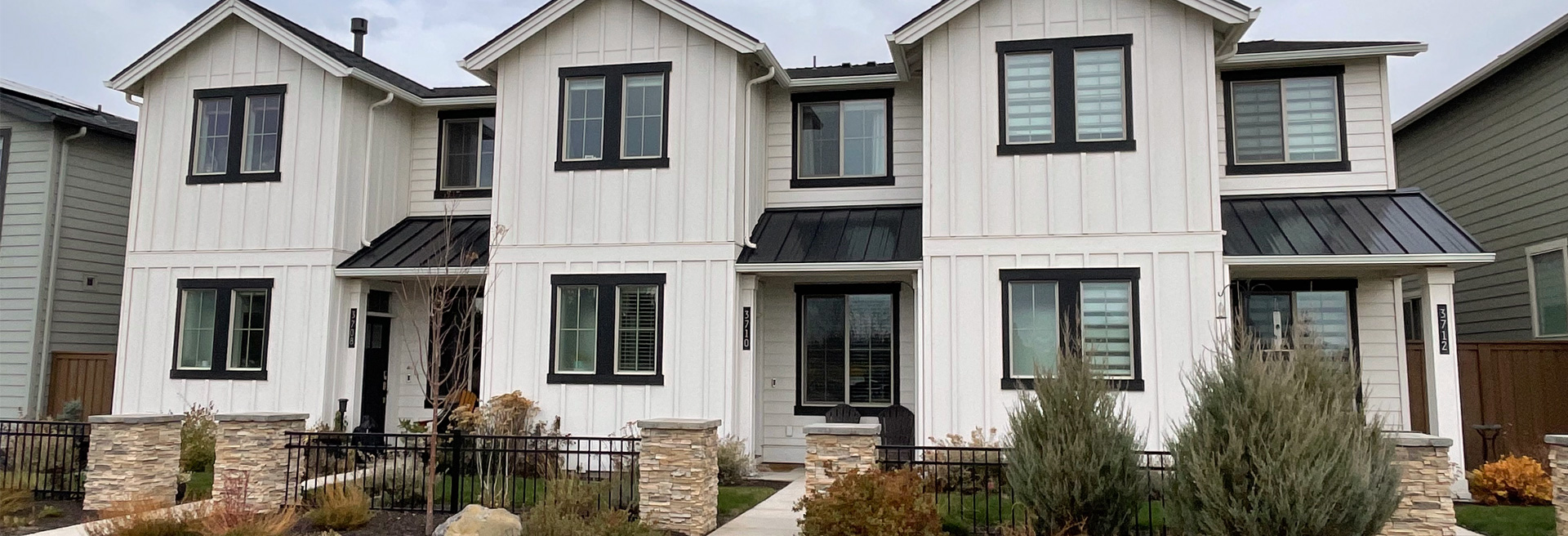
Infill housing development involves constructing buildings on vacant sites or on land that has room for more capacity within an already developed community. Typically, infill housing projects are small to medium in scale, ranging from 1 to 12 new housing units on one or two standard-sized residential lots in established neighborhoods.
While infill housing could be adding another single-family dwelling or even a small multifamily apartment building, it is the middle housing type of dwelling that often serves as an efficient way to maximize housing units for infill development.
Examples include duplexes, triplexes, quadplexes, cottage clusters, and townhomes in areas traditionally zoned for traditional single-unit homes.
Housing Types Available to Build
The City of Bend Development Code accommodates various housing types to address the diverse needs of community members and the unique characteristics of different properties.
The kind of infill housing development that makes the most sense for your goals and property will depend on whether you want to rent out the units in this new development or sell them individually.
Have you heard of our free plans?
The City of Bend Free Pre-Approved Plans Program streamlines the permitting process and saves cost for building your small unit. Learn more about the program.
Renting Out Units in Smaller Developments
If you want to rent out your units and you have a standard-sized residential property (4,000 to 10,000 square feet), consider these types of infill housing:
- Single-family Dwelling: Traditional, detached one-unit home.
- ADUs: One unit that is in addition to the single-family dwelling, whether that be attached or detached.
- Duplex: Two units on one property, either attached or detached.
- Triplex: Three units on one property, either attached or detached.
- Quadplex: Four units on one property, either attached or detached.
- Cottage Cluster: Typically, 3 to 12 units arranged in a cluster on one property.
Renting Out Units in Larger Developments
For larger properties or more than four units, consider these types of infill housing:
- Single Room Occupancy: At least four attached units, independently rented, with shared kitchen or bathroom facilities.
- Microunits: Very small units (150 to 400 square feet) without full kitchen facilities.
- Multi-unit Housing: Standard apartment-style rental housing with five or more units.
Selling Units in a New Development
To sell individual housing units on their own lots, you typically need to apply for a type of land division. Consulting with a planner for a pre-application meeting is recommended for any potential land division.
Consider these options:
- Traditional Land Division: Ideal for larger sites that can be divided into multiple lots, each at least 4,000 square feet. This may involve constructing new streets and extending sewer and/or water main lines.
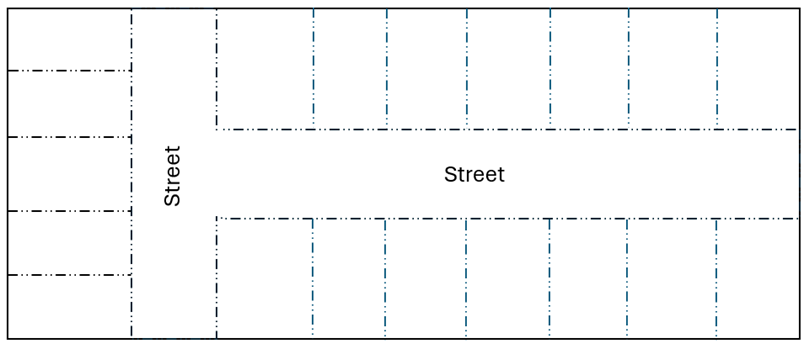
- Small Dwelling Unit Developments Small Dwelling Unit Developments offer a pathway to create small 1,500 square foot lots for single-family detached dwelling units, ADUs and duplexes. The maximum floor area for any dwelling unit is 800 square feet, except accessory dwelling units (ADUs) must not exceed 600 square feet. When two dwelling units are developed on site (i.e., a duplex or a single-unit detached dwelling with an ADU) the maximum total floor area permitted for all dwelling units is 1,200 square feet, cumulatively.
For example, a site may include an 800-square-foot single-unit detached dwelling and a 400-square-foot ADU for a total of 1,200 square feet. In no case can the total square footage of all dwelling units on site exceed 1,200 square feet, cumulatively. See BDC 3.8.300, Small Dwelling Unit Development. ADUs are by definition an accessory to the main dwelling unit and may not be partitioned to be sold separately.
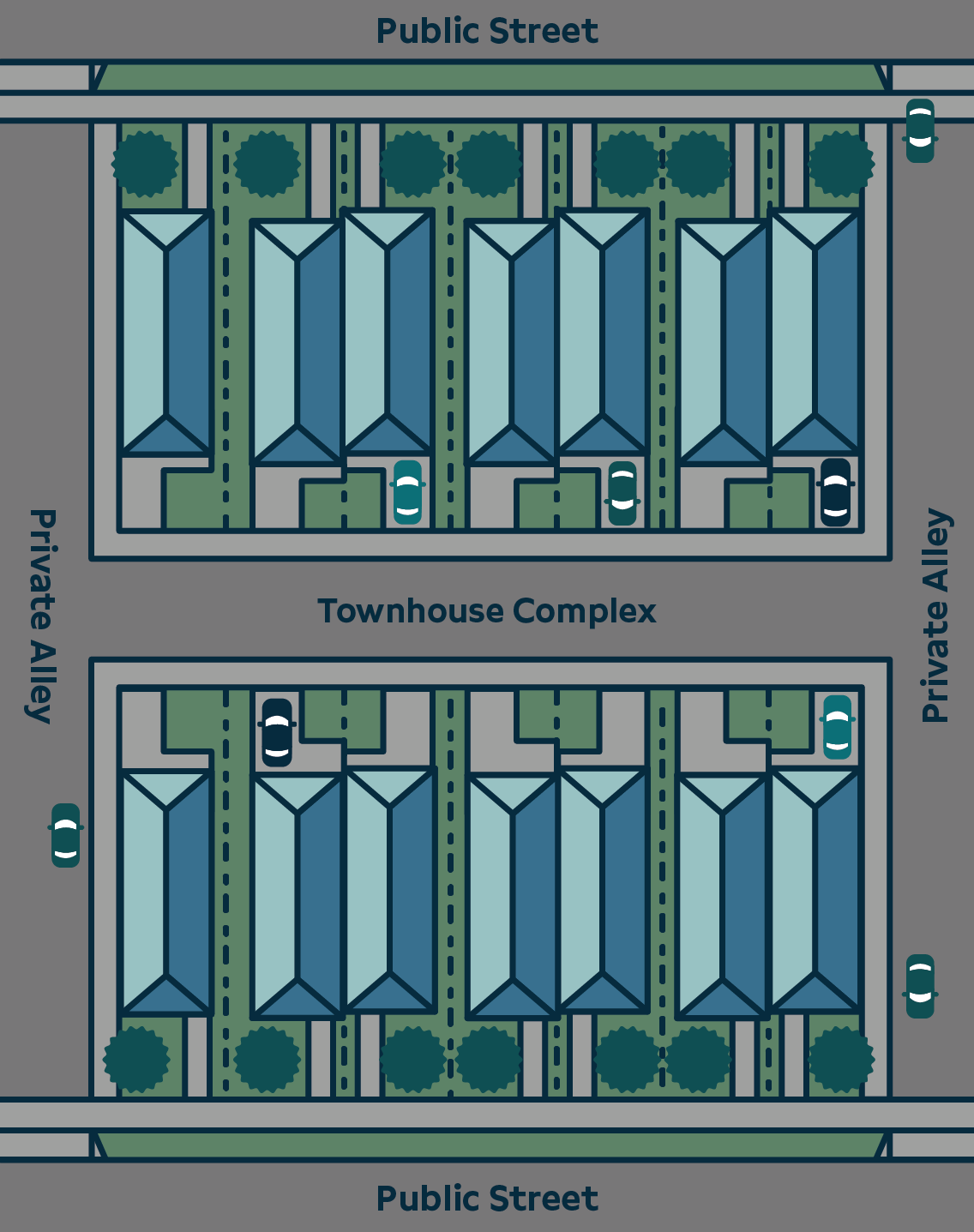
- Expedited Middle Housing Land Division: Suitable for Middle Housing types, such as duplexes, triplexes, quadplexes, cottage clusters and townhomes. This allows you to take the original lot, split it up and sell units on their own lots separately. This process relaxes some of the typical lot size and configuration standards, utility standards and process timeline of a traditional land division. This option is the most viable to use when you have existing detached units on a property already, or if you are building brand new units, attached or detached, on a property.
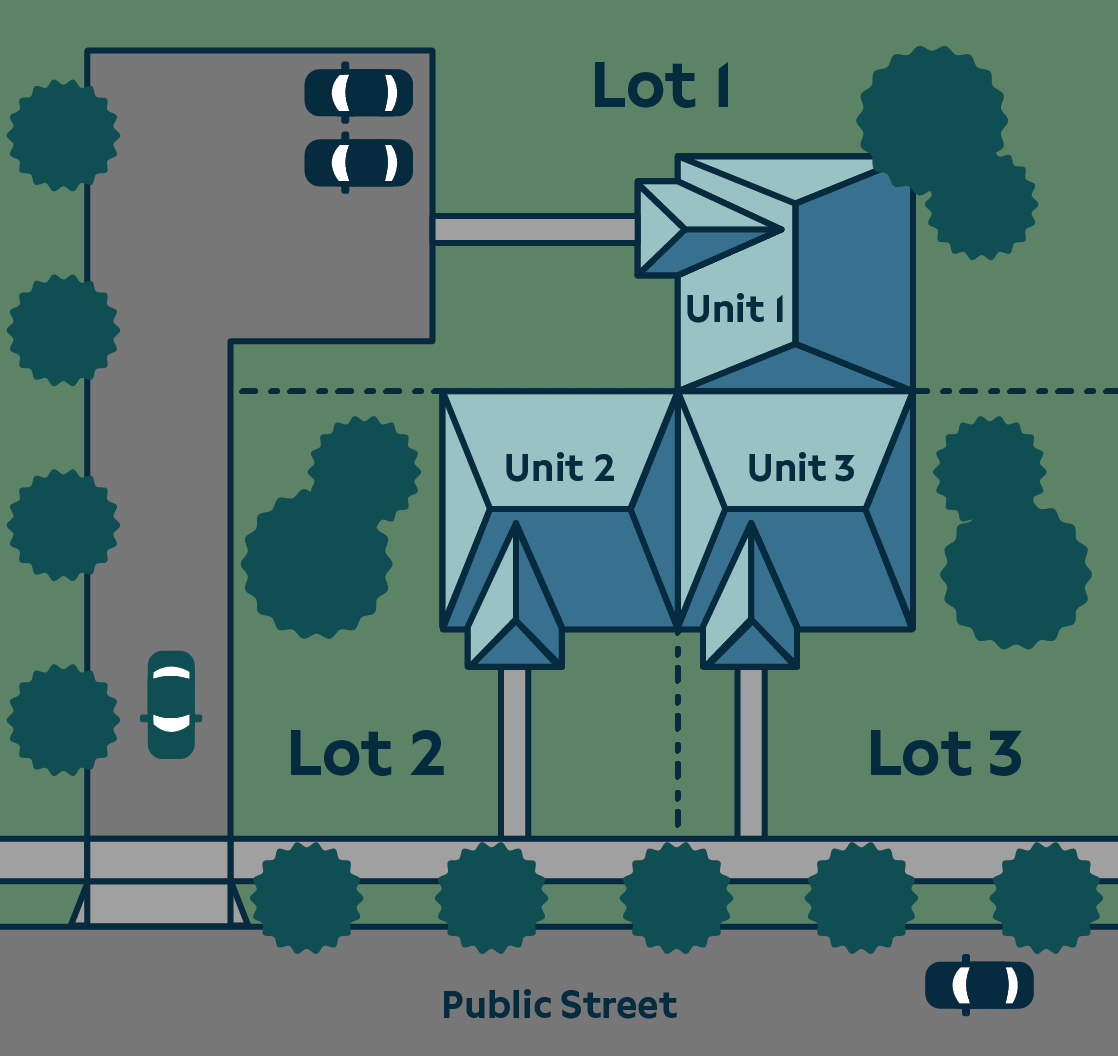
- Shared Court: Similar to a townhome development with attached units sold separately. The main difference is that vehicular access is provided via a private access drive rather than a public street or alley.
Quick Reference Guides
- Expedited Middle Housing Land Divisions
- Duplexes
- Triplexes and Quadplexes
- Townhomes
- Cottage Developments
Bend Development Code References
- Residential Districts
(Urban Area Reserve, Low Density Residential, Standard Density Residential, Medium Density Residential, Medium-10 Density Residential, High Density Residential) - Townhomes
- Duplex, Triplex and Quadplex Development
- Cottage Housing Development
- Cottage Cluster Developments
- Development on a Middle Housing Land Division Site
- Expedited and Middle Housing Land Division
- Micro-Unit Development
- Shared Courts
Frequently Asked Questions
Middle housing refers to a variety of housing types that fall between the traditional single-unit homes and larger, multi-story apartment buildings. The state of Oregon defines middle housing to include duplexes, triplexes, quadplexes, cottage clusters, and townhouses. They are designed to fit into neighborhoods that typically have single-unit homes, offering more housing options within the community.
Yes. Middle Housing rules do not prohibit or make it harder to build single-unit homes where they’re already allowed. Instead, it lets other types of housing like duplexes, triplexes, quadplexes, cottage clusters, and townhomes be built in the same areas as single-unit homes.
The City of Bend does not enforce or regulate private Covenants, Conditions, and Restrictions or other private agreements. Check your CC&Rs to see what is allowed.
When possible, new lots created through a land division will get their own unique addresses. For example:
- Existing primary residence or new residence with street frontage: 123 NE Main St
- New Middle Housing Lot: 125 NE Main St, etc.
If there isn’t enough space for new unique addresses, the new homes will be given a “unit” number. The original home or the new lot with street frontage will keep or get an address without a unit number. For example:
- Existing or primary residence or new residence with street frontage: 123 NE Main St
- New Middle Housing Lot: 123 NE Main St – Unit 2, 3, etc.
For additional questions surrounding addressing, please contact our addressing team at: addressing@bendoregon.gov
Still have questions?
Additional questions can be directed to our Planning Division: planning@bendoregon.gov or (541) 388-5580 Ext. 3.

Customer Resources:
Monday through Friday
8 a.m. – 5 p.m.
Permit Inquiries:
Monday through Friday
9 a.m. – 4 p.m.
Closed most major holidays.

Location:
710 NW Wall Street
Bend, OR 97703