December 2023 Project Survey Results
Thank you, December open house and survey participants!
We are committed to listening to community members early in the process and identifying the options that meet the City’s goals and optimize limited funding. The December 2023 open house and survey informed community members of potential improvement designs and gathered community feedback with an online survey. In total, 262 survey responses were received; however, not every respondent answered each question. Below is a summary of the survey results.
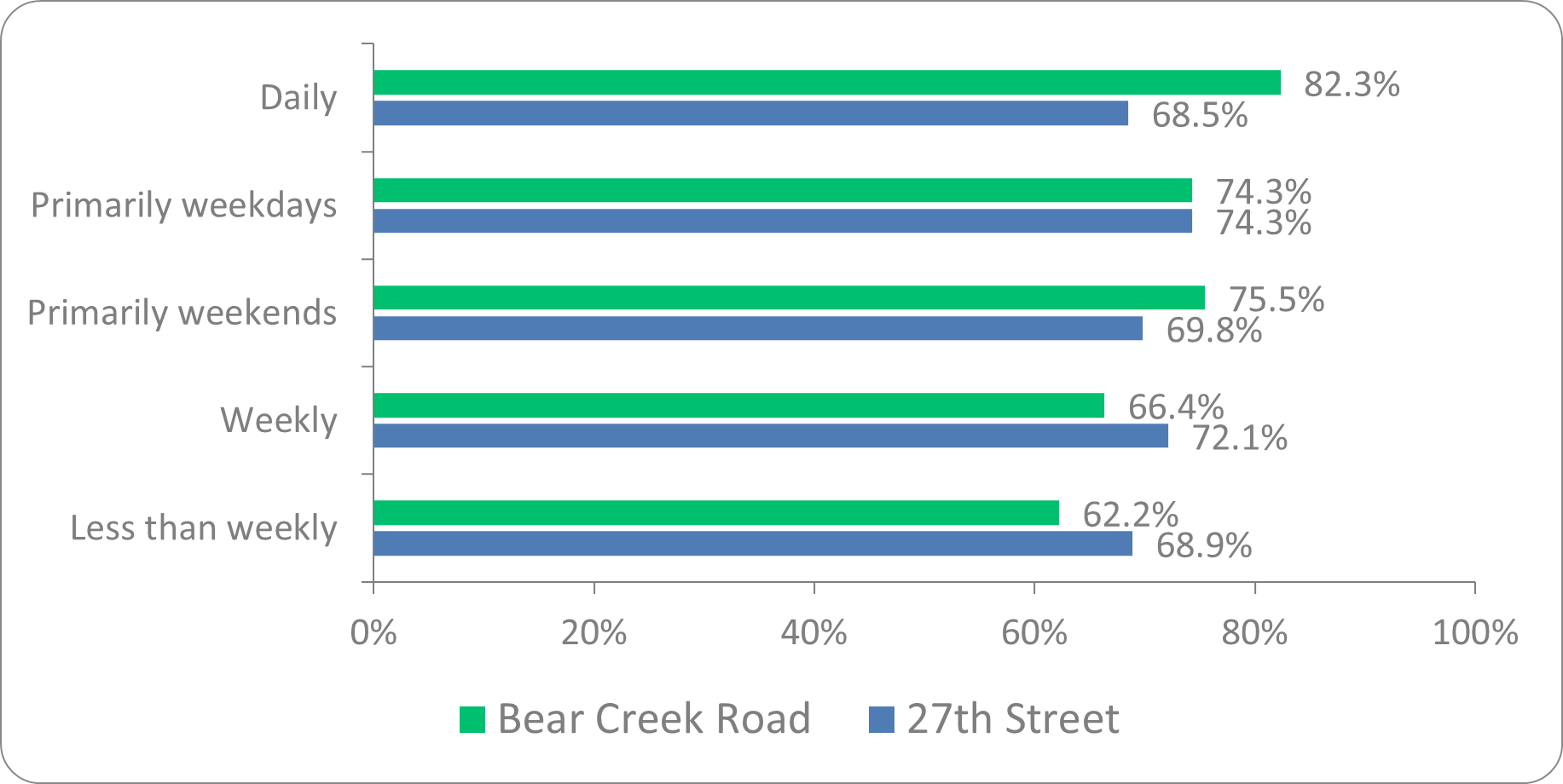
How often do survey participants travel through Bear Creek Road and 27th Street?
The overwhelming majority indicated survey participants use both routes daily. Specifically, 82.3 percent use Bear Creek Road daily, and 68.5 percent use 27th Street daily. Responses relating to the use of both streets were equal, primarily on weekdays. Bear Creek Road was slightly more heavily utilized by respondents who primarily traveled on weekends.
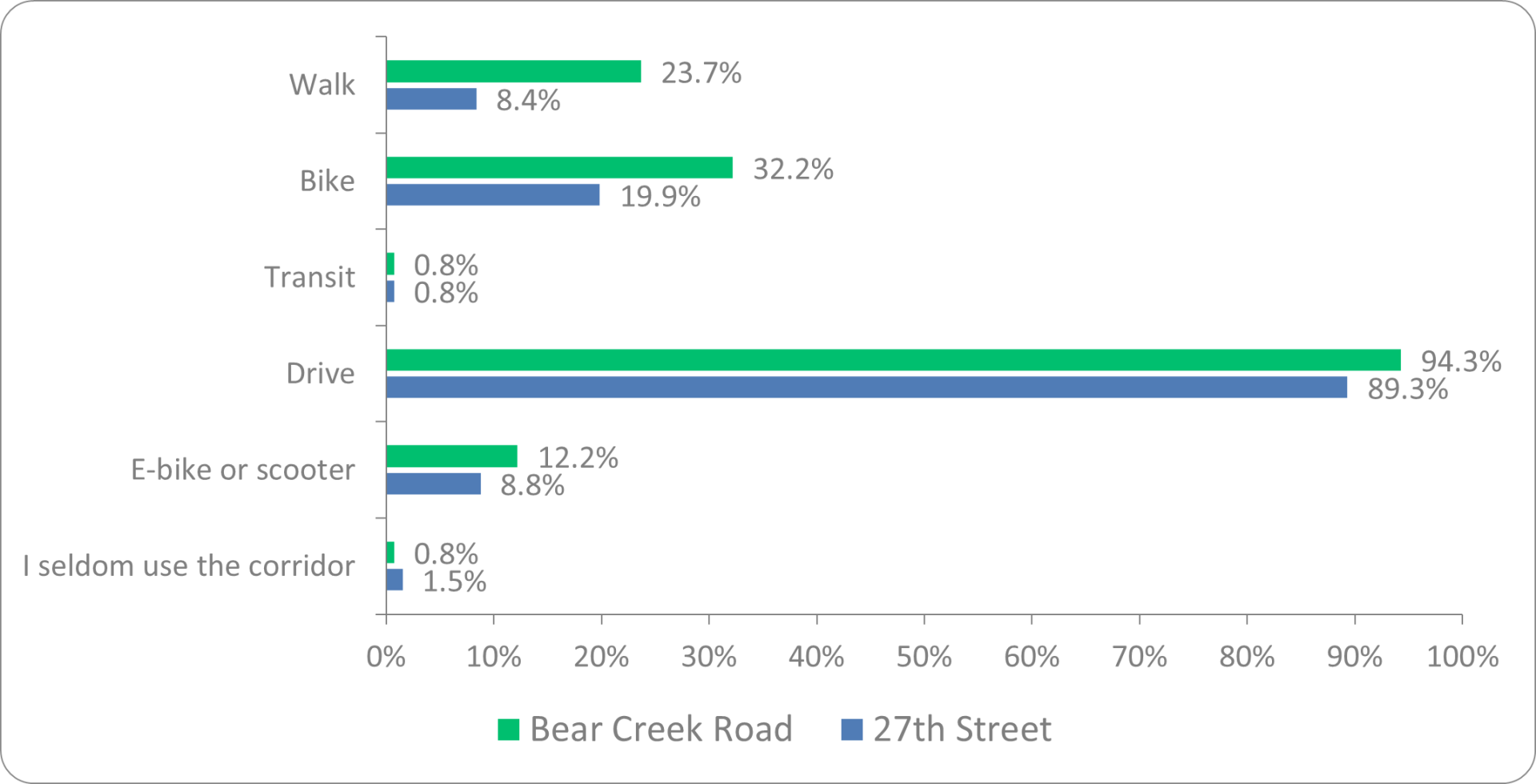
What mode of travel do survey participants use on Bear Creek Road and 27th Street?
Survey participants travel on both routes using a variety of modes. Overwhelmingly, driving was the most common mode used, with 94.3 percent of respondents reporting driving on Bear Creek Road and 89.3 percent driving on 27th Street. Biking on Bear Creek Road was also cited as a popular travel mode used by 32.2 percent of respondents. Biking was less common on 27th Street but still significant, as it was cited by 19.9 percent of respondents.
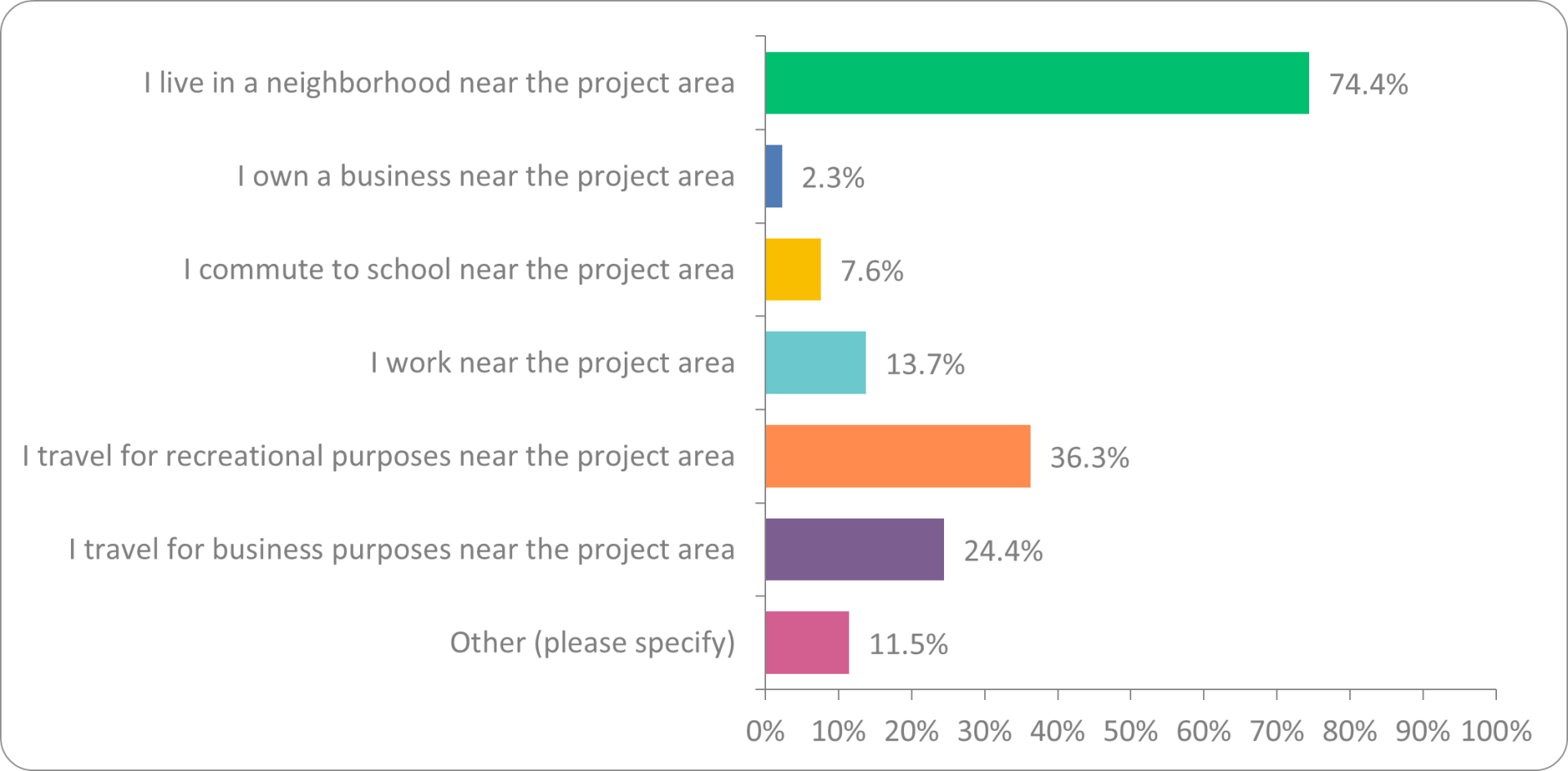
What best describes survey participants?
77.4 percent of survey participants reported traveling in the project area because they live near it. The second most cited reason is traveling to recreational destinations; business and employment-related uses were the third and fourth most cited reasons.
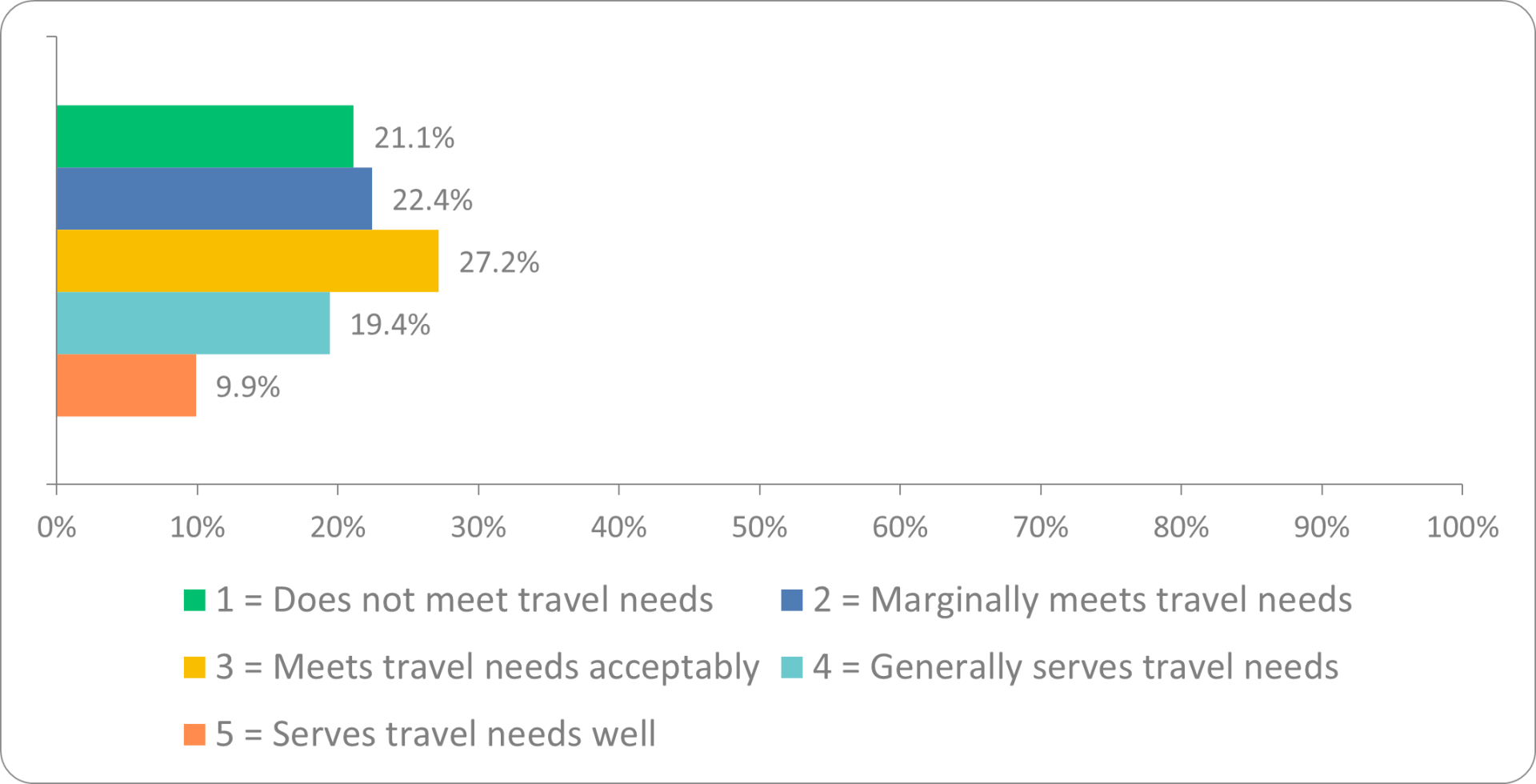
How well do Bear Creek Road and 27th Street serve the community’s travel needs today?
We asked survey participants to rate their assessment of how well the roads serve their current travel needs on a 1 – 5 scale, with 1 indicating “does not meet travel needs” and 5 indicating “serves travel needs well.”
43.5 percent rated the streets with a 1 or a 2—the lowest ratings. 29.3 percent rated the streets as a 4 or 5—the highest possible scores. The remaining 27.2 percent gave the streets a 3 or average rating. Some specific concerns about the project area were the absence of protected paths, vehicle speeds, and problematic intersections, including Bear Creek Road and Pettigrew Road.
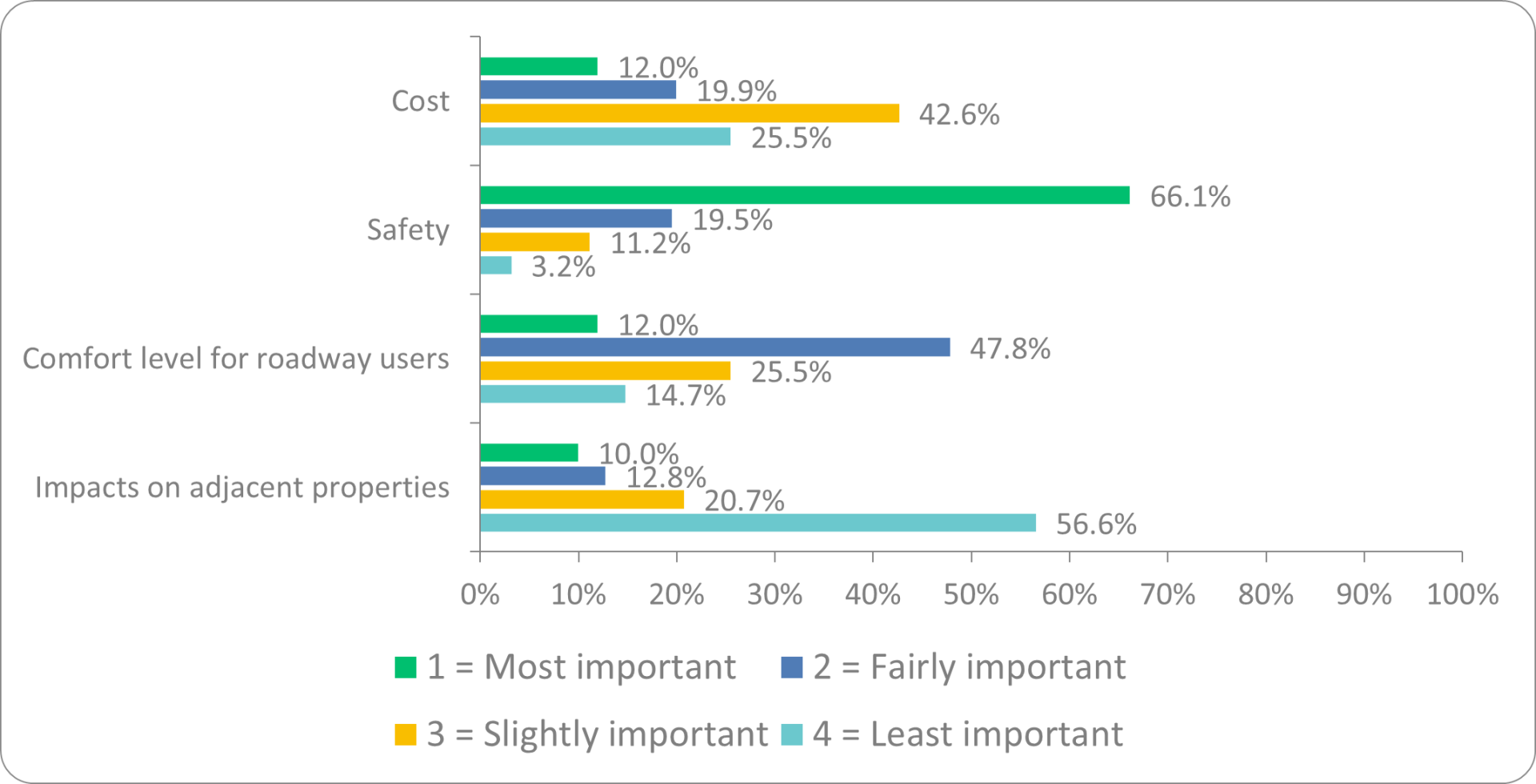
Survey participant’s ranking of considerations of the corridor from least impactful to most impactful.
66.1 percent of participants prioritized safety as the most important consideration, the second most important consideration cited by 47.8 percent of respondents was comfort level for roadway users. The third most important consideration was cost, with the least important being the impact on adjacent properties.
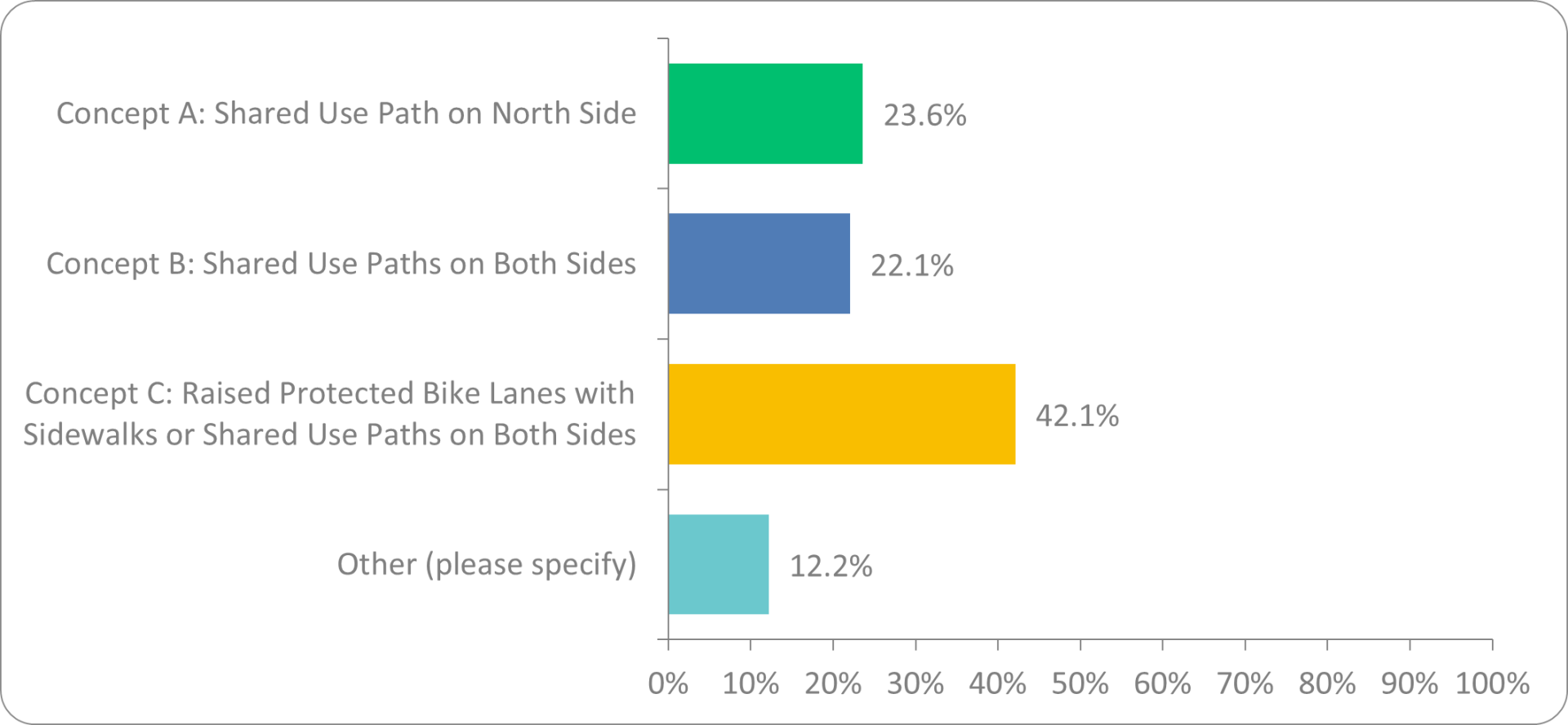
Which concept most appealed to the survey participants on Bear Creek Road between Cessna Drive and the East Urban Growth Boundary:
- Concept A – Shared Use Path on North Side,
- Concept B – Shared Use Paths on Both Sides, or
- Concept C – Raised Protected Bike Lanes with Sidewalks or Shared Use Paths on Both Sides?
42.1 percent favored Concept C, 23.6 percent preferred Concept A, and 22.1 percent favored Concept B. 12.2 percent selected ‘other’ and specified alternatives.
Some reoccurring themes shared by participants included:
- The need to allocate funds for enhanced crosswalks.
- The importance of keeping bike lanes separated from vehicle travel lanes.
- Balancing the needs of bicyclists, pedestrians, and drivers.
- Some were opposed to the project and favored preserving the existing infrastructure or addressing other priorities.
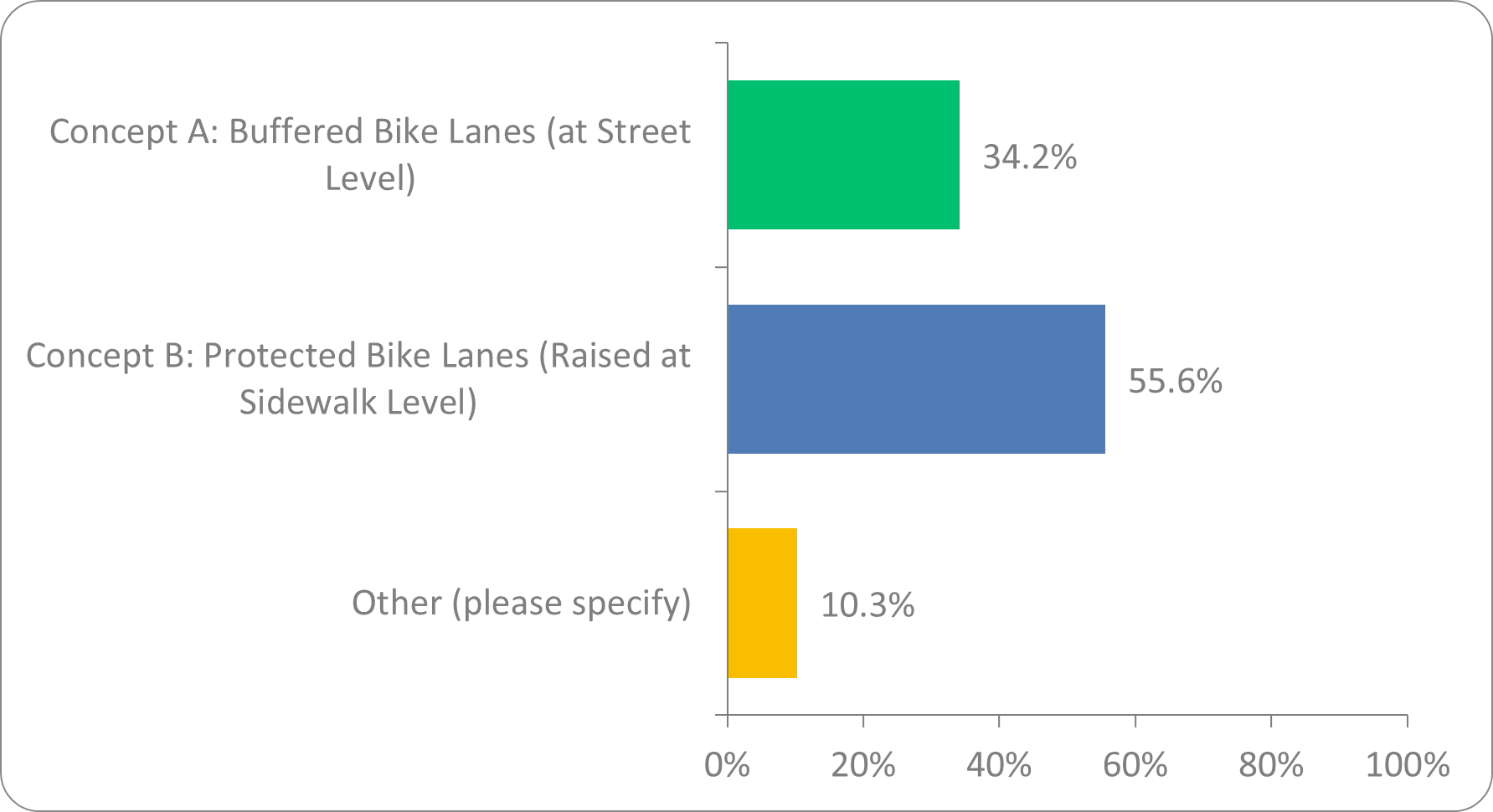
Stretch Goal #2: Which concept most appealed to survey participants on 27th Street between U.S. 20 and Bear Creek Road:
- Concept A – Buffered Bike Lanes (at Street Level), or
- Concept B – Protected Bike Lanes (Raised at Sidewalk Level)?
55.6 percent of respondents favored Concept B, and 34.2 percent preferred Concept A. 10.3 percent selected ‘other’ and specified alternatives.
Some reoccurring themes shared by participants included:
- Concerns about the adequacy of buffered bike lanes with some suggesting placing a buffer between bike lanes and cars.
- The need to carefully evaluate the intersection with U.S. 20 and consider seeking ODOT funding.
- Opinions varied on the need for bike paths—some felt strongly about including them, while others thought they were not a priority compared to other needs.
- There was a reoccurring emphasis on cost considerations, safety, and a need for the city to balance the needs of drivers and non-drivers while also planning for the city’s continued growth.
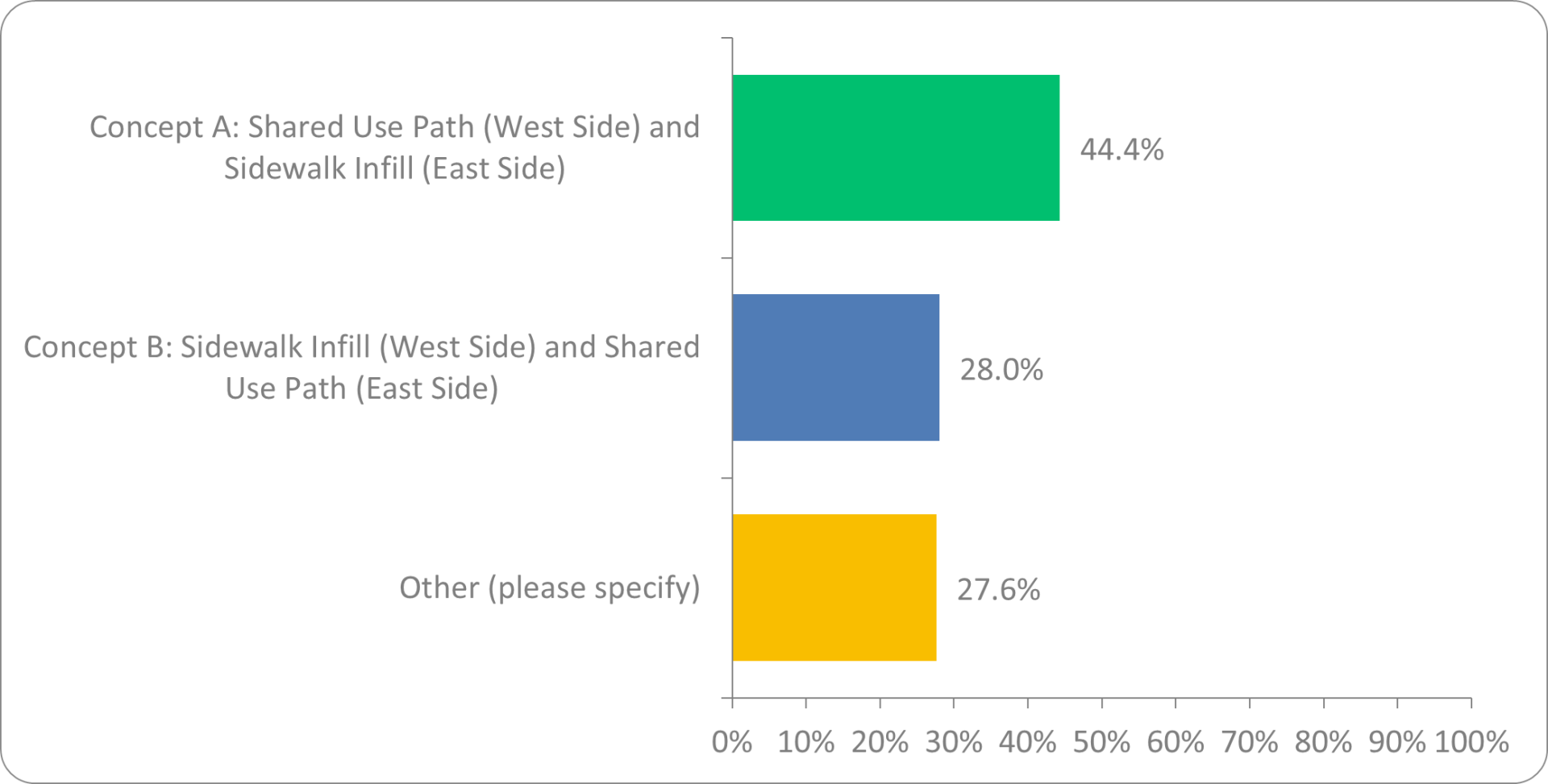
Which concept most appealed to survey participants on 27th Street between Bear Creek Road and Reed Market Road:
- Concept A – Shared Use Path (West Side) and Stretch Goal #1: Sidewalk Infill (East Side), or
- Concept B – Shared Use Path (East Side) and Stretch Goal #1: Sidewalk Infill (West Side)?
44.4 percent favored Concept A, and 28 percent preferred Concept B. 27.6 percent selected ‘other’ and specified alternatives.
Common themes included:
- A desire to maintain or extend existing bike lanes and sidewalks on both sides to emphasize the importance of pedestrian and bicyclist safety.
- Some advocated adding a center turn lane to alleviate traffic congestion and enhance safety at intersections.
- Raised and protected bike lanes received substantial support.
- Ensuring the changes accommodate existing and projected future demands resulting from Bend’s continued population growth.
Stretch Goal #3: Where do community members want to see more comfortable pedestrian crossings along Bear Creek Road / 27th Street?
Several locations were frequently cited by respondents, including:
- Bear Creek Road – 25.4 percent.
- 27th Street – 21.4 percent.
- Dean Swift Road – 13.9 percent.
- Cessna Road – 11 percent.
- Purcell Road – 7 percent.
In additional to the commonly cited locations above, there were some overarching themes, including the desire for crossings with enhanced safety features at school bus stops, intersections with high pedestrian activity, and areas with new housing developments. Some often-cited safety enhancements people would like to see are flashing lights, designated pedestrian refuges, and raised mid-block crossings. Overall, the comments emphasized the importance of improving pedestrian infrastructure to enhance safety and improve local connectivity.
Roadway features that community members feel are most important.
Community members were asked to rank specific roadway features presented in the various concepts from 1 to 6, with 1 indicating the most important and 6 indicating the least important.
Of the 243 responses received, the roadway features ranked in order of importance were:
- Shared use path for bicyclists and pedestrians on both sides.
- Filling sidewalk gaps.
- Protected bike lanes.
- Shared use path for bicyclists and pedestrians on one side.
- Raised crossings for bicyclists and pedestrians on side streets.
- On-street bike lanes.
What adjustments (if any) would community members make to any of the concepts?
Most community members expressed a desire for safer roads that effectively accommodate motorists and non-motorists. They believe that keeping roads at 11-feet wide helps control speeding, and some would like roundabouts to be safer for bicyclists. Many people would like a consistent road design with bike lanes and sidewalks from U.S. 20 to Reed Market Road to make it easier and safer for people who do not drive. Some suggestions included adding bike lanes on both sides of 27th Street, and addressing some specific neighborhood issues, such as reducing speeding by installing cameras, and improving local intersections to improve safety.
View All News