Efficient Irrigation: Maintenance Tips
To conserve and protect drinking water, the City of Bend offers tips to stay on top of water use at homes and businesses. Learn about your water consumption patterns, get maintenance tips that keep your irrigation operating efficiently, and access valuable resources to care for your landscape.

Regularly monitor your irrigation system for any issues and address them promptly to prevent water waste. Basic maintenance practices such as addressing leaks and breaks, regulating sprinkler pressure and ensuring sprinklers are properly adjusted is crucial to avoid overwatering or dry spots. Additionally, matching sprinkler types and nozzles helps ensure consistent water coverage and prevents inefficiencies.
By following these guidelines, community members can conserve water.
Fixing Leaks and Breaks in Irrigation Systems
Taking care of leaks and breaks in irrigation systems is crucial for saving water and protecting drinking water. The City of Bend provides tools like the WaterSmart Portal to help homeowners find leaks and manage water use. To prevent water waste and support water conservation efforts key steps include: isolating irrigation systems, fixing broken sprinkler heads quickly and moving sprinklers if needed.
Leaks in an Irrigation Line
To turn off your irrigation system if you have leaks:
- Do not try to turn off the water at your City of Bend meter box.
- Use the isolation valve to stop the flow to the backflow prevention device.
- Turn off the irrigation at the backflow prevention device itself.
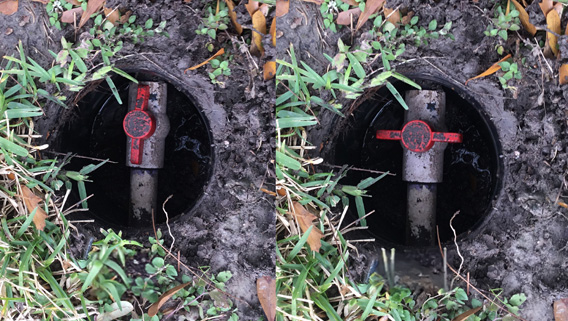
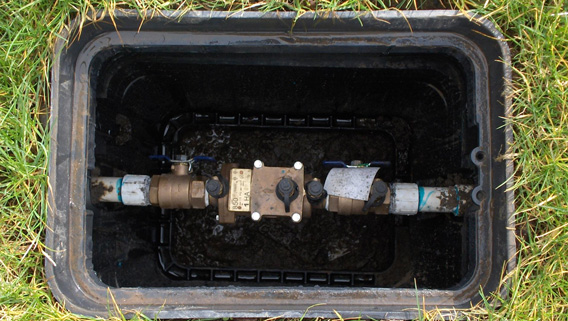
Protect Your Water
Irrigation systems need a backflow prevention device to stop pollutants from contaminating drinking water.
Leaks at the Sprinkler
Sprinkler heads can get damaged by maintenance equipment, freezing or accidental impacts. If water escapes from the top of the sprinkler when running, it might be due to a cracked sprinkler body or faulty wiper seal, which should be replaced. These leaks can lead to significant water usage, especially during peak season.
Water that consistently leaks from the sprinkler when the zone is turned off, or standing water around your sprinkler heads, are typically signs of a stuck valve. Even small amounts of debris like soil particles can prevent a valve from fully closing.
If you need help, you can call a Water Sense certified contractor for repairs.
The City of Bend’s WaterSmart software can help alert you if you have ongoing water usage that could indicate a leak that needs to be fixed.

Repairing a Broken Sprinkler Line
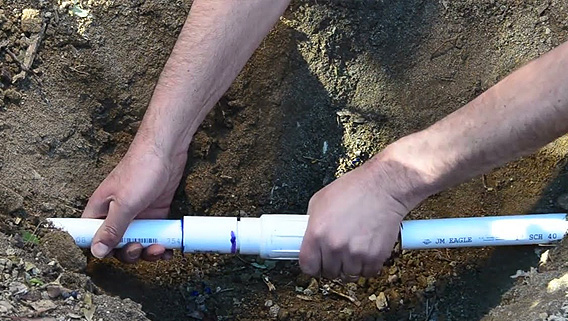
A “slip fix” or telescope repair coupler is useful for fixing lateral lines on a broken sprinkler line.
Moving a Sprinkler
To move or add sprinklers:
- Dig around the sprinkler and fully expose the pipe and sprinkler connection.
- Add enough swing pipe to reach the new location. Limit swing pipe, a durable but flexible type of pipe, to 2 feet. To move a sprinkler longer distances, PVC pipe should be used.
- Attach the sprinkler to the swing pipe using a marlex, a plastic threaded elbow, and barbed fitting.
- Place the top of sprinkler at grade and bury it.

Sprinkler Performance
The City of Bend is dedicated to reducing water waste through better irrigation practices, helping conserve water, maintaining a healthy watershed, and creating safe streets and sidewalks.
Sprinkler Pressure
High sprinkler pressure can cause misting and runoff, wasting water. Ideal operating pressures for sprinkler types are:
- Fixed Spray: 20 – 30 (pounds per square inch) psi
- Rotor: 30 – 60 psi
- Drip: 20 – 40 psi
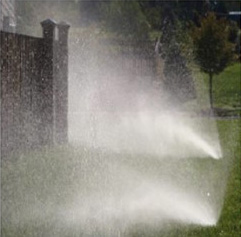
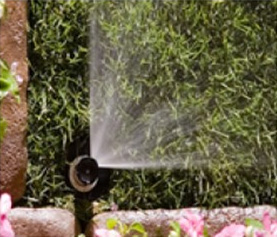
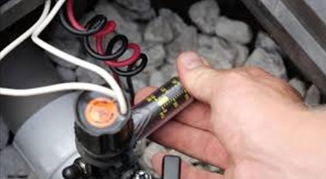
Pressure-regulating sprinkler bodies and dials can help maintain even water distribution throughout your irrigation system.
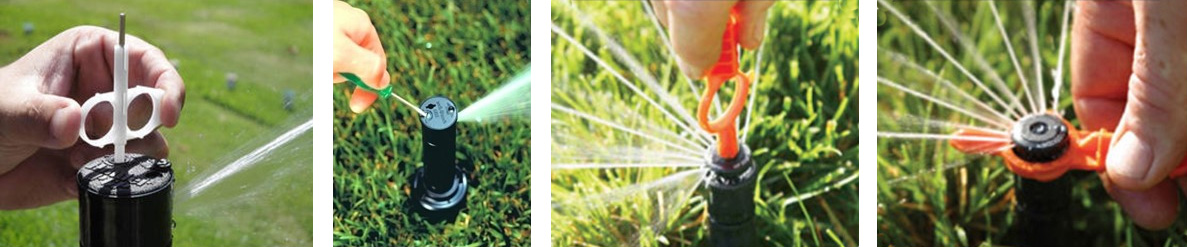
Sprinkler Adjustment
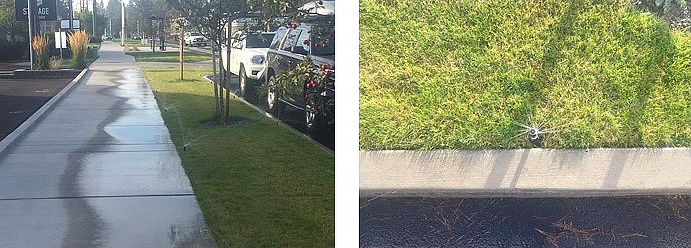
Ensure sprinklers are properly aligned to water only planting areas, avoiding waste on sidewalks or driveways.
Sprinkler Uniformity
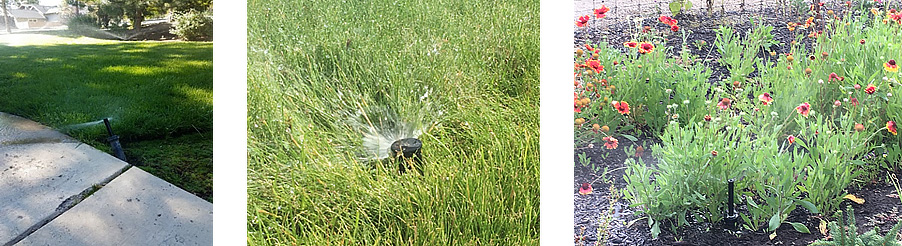
Sprinkler uniformity ensures even water distribution across your landscape. Poor uniformity leads to wasted water and higher usage. Tilted, low or blocked sprinklers can cause dry spots and longer run-times. Mixing sprinkler types can lower uniformity and cause excessively wet or dry spots.
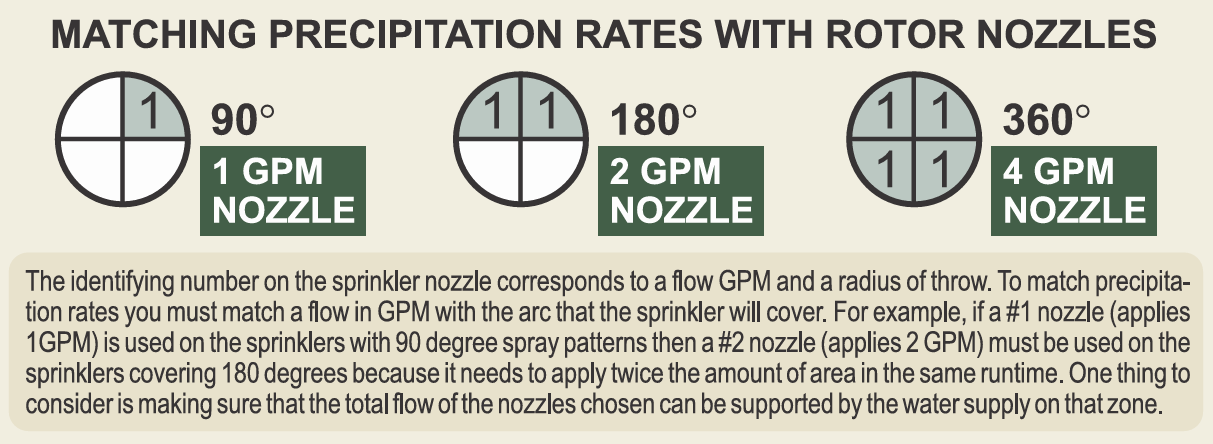
Properly Match Precipitation Rates with Rotor Nozzles
Each rotor needs a different nozzle depending on the sprinkler pattern to apply water evenly.
The Right Plant in the Right Place
Watering a lawn in narrow spaces like street strip planters can lead to overspray and runoff, wasting water and potentially affecting underground drinking water supplies. Converting street strip planters to a WaterWise Streetscape can help mitigate these issues.
Backflow Requirements
Backflow assemblies must be tested at the time of installation, annually after installation, after repairs and relocating. Testing in Oregon must be completed by an Oregon Health Authority certified backflow tester. For more information and to access a list of active backflow testers in our area: