Water Curtailment Stages
The City of Bend has a three-stage plan to help manage water use during times when water is in short supply. This might happen during a long drought or if something unexpected affects the water system, like a fire, flood, earthquake, or power outage.
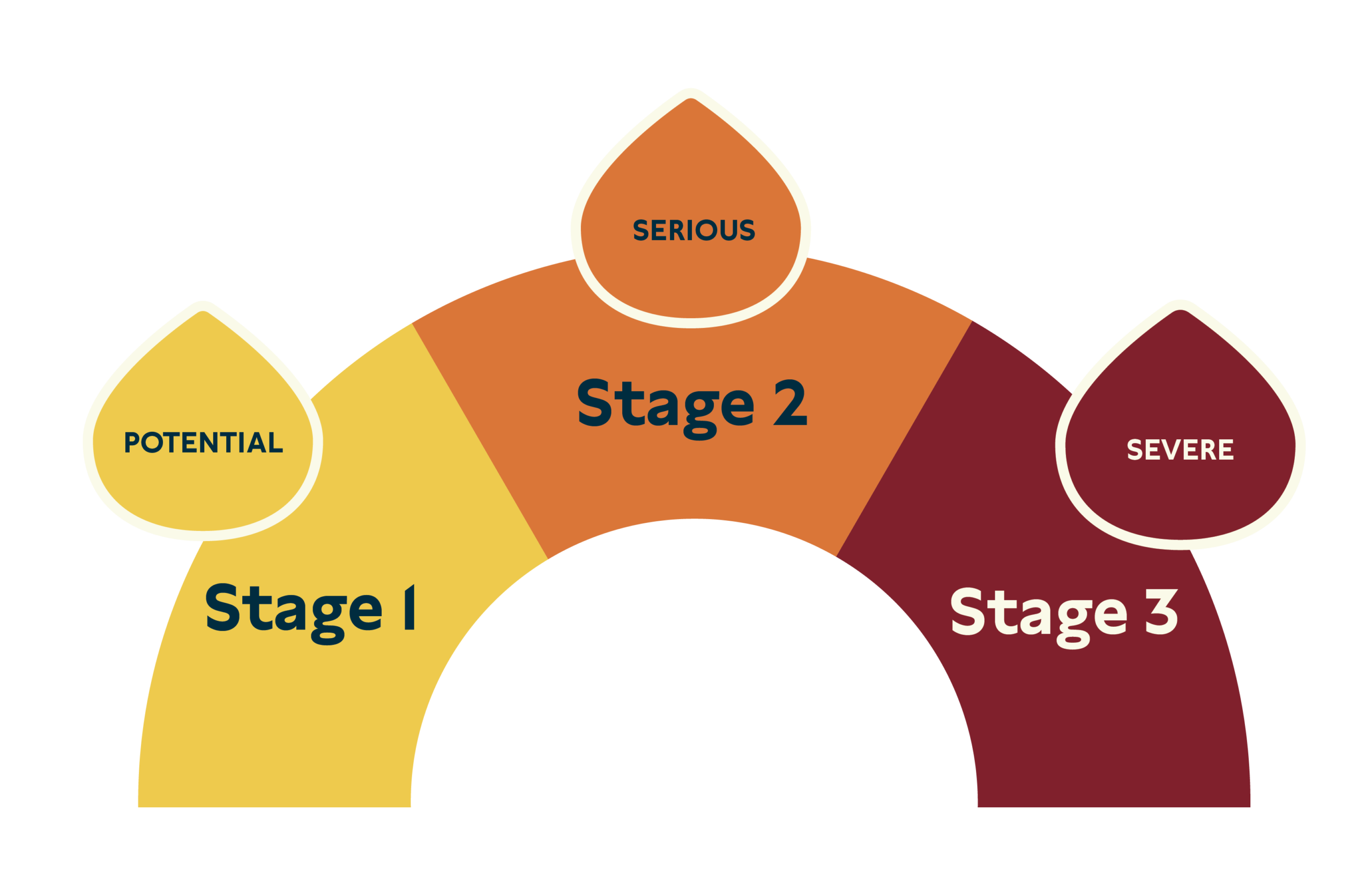
The three curtailment stages are designed to lower water use when needed, while still making sure there’s enough clean water for drinking, hygiene, and keeping the city’s water pressure strong enough for everyday use and fire protection.
The three stages—Potential, Serious, and Severe—can be put into place step by step or all at once, depending on how urgent the situation is. They are separate from the City’s seasonal watering advisories, which remind people about outdoor watering rules and incentivize water conservation during certain times of the year.
By working together and following these stages when needed, we can help protect our community’s water supply and stay prepared for emergencies.
Stage 1: Potential Water Shortage
What are some things that might trigger it?
- Minor damage to the water system.
- Mechanical or electrical issues at water sources.
- Long periods of high-water use.
- Delays in getting treatment chemicals like chlorine.
What happens?
- The City reminds everyone to follow seasonal watering regulations and asks for voluntary water use reductions.
- Certain neighborhoods or customer groups may be asked to cut back.
- People should reduce or stop watering lawns and gardens.
- No filling pools or ponds, running decorative fountains, or washing sidewalks and driveways.
Is it enforced?
- No, this stage relies on voluntary cooperation.
Stage 2: Serious Water Shortage
What are some things that might trigger it?
- Major damage to water sources or pipes.
- A credible threat to water infrastructure.
- Fire danger near the watershed.
What happens?
- The City prohibits all nonessential water use.
- Restrictions may apply to specific areas or groups.
- No outdoor watering, pool or pond filling, or washing of outdoor surfaces.
Is it enforced?
- Yes, the City can issue penalties through its Code Enforcement team.
Stage 3: Severe Water Shortage
What are some things that might trigger it?
- Major damage to the water system.
- Contaminated water sources.
- Fire in the watershed.
- High summer demand making things worse.
What happens?
- Only water needed for drinking and sanitation is allowed.
- All outdoor water use is banned, including irrigation, pools, fountains, and surface washing.
Is it enforced?
- Yes. Violations can result in fines of up to $400 per day.
For more details, check out Section 4 (starting on page 61) of the Water Management and Conservation Plan.
Frequently Asked Questions
The City will share updates in several ways, including social media; local TV, radio, and newspapers; roadside signs and sandwich boards; the City’s website.
To stay in the loop, sign up for email updates.
Not usually. The City’s current watering rules and conservation efforts have been enough to manage water use during recent droughts. Curtailment would be put in place if there were a water supply issue. If the Governor declares a drought in our area, the City of Bend will look at how it might affect our water system. Based on the situation, the City will decide whether to ask for voluntary water savings or put mandatory rules in place. Even if no curtailment is needed, the City will still encourage everyone to use water wisely through seasonal reminders and conservation programs.
Learn more about drought at www.bendoregon.gov/drought.
No, it’s rare. In the past 10 years, Bend hasn’t had a water shortage serious enough to require curtailment. We’ve had a few short-term issues—like lightning strikes, equipment problems, or murky water from storms—but the City has always been able to keep water flowing by switching between our two water sources. Bend is lucky to have surface water from Bridge Creek and groundwater from deep wells in the Deschutes Aquifer. These two sources help us meet demand, even during peak times.
Even though we expect to keep providing safe drinking water and water for basic needs, it’s smart to be prepared. The Oregon Health Authority recommends storing one gallon of water per person per day for emergencies.
You can also check out the City’s conservation tips to learn how to save water every day.
You can read the full Water Management and Conservation Plan (2021 update). Details about curtailment are in Section 4, starting on page 61.