Wastewater
Efficiently managing wastewater is essential for the City of Bend. By treating it safely, we can make our city a better place to live and help ensure a sustainable future for everyone.
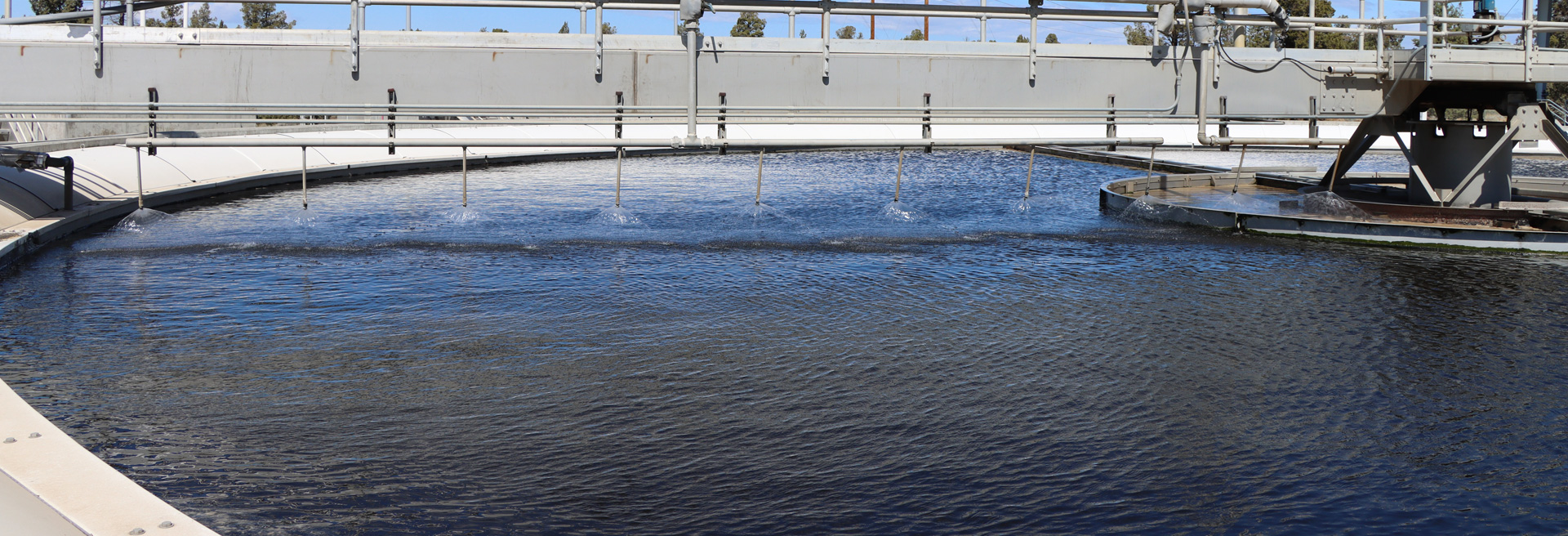
The resources below cover various aspects of wastewater management, including the Industrial Pretreatment Program, wastewater treatment processes, the importance of proper disposal of wipes, and a virtual tour of the Water Reclamation Facility. Let’s explore how these efforts contribute to a cleaner, safer and more sustainable Bend.
Wastewater Treatment
What is Wastewater?
Ever wondered where the water goes after it leaves your sink or shower? About half of the water delivered to homes and businesses ends up going down the drain. Clean water pipes go into buildings and wastewater pipes carry used water out. This used water, mostly from kitchens and bathrooms, is called wastewater. Think about what goes down the drain where you live!
Keeping Us Safe
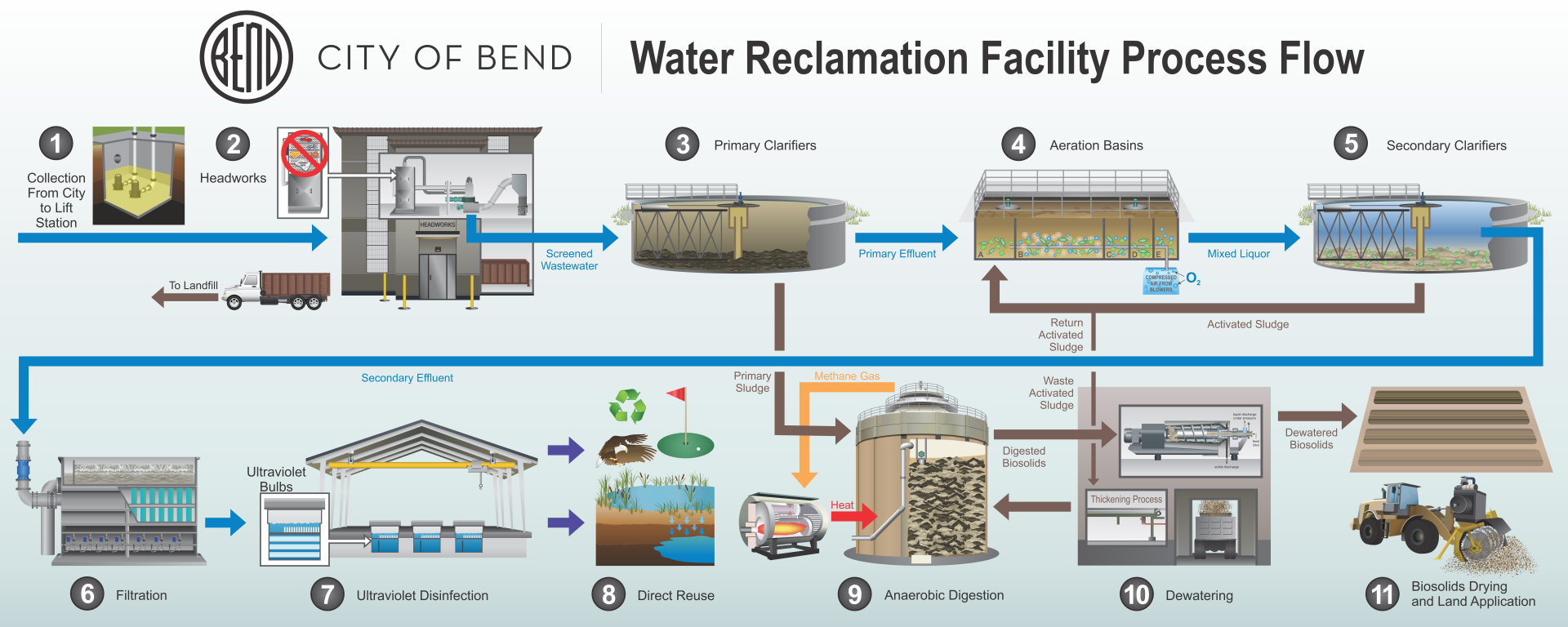
Wastewater collection and treatment processes are designed to keep us safe from harmful germs that could make us sick. Once the wastewater leaves your home’s pipes, it travels through a complex network of underground pipes and pumps, known as the wastewater collection (sewer) system, to the Water Reclamation Facility. Here, the dirty water goes through a series of steps to filter, clean, disinfect, test, and finally return the cleaned water safely back into the water cycle.
The Good Bug Factory
A wastewater treatment plant is like a good bug factory! The treatment process includes both physical and biological methods. First, solids are physically removed through sedimentation, where gravity helps separate them. Then, biological treatment uses microorganisms to effectively consume solids and dissolved organic matter.
Biosolids: Helping Our Farms
In aeration basins, microorganisms eat and digest waste material, turning it into carbon dioxide, water and energy. These hardworking microorganisms also break down solid organic matter, which is then dried and spread on crops in Central Oregon. After treatment, these biosolids are removed from the system and used to improve farmland. In Bend, our biosolids are “Class A,” meaning they can be used by the public.
Being a good neighbor
Are you a reclamation facility neighbor and curious how operations impact surrounding lands?
Visit this page to comment and sign up for updates.
Pretreatment and Source Control Program
The Pretreatment and Source Control Program is essential for safeguarding both public health and the environment. By ensuring wastewater systems remain safe and efficient, it also helps local businesses thrive and supports economic growth. This program oversees compliance with federal and state environmental regulations for industries such as metal finishing and pharmaceutical manufacturing by issuing permits for wastewater discharge.
Industrial Pretreatment Program
The City of Bend’s Industrial Pretreatment Program helps prevent unnecessary or excessive industrial waste from entering the wastewater treatment facility. It also ensures that industries such as metal finishing and pharmaceutical manufacturing comply with federal and state environmental regulations by issuing wastewater discharge permits.
How You Can Help
Wipes Clog Pipes
Disposable wipes clog pipes. Whether labeled “flushable” or not, they should go in the trash. Wipes don’t break down like toilet paper and can cause clogs, leading to sewer backups into homes and streets. Wipes can travel through pipes without dissolving, sticking to grease and debris to form blockages in pipes and pumps.
Flooding and sewer backups are often caused by debris like wipes, paper towels, q-tips, cotton swabs, hair, and dental floss. Only flush Poop, Pee, and toilet Paper.
Check out this video by our 2019 One Water Student Video contest winners Cedar Vickery and Marvin Walder from Summit High School:
Fats, Oils and Grease (FOG)
Fats, oils and grease also clog sewer pipes. The City’s Fats, Oil and Grease (FOG) program works with local restaurants, coffee shops and other facilities and industries to control the amount of grease that goes into the sewer system. The program monitors and inspects grease collection devices, such as grease interceptors or grease traps, that separates fats, oils and grease from wastewater before it enters the sewer system preventing sewer backups and costly equipment and infrastructure failures.
Location
Wastewater Treatment Plant
McGrath Rd., Bend, OR 97701