Bend Redmond Model
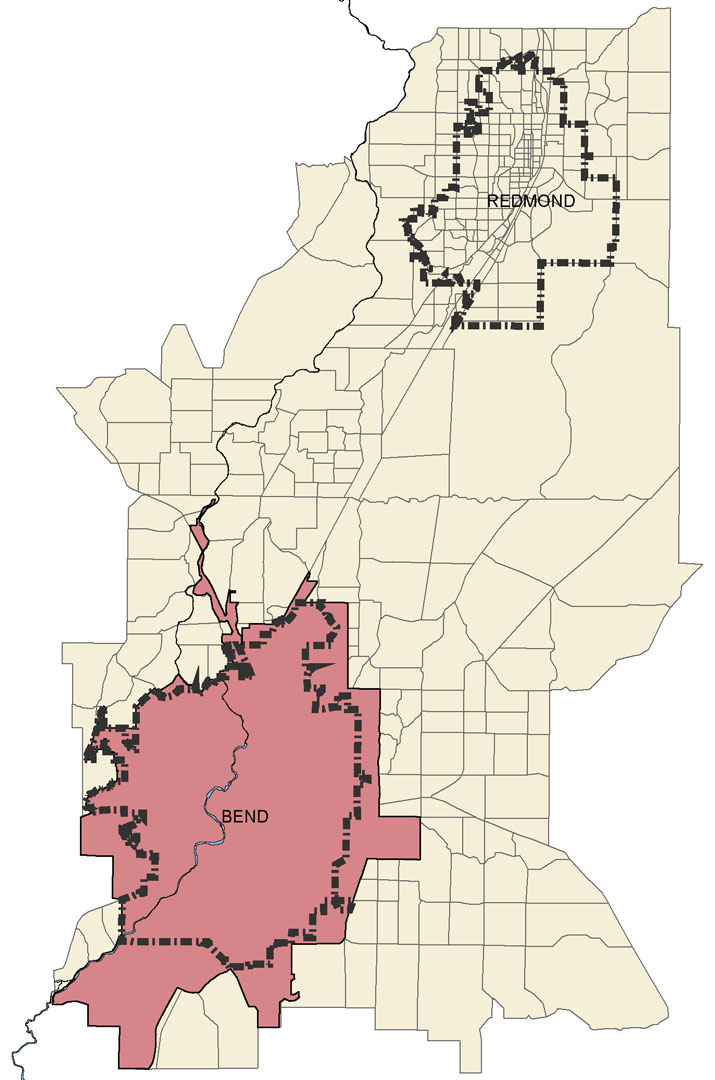
The Bend Redmond Model (BRM) is an analysis tool used to forecast travel patterns on the transportation system within the BRM area.
Federal regulations require transportation project to be analyzed using models and tools. Travel demand models, which use data to forecast travel patterns and their impact on the transportation system, are one of the tools used.
Planners and policy makers use travel demand models to analyze potential public policy changes, project investments, and other strategies based on travel behavior patterns and how they are expected to continue or change over time.
BRM
The BRM is a four-step model that is regularly reviewed and updated to meet or exceed national standards. The model forecasts how travel and transportation systems in the BRM area are likely to respond to changes in:
- Land use
- Population
- Employment
- New transportation facilities
- Transit service
- Public policy
Forecasting is based on analysis of travel data, such as:
- Trip frequency, origins, and destinations
- Types or modes of transportation (e.g., driving, walking, bicycling, public transit)
- Travel by time of day
For more information, refer to the following resources:
Model Requests/Questions
Consultants working on projects within the BRM area may request model runs and output from ODOT. For more information, visit ODOT’s Planning & Technical Guidance webpage.
If you have questions about the BRM or the data or procedures used in it, please contact Tyler Deke at tdeke@bendoregon.gov or (541) 693-2113.
Activity Based Models (ABMs)
ODOT and Oregon MPOs are starting to transition from four-step travel demand models to ABMs, which provide more complete information about potential benefits and impacts of transportation investments. This in turn allows for more detailed investigations of issues under consideration by transportation decision makers.
Transition efforts are being coordinated through the Oregon Statewide Modeling Collaborative (OMSC), which is a voluntary collaborative of state, regional, and local governmental agencies. The OMSC works to ensure Oregon has the right data, tools, skills, and expertise needed to answer important questions about our multi-modal transportation systems and their relation to Oregon’s economy, environment, and livability.
To learn more, refer to the following resources: