Planning for People Streets
This study will help the City plan for vibrant, people-centered streets in Bend.
What is the low-car district study?
The study helped the City define what a “People Street” (or “low-car district”) could look like in Bend. Best practices for People Streets and low-car districts were evaluated to understand possible street types, design considerations, as well as supportive policies and programs to allow for more vibrant, people-centered streets in Bend citywide.
As part of this effort, a case study that evaluated People Street and low-car district considerations for a connected route between Juniper Park and Drake Park utilizing the planned Hawthorne Avenue Pedestrian and Bicycle Overcrossing was completed.
Why did we complete this study?
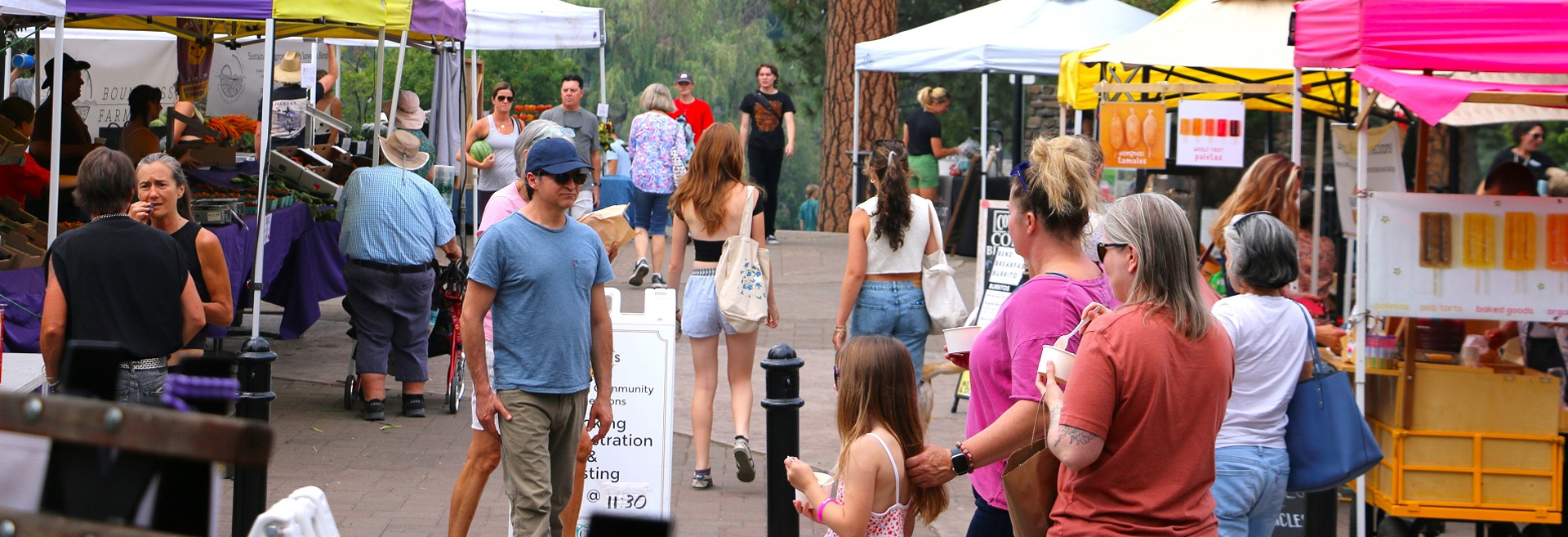
Bend has great people-centered streets, like Brooks Street Alley, and is expecting more in the future. This study will help the City to plan for where and how we could have more of these kinds of vibrant People Streets in Bend.
This study will inform the City’s next update to the Transportation System Plan to meet state land use and transportation planning requirements.
The State of Oregon requires cities with over 100,000 people in population, like Bend, to allow for low-car districts the next time those cities update their Transportation System Plan. The City received a grant to better prepare for this new rule, Oregon Administrative Rule OAR 660-012-0330(7), and will begin updating its Transportation System Plan in 2026.
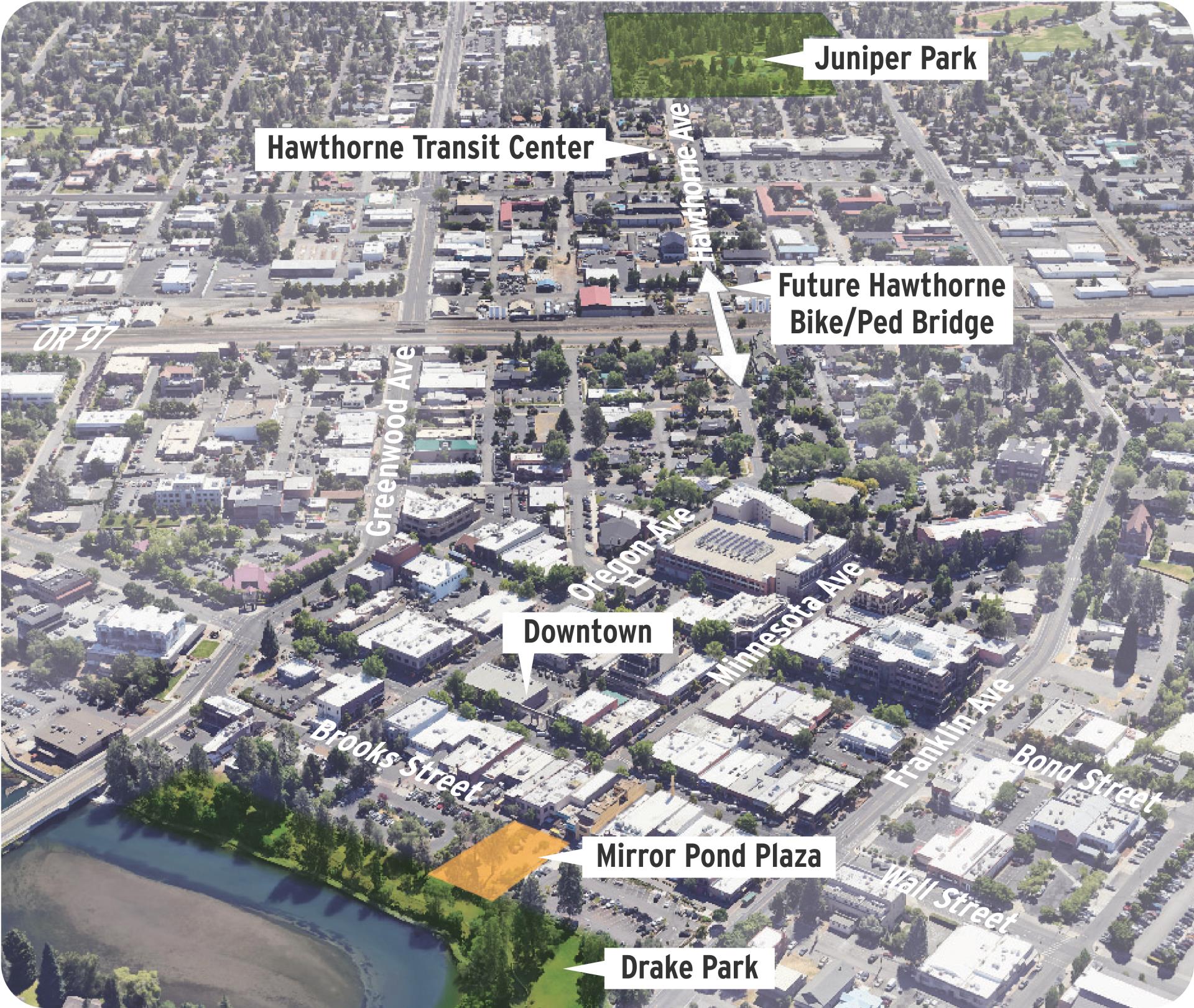
This study was funded through a grant provided by the Department of Land Conservation and Development and took place between Summer 2024 and Summer 2025. Policies for low-car districts and additional People Streets will be adopted only after the City updates the Transportation System Plan, beginning in 2026. This study will provide valuable insights for that update.
Where are People Streets and low-car districts being considered in Bend?
Bend already has well-loved People Streets: Brooks Street Alley, Tin Pan Alley and more. State rules require that Bend allow for low-car streets (People Streets) in all mixed-use and residential areas in the future. This study helped inform where and how these streets will be allowed and explored the potential benefits of People Streets and low-car districts as part of Bend’s future Climate Friendly Areas.
How were all users being considered?
All users, including residents, businesses, employees, emergency service providers, utility service providers and individuals with low mobility were considered throughout the study. Public access requirements such as pick-up and drop-off, maintenance and delivery were also considered.
The City prioritized equity in both public engagement and policy considerations for this study. This helped to ensure that future People Streets and low-car districts take into consideration the needs of all users, especially those who have been historically underserved and under-engaged.