Stormwater Walking Tour: Newport Avenue
Learn about how Newport Avenue has been designed to keep the river clean.
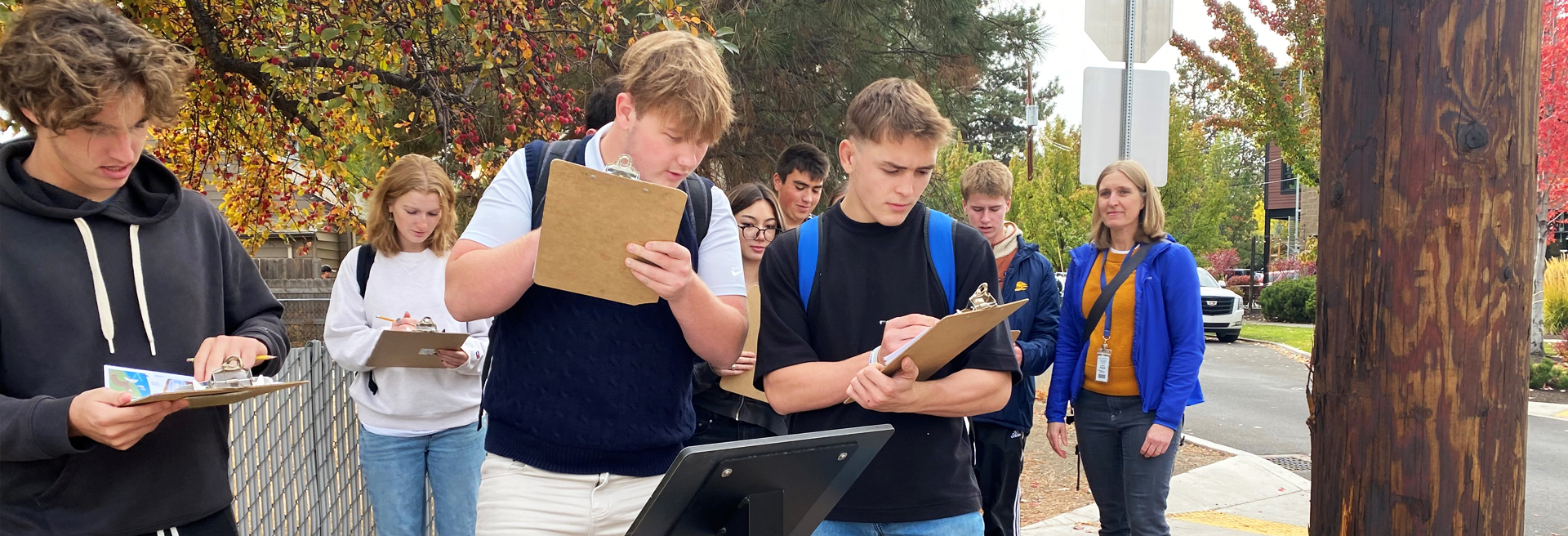
Take a walking tour along Newport Avenue to learn about the stormwater tools the City of Bend has implemented to help protect the Deschutes River.
Distance
1,700 steps
(A little less than a mile)
Location
Need help finding the interpretive sign locations? View the walking tour on Google Maps.
Tour Stops
Directions: Head to Pageant Park and look for the stormwater map on the left side of the park as you’re looking towards the river. [Google Maps Pin]
Student Challenge: See if you can pick up the most pieces of trash from Harmon Park to Pageant Park! Once you get to the start of the tour, discuss why trash on the ground could have an impact on stormwater and dispose of your trash in the can near the sign.
Trivia Term: What is the term on the walking tour map that means any rainwater or melting snow or ice that flows over the surface of the land to nearby sewers, rivers, lakes, or streams? Write it down below! ____ ____ ____ ____ ____ ____ ____ ____ ____ ____.
Directions: Walk one block forward on Nashville Avenue to learn about the utility history here in Bend. This sign is long, so there’s no need to read it in its entirety! [Google Maps Pin]
Student Challenge: As you’re looking at the sign, can you figure out what the original water pipes in Bend were made out of? Why would the health of our rivers and streams be important for these pipe materials?
Trivia Term: What is the term on the walking tour sign that is the name of our municipality? (Hint: The city of….) ____ ____ ____ ____.
Directions: Keep walking forward to head to the corner of Newport Avenue and Nashville Avenue to explore some planters. [Google Maps Pin]
Student Challenge: As you are walking to your next stop, count how many planters near the road or garden boxes you see around you. Once you get to your next stop, find out why these are so important to protecting our rivers from stormwater!
Trivia Term: Stormwater _______ can pick up pollutants like vehicle waste and trash. ____ ____ ____ ____ ____ ____.
Directions: Cross Newport Avenue and 9th Street and continue onwards towards the corner of 10th Street to find some catch basins to explore. [Google Maps Pin]
Student Challenge: As you are walking to your next stop, count how many catch basins you see near the sides of the roads. Once you get to your next stop, answer why these are so important to protecting our rivers from stormwater!
Trivia Term: ________ ________ “catch” excess water from hard surfaces like streets, sidewalks and rooftops. ____ ____ ____ ____ ____ /____ ____ ____ ____ ____ ____.
Directions: Continue up Newport Avenue towards the corner of 11th Street. [Google Maps Pin]
Student Challenge: As you are walking to your next stop, count how many cars pass by you. Once you get to your next stop, discuss how cars can have an impact on stormwater and what could help improve this stormwater quality before it gets to the river.
Trivia Term: Stormwater ______vaults use cartridges that absorb and retain the most challenging pollutants from stormwater. ____ ____ ____ ____ ____ ____.
Directions: Continue up Newport Avenue towards the corner of 12th Street. [Google Maps Pin]
Student Challenge: As you are walking to your next stop, count all the pedestrians and bicycles that you pass. Once you get to your location, discuss how a roundabout design like this can not only help keep people in the area safe but also reduce stormwater impacts by walking, rolling, or biking.
Trivia Term: What is the street on the walking tour sign that we are currently on? (Hint: Newport is the first part!) ___ ___ ___ ___ ___ ___.
Directions: Cross the roundabout at Newport Avenue and 12th Street. Continue down Newport Avenue until you reach the corner of 11th Street. [Google Maps Pin]
Student Challenge: As you are walking to your next stop, count how many manholes you see. Once you get to your next stop, find out what’s under these manholes and how they filter out pollutants and surface water!
Trivia Term: _________ allow the stormwater to soak into the ground. ____ ____ ____ ____ ____ ____
Directions: Continue down Newport Avenue until you meet the far corner of Union Street. [Google Maps Pin]
Student Challenge: As you are walking to your next stop, count how many plants you see right next to the road in the planters. Once you get to your next stop, find out what type of plants these are and how they play a role in filtering pollutants and capturing rainwater!
Trivia Term: Native plants can have long root systems that help us by capturing rainwater, reducing local flooding, and preventing ________. ____ ____ ____ ____ ____ ____ ____.
Directions: Turn right down Nashville Avenue and continue onwards until you meet the corner of Columbia Street. [Google Maps Pin]
Student Challenge: As you are walking to your next stop, observe the different types of trees in this area and how many there are. Once you get to your next stop, answer why trees have such an important influence on our stormwater management!
Trivia Term: The tree canopy captures and slows down the ______. ___ ___ ___ ___.
Directions: Continue down Nashville Avenue until you meet the corner of Harmon Boulevard. [Google Maps Pin]
Student Challenge: As you are walking to your next stop, think about how native plants help return water to the water cycle. Once we get to our next stop, discuss why planters not only help keep our stormwater clean but also help to keep water cycling throughout our watershed!
Trivia Term: Hard surfaces like _______, sidewalks, and rooftops cause stormwater runoff. ___ ___ ___ ___ ___ ___ ___.
Directions: Head down Nashville Avenue until you’re once again in Pageant Park. Look for the outfall where some of our stormwater drains into the Deschutes River! [Google Maps Pin]
Student Challenge: As you are walking to your next stop, take a look out for oil spots or other chemicals that could be on the ground. Once you get to your stop, talk about how these non-point source pollutants could have an impact on the health of our rivers and streams.
Trivia Term: Urban runoff often carries with it eroded soil and pollutants like ________. ____ ____ ____.
The Project
Learn more about the award-winning project behind the innovative stormwater management tools observed along the tour.