Materials and Waste Management
Managing waste and materials effectively is essential to reduce greenhouse gas emissions and promote a more sustainable system where materials and products are reused, repaired, refurbished, remanufactured, recycled, and composted.
Materials are central to our economy, environment, and communities. Everything we buy or use starts with extracting natural resources, producing goods, transporting them, using them, and then either recycling, composting, or throwing them away.
Preventing waste has a greater positive impact than recycling or composting because it reduces the need for more resources, energy use and emissions associated with transportation, extraction and production. Reducing how much we consume and improving waste management are crucial for addressing climate change. To reduce our impact from materials and waste, the city is prioritizing work to reduce edible food waste, expand composting programs, implement construction and demolition material recycling programs, encourage repair and reuse, and promote the use of low-carbon concrete.
Greenhouse Gas Emissions from Materials & Waste
The 2021 Community Greenhouse Gas Inventory reported that waste-related emissions make up a small but critical portion of Bend’s total emissions profile. While local emissions from waste management account 2% of Bend’s total greenhouse gas emissions, the environmental impact of materials extends far beyond what is thrown away. Imported emissions (generated during the production and transportation of goods, food, and packaging) contribute significantly to the city’s carbon footprint. In fact, the emissions from what we consume (1.2 million MT CO2e) are nearly equal the total emissions from local energy use in vehicles, homes, and buildings in our community (1.3 million MT CO2e).
Bend’s 2021 Local GHG Emissions (left) and Local + Imported GHG Emissions (right)
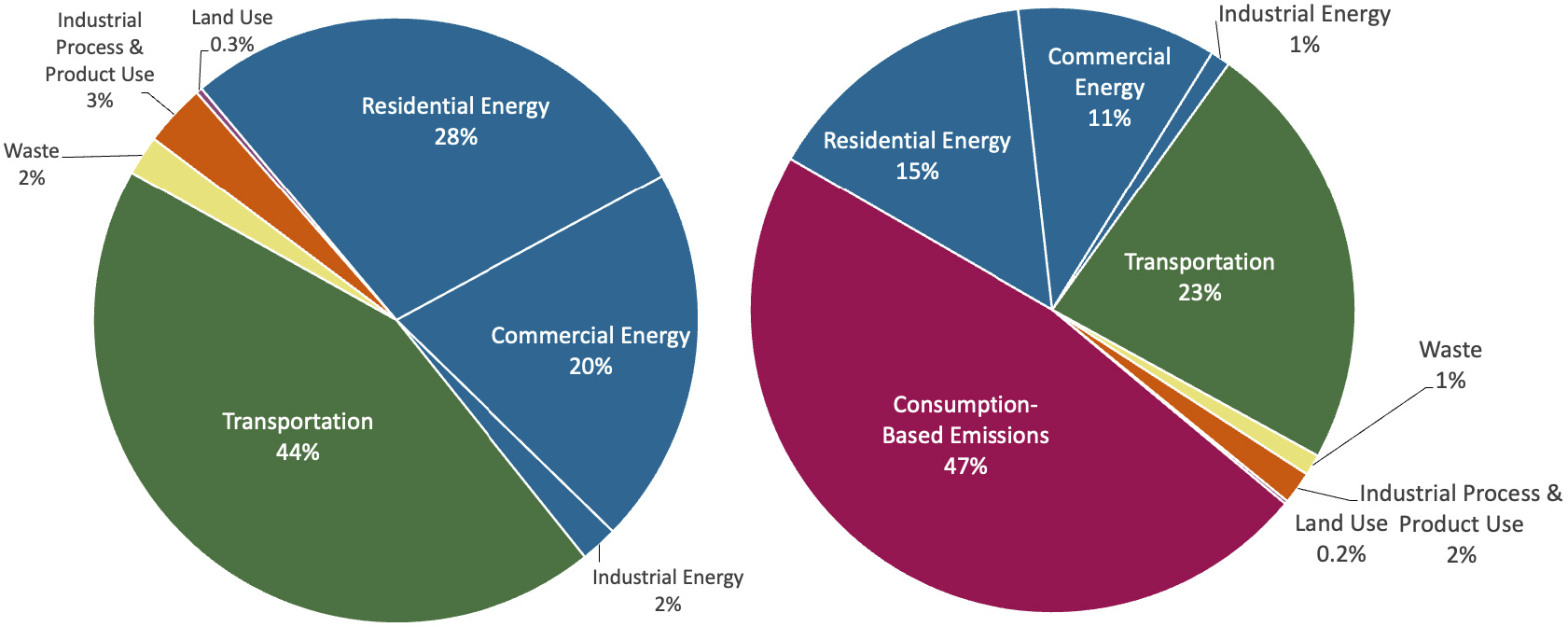
Between 2016 and 2021, Bend’s waste-related emissions remained relatively stable at about 2% of total local emissions, but imported emissions from consumption increased significantly, by 10%. Methane emissions from landfills remain a concern, emphasizing the need for increased composting and waste reduction efforts. Expanding recycling and compost programs, along with reducing material consumption, are key strategies to cutting emissions and supporting a circular economy.
2016 Greenhouse Gas Inventory Comparison
What the City is Doing
In 2018, Bend’s waste companies—Republic Services (then Bend Garbage), and Cascade Disposal—started allowing all food waste to be put in the organics bin for curbside compost collection. Before this, only plant-based food waste was accepted. This change has made it much easier for residents to compost and has reduced confusion about what can be composted, decreasing the amount of food waste being sent to the landfill. Both waste companies promote the food scraps collection program through their websites and occasional mailers. Food waste is a significant contributor to methane emissions in landfills, and increasing composting efforts plays a crucial role in reducing Bend’s waste-related emissions. Deschutes County is happy to help you or your business start composting.
Republic Services:
Cascade Disposal:
In 2023, the City supported an expansion of the Community Innovation Fund, a local grant program that empowers residents and businesses to develop creative waste reduction solutions. This program provides grants of up to $5,000 for projects that promote waste reduction, reuse, recycling, and composting throughout Deschutes County. The City allocated approximately $42,000 for both project support and administration, prioritizing initiatives that target food waste reduction and multifamily recycling—key strategies in the Community Climate Action Plan. The Community Innovation Fund is part of the Rethink Waste Project, a program of the Environmental Center.
The city also launched its own grant program in 2025 called the Climate Action Partner Grant Program, to support local non-profit organizations, government agencies, and higher education institutions implementing climate solutions.
The Oregon Recycling Modernization Act, passed in 2021 and officially adopted in 2025, is transforming the state’s recycling system. It makes it easier for people to recycle, expands access to recycling services, upgrades sorting facilities, and reduces environmental damage. The Act also created a new way to fund recycling: It requires producers and manufacturers of packaging, paper, and food service items to help pay for waste management costs.
For Bend, the Recycling Modernization Act requires improvements to waste prevention, waste reduction education, and recycling infrastructure expansion, aligning directly with the City’s CCAP goals. Bend is proactively working to update its waste programs to comply with the new regulations, accelerating progress on CCAP strategies.
To reduce waste, everyone in Bend is encouraged to embrace reusing, recycling, composting, and most importantly, reducing consumption. As the population grows, tracking waste generation helps guide meaningful solutions.
In 2021, every person in Bend sent an average of 2,165 pounds of waste to the landfill per year.
To help drive this number down, Cascade Disposal and Republic Services launched RecyclePlus, a new doorstep recycling service to collect recyclable items that cannot go in the blue commingled recycle cart (i.e., batteries, light bulbs, textiles, plastic film, Styrofoam/block foam and plastic clamshell). This program keeps more materials out of the landfill, supporting Bend’s waste reduction goals. However, challenges remain—in 2021, Bend’s recycling diversion rate was 29%, a decrease from 33% in 2020. There is room for improvement, and the City continues to develop policies and programs to enhance recycling participation and effectiveness.
What You Can Do
For all things waste-related, Rethink Waste (an Environmental Center program) is the go-to resource in Bend. Check out their Rethink Waste Guide for detailed guidance on waste prevention, recycling, and composting.
Follow Deschutes County’s Waste Prevention tips:
- Plan before you buy: Purchase only what you need and choose high-quality, long-lasting products.
- Reduce food waste: Use an “Eat First” basket in your fridge, plan meals, store food properly, and compost scraps.
- Opt for reusable products: Use refillable water bottles, coffee cups, cloth napkins, and shopping bags.
- Borrow, rent, or share: Use local libraries, tool lending programs, and community swaps to reduce new purchases.
- Fix items instead of tossing them: Take advantage of free Repair Cafés or learn DIY repair skills. Check if your clothing brands offer repair or resale options.
- Shop secondhand: Support thrift stores, online resale markets, and community exchange programs.
- Donate or swap items: Give away clothing, furniture, and household goods to local nonprofits or swap groups.
- Compost organic waste: Use Bend’s curbside compost program for food scraps and yard waste.
- Know what to recycle: Follow local recycling guidelines to keep contamination out of the system.
- Use RecycleOn Centers: Discover free and convenient drop-off locations that accept items that are not accepted in recycling bins at home or work.
- Use RecyclePlus (Cascade Disposal or Republic Services) for hard-to-recycle items: Properly dispose of items like batteries, Styrofoam, and electronics.
- Dispose of hazardous waste safely: Take materials like paint, motor oil, and chemicals to designated drop-off locations.
The holidays produce significant amounts of waste. Between Thanksgiving and New Year’s, U.S. household waste jumps by 25%, adding 1 million extra tons to landfills. This year, let’s rethink our gifts and celebrations to keep waste and emissions down.
Stay Connected
Sign up for Bend’s Sustainability Newsletter to receive updates on Community Climate Action Plan events, progress, and community opportunities.