Gestión de materiales y residuos
Una gestión eficaz de los residuos y los materiales es fundamental para reducir las emisiones de gases de efecto invernadero y promover un sistema más sostenible en el que los materiales y los productos se reutilicen, reparen, reacondicionen, refabriquen, reciclen y conviertan en abono.
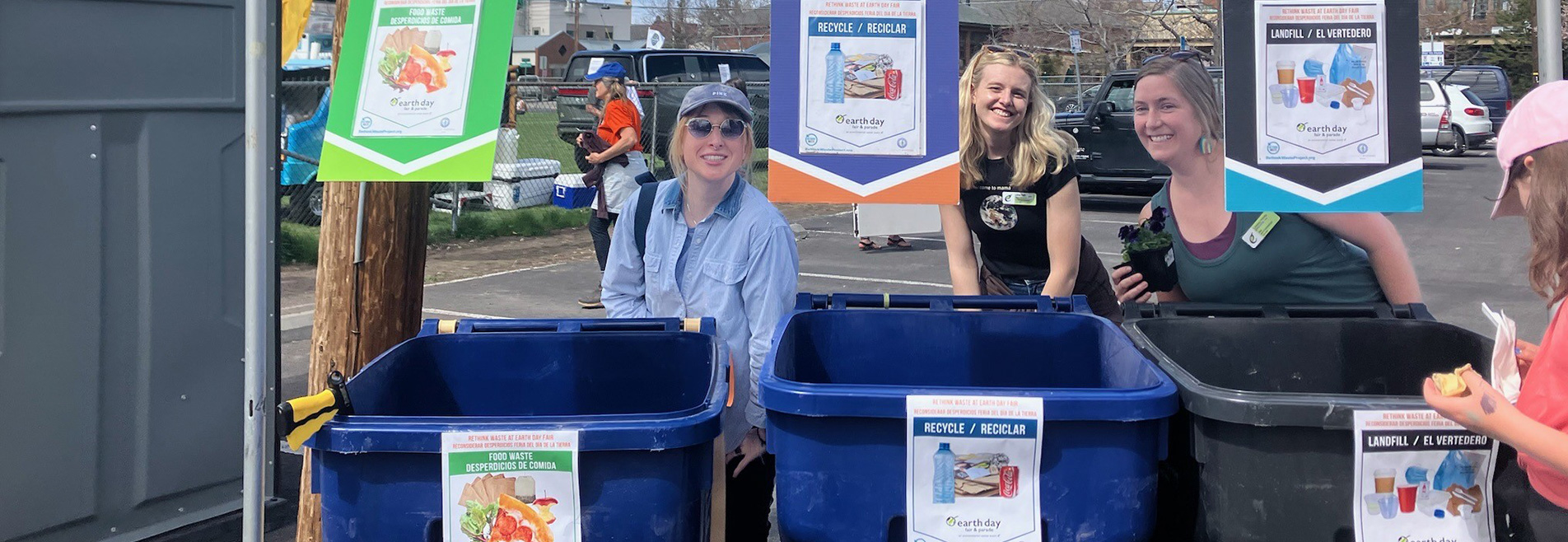
Los materiales son fundamentales para nuestra economía, nuestro medio ambiente y nuestras comunidades. Todo lo que compramos o utilizamos pasa por la extracción de recursos naturales, la fabricación de productos, su transporte, su uso y, finalmente, su reciclaje, compostaje o eliminación.
La prevención de residuos tiene un impacto positivo mayor que el reciclaje o el compostaje, ya que reduce la necesidad de más recursos, el consumo de energía y las emisiones asociadas al transporte, la extracción y la producción. Reducir nuestro consumo y mejorar la gestión de los residuos son medidas fundamentales para hacer frente al cambio climático. Para reducir nuestro impacto derivado de los materiales y los residuos, la ciudad está dando prioridad a las iniciativas destinadas a reducir el desperdicio de alimentos comestibles, ampliar los programas de compostaje, poner en marcha programas de reciclaje de materiales de construcción y demolición, fomentar la reparación y la reutilización, y promover el uso de hormigón con bajas emisiones de carbono.
Emisiones de gases de efecto invernadero procedentes de materiales y residuos
El Inventario de Gases de Efecto Invernadero de la Comunidad de 2021 reveló que las emisiones relacionadas con los residuos constituyen una parte pequeña, pero crucial, del perfil total de emisiones de Bend. Aunque las emisiones locales derivadas de la gestión de residuos representan el 2 % del total de emisiones de gases de efecto invernadero de Bend, el impacto medioambiental de los materiales va mucho más allá de lo que se tira a la basura. Las emisiones importadas (generadas durante la producción y el transporte de bienes, alimentos y envases) contribuyen de manera significativa a la huella de carbono de la ciudad. De hecho, las emisiones derivadas de lo que consumimos (1,2 millones de toneladas métricasde CO₂e) son casi iguales al total de las emisiones procedentes del consumo energético local en vehículos, hogares y edificios de nuestra comunidad (1,3 millones de toneladas métricasde CO₂e).
Emisiones locales de gases de efecto invernadero de Bend en 2021 (izquierda) y emisiones locales e importadas de gases de efecto invernadero (derecha)
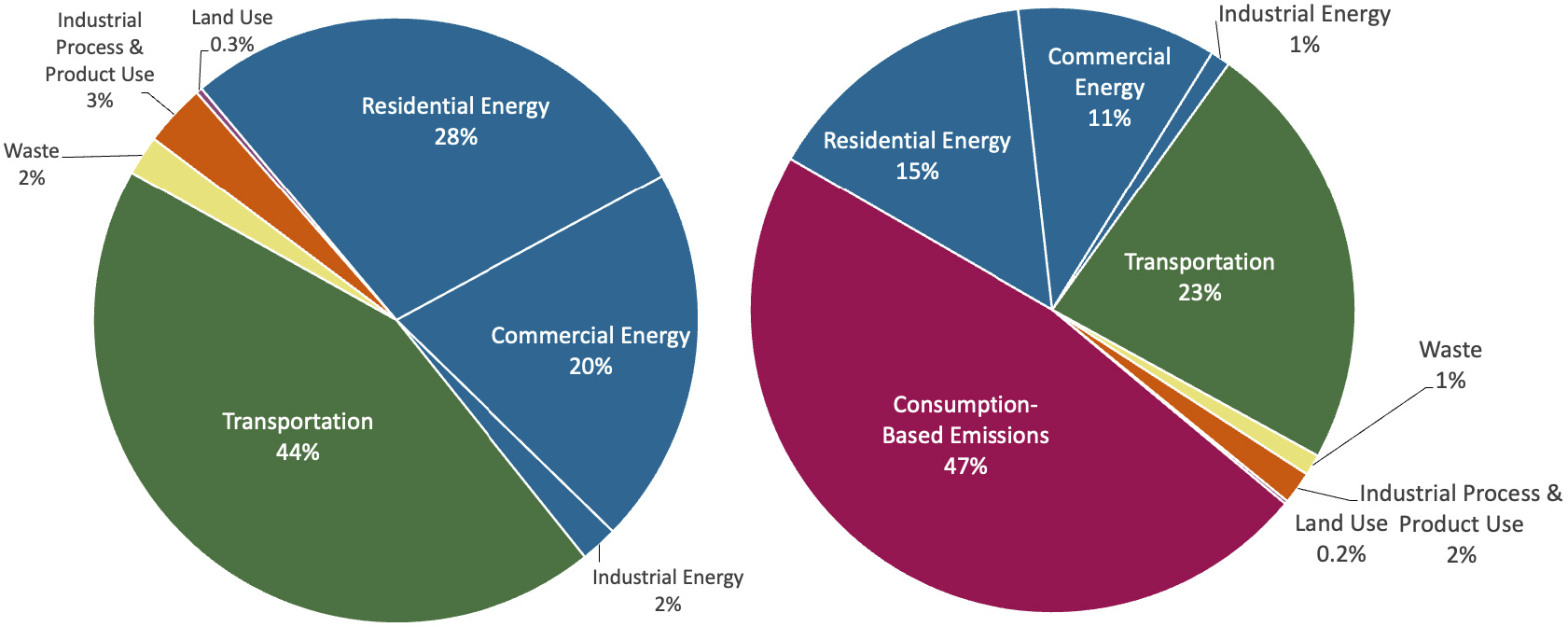
Entre 2016 y 2021, las emisiones relacionadas con los residuos de Bend se mantuvieron relativamente estables, en torno al 2 % del total de emisiones locales, pero las emisiones importadas derivadas del consumo aumentaron significativamente, en un 10 %. Las emisiones de metano procedentes de los vertederos siguen siendo motivo de preocupación, lo que pone de relieve la necesidad de intensificar los esfuerzos en materia de compostaje y reducción de residuos. La ampliación de los programas de reciclaje y compostaje, junto con la reducción del consumo de materiales, son estrategias clave para reducir las emisiones y fomentar una economía circular.
Comparación del inventario de gases de efecto invernadero de 2016
Qué está haciendo la ciudad
En 2018, las empresas de gestión de residuos de Bend —Republic Services (entonces Bend Garbage) y Cascade Disposal— comenzaron a permitir que todos los residuos alimentarios se depositaran en el contenedor de residuos orgánicos para su recogida en la acera con fines de compostaje. Antes de esto, solo se aceptaban residuos alimentarios de origen vegetal. Este cambio ha facilitado mucho el compostaje a los residentes y ha reducido la confusión sobre qué se puede compostar, lo que ha disminuido la cantidad de residuos alimentarios que se envían al vertedero. Ambas empresas de gestión de residuos promueven el programa de recogida de restos de comida a través de sus páginas web y de envíos postales ocasionales. Los residuos alimentarios contribuyen de manera significativa a las emisiones de metano en los vertederos, y el aumento de las iniciativas de compostaje desempeña un papel crucial en la reducción de las emisiones relacionadas con los residuos en Bend. El condado de Deschutes estará encantado de ayudarte a ti o a tu empresa a empezar a hacer compost.
Republic Services:
Eliminación en cascada:
En 2023, el Ayuntamiento apoyó la ampliación del Fondo de Innovación Comunitaria, un programa local de subvenciones que empodera a los residentes y a las empresas para desarrollar soluciones creativas de reducción de residuos. Este programa concede subvenciones de hasta 5.000 dólares para proyectos que promuevan la reducción de residuos, la reutilización, el reciclaje y el compostaje en todo el condado de Deschutes. El Ayuntamiento destinó aproximadamente 42 000 dólares tanto al apoyo a los proyectos como a su gestión, dando prioridad a las iniciativas centradas en la reducción de los residuos alimentarios y el reciclaje en edificios de viviendas plurifamiliares, estrategias clave delPlan de Acción Climática Comunitario. El Fondo de Innovación Comunitaria forma parte delProyecto «Rethink Waste», un programa del Centro Medioambiental.
La ciudad también puso en marcha en 2025 su propio programa de subvenciones, denominado «Programa de Subvenciones para Socios en la Acción Climática», con el fin de apoyar a las organizaciones locales sin ánimo de lucro, los organismos públicos y las instituciones de educación superior que pongan en práctica soluciones climáticas.
La Ley de Modernización del Reciclaje de Oregón, aprobada en 2021 y adoptada oficialmente en 2025, está transformando el sistema de reciclaje del estado. Facilita el reciclaje a los ciudadanos, amplía el acceso a los servicios de reciclaje, mejora las instalaciones de clasificación y reduce el daño medioambiental. La ley también ha creado una nueva forma de financiar el reciclaje: obliga a los productores y fabricantes de envases, papel y artículos para el sector de la restauración a contribuir a sufragar los costes de la gestión de residuos.
En el caso de Bend, la Ley de Modernización del Reciclaje exige mejoras en la prevención de residuos, la educación para la reducción de residuos y la ampliación de las infraestructuras de reciclaje, lo que se ajusta directamente a los objetivos del CCAP de la ciudad. Bend está trabajando de forma proactiva para actualizar sus programas de residuos con el fin de cumplir con la nueva normativa, lo que acelera los avances en las estrategias del CCAP.
Para reducir los residuos, se anima a todos los habitantes de Bend a apostar por la reutilización, el reciclaje, el compostaje y, sobre todo, la reducción del consumo. A medida que crece la población, el seguimiento de la generación de residuos ayuda a encontrar soluciones eficaces.
En 2021, cada habitante de Bend envió un promedio de 2.165 libras de residuos al vertedero al año.
Para ayudar a reducir esta cifra, Cascade Disposal y Republic Services han puesto en marcha RecyclePlus, un nuevo servicio de recogida de reciclaje a domicilio destinado a recoger artículos reciclables que no pueden depositarse en el contenedor azul de residuos mezclados (por ejemplo, pilas, bombillas, textiles, láminas de plástico, poliestireno expandido y envases de plástico tipo «clamshell»). Este programa evita que más materiales acaben en el vertedero, lo que contribuye a los objetivos de reducción de residuos de Bend. Sin embargo, siguen existiendo retos: en 2021, la tasa de desviación hacia el reciclaje de Bend fue del 29 %, lo que supone un descenso respecto al 33 % registrado en 2020. Hay margen de mejora, y el Ayuntamiento sigue desarrollando políticas y programas para aumentar la participación y la eficacia del reciclaje.
Lo que puedes hacer
Para todo lo relacionado con los residuos, Rethink Waste (un programa del Centro Medioambiental) es el recurso de referencia en Bend. Echa un vistazo a su Guía Rethink Waste para obtener información detallada sobre la prevención de residuos, el reciclaje y el compostaje.
Sigue los consejos para la prevención de residuos del condado de Deschutes:
- Planifica antes de comprar: Compra solo lo que necesites y elige productos de alta calidad y duraderos.
- Reducir el desperdicio de alimentos: Utiliza una cesta con el letrero «Consumir primero» en la nevera, planifica las comidas, guarda los alimentos correctamente y haz compost con los restos.
- Opta por productos reutilizables: utiliza botellas de agua reutilizables, tazas de café, servilletas de tela y bolsas de la compra.
- Pedir prestado, alquilar o compartir: Aprovecha las bibliotecas locales, los programas de préstamo de herramientas y los intercambios comunitarios para reducir las compras nuevas.
- Repara los objetos en lugar de tirarlos: Aprovecha los Repair Cafés gratuitos o aprende a hacer reparaciones tú mismo. Comprueba si las marcas de ropa que compras ofrecen opciones de reparación o reventa.
- Compra artículos de segunda mano: apoya a las tiendas de segunda mano, los mercados de reventa en línea y los programas de intercambio comunitarios.
- Dona o intercambia artículos: dona ropa, muebles y artículos para el hogar a organizaciones sin ánimo de lucro locales o a grupos de intercambio.
- Composta los residuos orgánicos: Utiliza el programa de recogida de residuos orgánicos en la acera de Bend para los restos de comida y los residuos de jardín.
- Sepa qué se puede reciclar: Sigue las normas locales de reciclaje para evitar que el sistema se contamine.
- Utiliza los centros RecycleOn: Descubre puntos de recogida gratuitos y cómodos donde puedes entregar los artículos que no se admiten en los contenedores de reciclaje de tu casa o del trabajo.
- Utilice RecyclePlus (Cascade Disposal o Republic Services) para los artículos difíciles de reciclar: Deshazte de forma adecuada de artículos como pilas, poliestireno y aparatos electrónicos.
- Deseche los residuos peligrosos de forma segura: lleve materiales como pintura, aceite de motor y productos químicos a los puntos de recogida designados.
Las fiestas generan una cantidad considerable de residuos. Entre Acción de Gracias y Año Nuevo, los residuos domésticos en Estados Unidos aumentan un 25 %, lo que supone un millón de toneladas adicionales en los vertederos. Este año, replanteémonos nuestros regalos y celebraciones para reducir los residuos y las emisiones.
Manténgase conectado
Suscríbase al boletín informativo sobre sostenibilidad de Bend para recibir actualizaciones sobre los eventos, los avances y las oportunidades comunitarias del Plan de Acción Climática Comunitario.