Winter Road Maintenance
The City of Bend’s dedicated snowplow operators manage snow and ice on the streets, prioritizing major roads, emergency routes and high-traffic areas during storms.
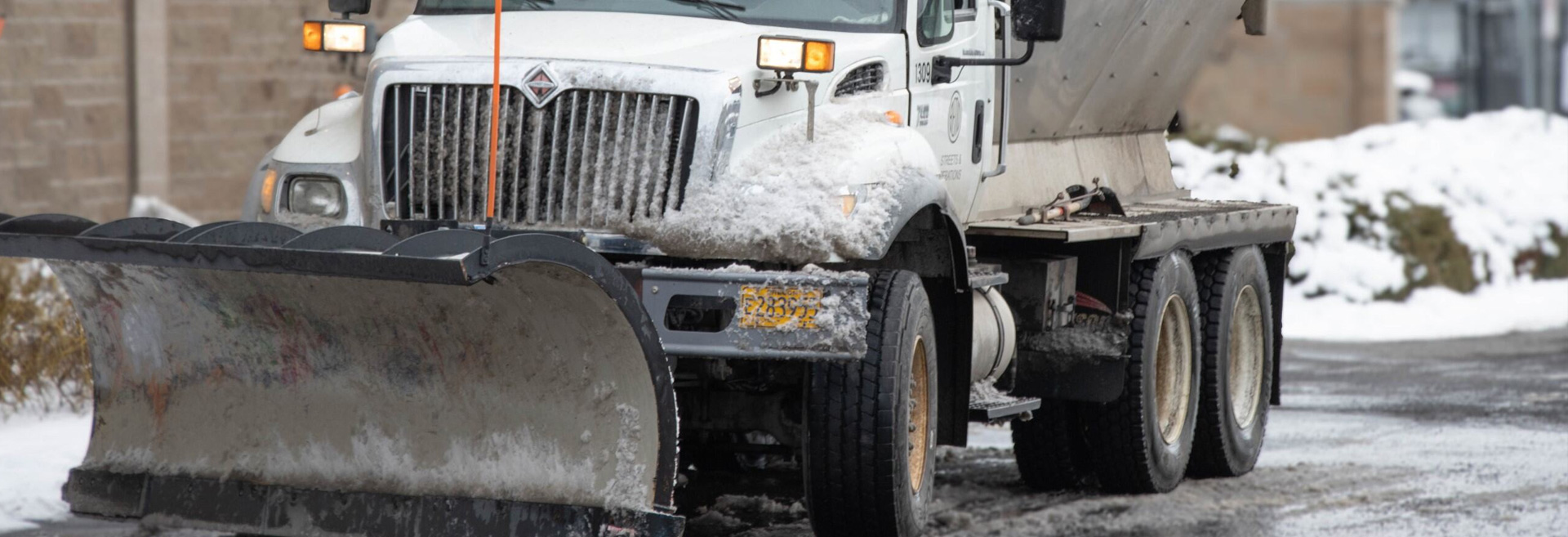
Each winter, the City of Bend’s Transportation and Mobility Department prepares for the winter season and asks you to be prepared too.
Winter Operations Map
During a storm you can see where our winter operations fleet has been.
While winter in beautiful in Bend, travel can be challenging, and the professional snowplow operators are here to make it easier by using snow-fighting strategies to manage drifting snow, ice, and special emergency situations, and to clear obstacles drivers might encounter.
Here are some ways you can be prepared:
- Drive cautiously: Drive safely and avoid following too closely behind or passing snowplows.
- Before traveling on roadways: Verify latest road conditions, road closures and congestion spots at tripcheck.com. The entire area can be observed from this site.
- Respect Detours: As with any emergency, detours on roadways may appear without advance notice. Be respectful of the detours. This is to protect the safety of our community.
- Weather Information: Please check the latest forecast and stay alert at noaa.gov.
The City of Bend Transportation and Mobility team truly appreciates your patience and cooperation as we work to keep everyone safe each winter season. Thank you.
Street Priority Levels
Crews focus on plowing and sanding the busiest streets first. These are the roads that most drivers use, including major employment and medical areas, schools and transit routes. The priority levels on the following map show the routes cleared first. Click on the legend at the top left of the map to see the priority levels.
Priority One: Major Collectors and Arterials
Bend streets form a network for emergency services, connect high-volume roads and serve as the main street system. They are the highest priority and are shown on the map above.
Priority Two: Selected Collector Streets
These streets provide access to Priority One roads and include routes to medical facilities, schools, major employment centers and streets that need special attention, like steep hills or curves.
Priority Three: Residential/Other
Once snow control operations on Priority One and Two streets are completed, snowplows may move to residential areas.
During a big snowstorm, City officials may decide to call in contractors to assist City snowplow crews, depending on various factors like the weather forecast. Contractors can help clear local, residential streets.
Bend has microclimates, meaning different weather patterns in different areas, so storms can affect parts of town differently.
Please note: the City of Bend does not maintain private properties, business complexes, apartment complexes, alleys or private streets. Snow control in these areas is the responsibility of property owners.
Winter Operations Map
The Winter Operations Map shows which roads have been serviced by the City’s snowplows, sanders, graders, and de-icing equipment, with a 30-minute delay.
Please note that serviced roads may still have snow and ice on them, and conditions can change quickly depending on the weather. Always drive extra safely in the winter and adjust according to the conditions. Stay safe out there!
Emergency Snow Zones
The Transportation and Mobility Department has a winter street operations plan, prioritizing streets for plowing and sanding, and addressing problematic streets where on-street parking during heavy snowfalls creates narrow and sometimes impassable roads. These areas are marked as “emergency snow zones.” During declared snow emergencies, the City of Bend can ask that “emergency snow zones” be cleared of parked cars to help crews plow from curb to curb.
Snow Emergency Zone Maps
Emergency Snow Zone Streets
- Wall Street (Portland Avenue to Colorado Avenue)
- Bond Street (Wall Street to Colorado Avenue)
- Chandler Avenue (Mt. Washington Drive to Century Drive)
- NE Courtney Drive (27th Street to Conners Avenue)
- NE Conners Avenue (27th Street to Courtney Drive)
- NW Broadway Street (Franklin Avenue / Riverside Boulevard to Colorado Avenue)
- NW Tumalo Avenue (Riverside Boulevard to Broadway Street)
- 17th Street & Troon Avenue (Galveston Avenue to Mt. Washington Drive)
Snow Emergency Protocol
- During a declared snow emergency, marked streets must be cleared of parked cars to allow curb-to-curb plowing.
- The City will issue a News Release and identify a 12-hour period for parking restrictions.
- Once streets are fully plowed, cars can return.
- Snowplowing in downtown areas is expected to occur at night.
Stay Informed
- Sign up for notifications at bendoregon.gov/enews.
- For parking info, visit Parking or call 541-323-8582 during business hours.
- During a storm, look for a banner on the top of the City of Bend homepage or call 541-323-5980.
Towing Information
- The City does not intend to tow vehicles, but, if necessary, it will be at no cost to the driver.
- If your vehicle is missing during a snow emergency, call Consolidated Towing at 541-389-8080.
How You Can Help
- Keep streets clear of obstacles like parked vehicles, basketball hoops, campers, garbage cans, and other objects.
Frequently Asked Questions
The Transportation and Mobility Department takes care of more than 930 miles of public streets, including main roads, collector streets and local residential streets. Plowing usually starts when snowfall reaches 2 inches or more. Crews begin with Priority One routes, which are the main roads, then move to Priority Two routes for emergency vehicle access, focusing on routes to hospitals, government buildings, and schools (if classes are in session). Residential streets are done last as Priority Three routes. The City of Bend does not maintain alleys and won’t remove snow from them. Not every street can be cleared at the same time, and changing weather conditions can affect our snow-fighting strategy.
Snow plowing operations may place snow in your driveway. Snowplows are angled to the right to push snow from the centerline to the curb, which can deposit snow in driveways. Residents and property owners are responsible for removing this snow.
Snow may end up on your driveway after you shovel it. We understand the frustration this can cause and apologize for the inconvenience. If possible, wait to clear your driveway until the snowplows have passed. Snowplows may return to make multiple passes, clearing streets curb-to-curb for parking and drainage. There are over 40,000 driveways in the city, and it would take several days to clear them all if we spent just 60 seconds per driveway.
Snow Removal Tip:
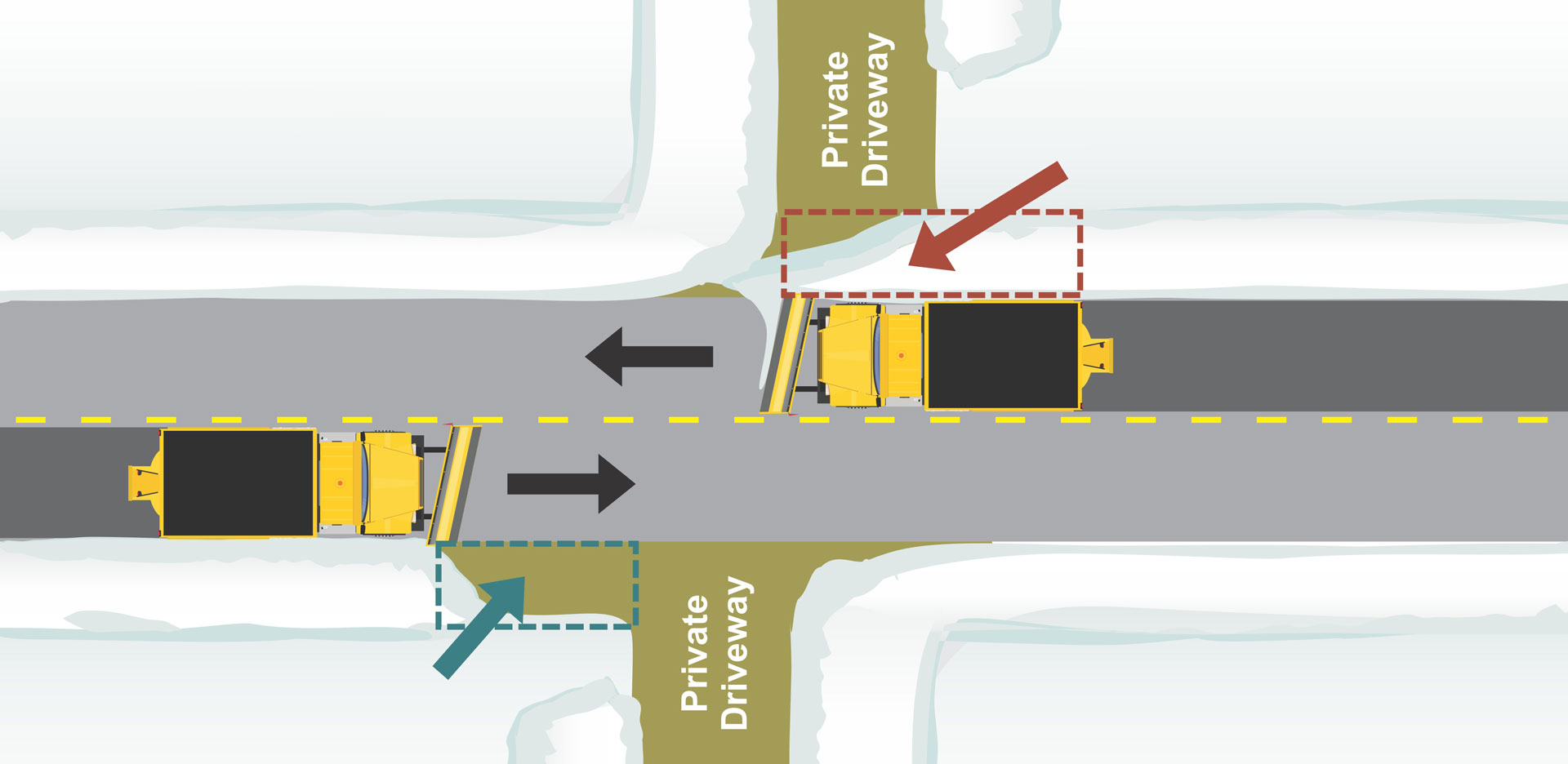
To minimize snow berms in front of your driveway, clear a wide apron in front and to the right of your driveway or walkway (when facing your property from the street). Clear an area to the right of your driveway before the street is plowed. This will reduce the amount of snow pushed onto your driveway. Pile snow on the downstream side of the driveway and behind the sidewalk to prevent the snowplow from moving it back into your driveway or onto the sidewalk.
Narrow public rights of way can be impacted more than wider areas. Snow may end up on the sidewalk you just shoveled. We understand this can be frustrating and apologize for the inconvenience. If possible, wait to clear your sidewalk until after the snowplows have passed. Snowplows may return to open streets curb-to-curb for parking and drainage.
Snowplows are emergency vehicles and typically do not exceed the posted speed limit. They may appear to be driving fast due to engine noise and the sound of the plow scraping the pavement. Snowplows move faster on open stretches to push snow farther off the road, ensuring space to stack the snow. Please do not follow snowplows too closely and give them plenty of room.
Snow cannot be pushed into or across the street from private property, including private streets, parking lots, driveways and sidewalks. Violating this rule is a Class B Civil Infraction.
Residents and property owners must remove snow from sidewalks within 24 hours after snowfall stops, and within 6 hours for commercial properties. If you have a fire hydrant in front of your property, you are responsible for removing snow around it, as well.
If your mailbox is struck by a City or contractor snowplow, contact the Transportation and Mobility Department at 541-323-5980 during business hours. Non-standard mailboxes placed in public rights of way are at the owner’s risk. Snow removal near mailboxes is the responsibility of the adjacent property owner.
Do not landscape with rocks, bricks, timbers, shrubs, or other items in the right of way. Irrigation in the right of way is done at the owner’s risk. Keep irrigation heads away from curbs and sidewalks to avoid damage from snowplows. Report any damage to curbs or sidewalks to the Transportation and Mobility Department at 541-323-5980.
The Transportation and Mobility Department works closely with the Bend Police Department and Bend Fire Department. In an emergency requiring snow control assistance, plowing crews are pulled from their regular routes to respond as quickly as possible.
Snowplow operators work hard to clear the streets quickly and thoroughly. Driving a snowplow is demanding and tiring work. For safety reasons, each driver should take a 30-minute break every four to six hours. It’s dangerous for both the driver and the public if a fatigued driver is behind the wheel. Taking breaks is in everyone’s best interest.
We wish we had enough snowplows and drivers to clear every street right away, but resources are limited. We follow a carefully planned system for clearing the streets. Main arterial streets are plowed first, followed by collector streets, and then residential streets. Snowplows stick to their assigned routes to keep operations effective and efficient.
Unfortunately, we can’t give you an exact time for when your street will be cleared. Weather conditions, emergencies, traffic congestion and available resources can all affect our snow-fighting strategies. We often need to adjust our plans to deal with drifting snow, ice or other specific problems.
Snowplow operators follow assigned routes. If they spread sand continuously to their destination, they would run out before completing their route. Sanding is focused on steep grades, stops, railroad crossings, roundabouts, curves and other areas where it’s needed most.