Emergency Response
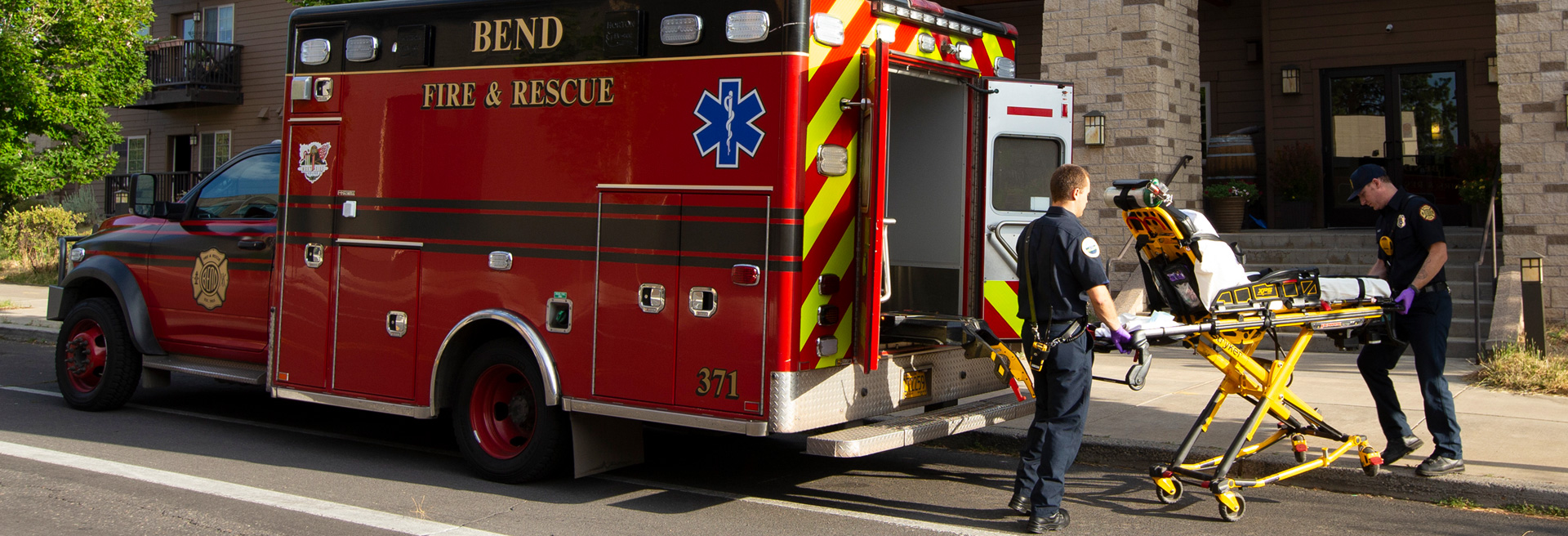
When emergencies happen, every second counts. Bend Fire & Rescue provides fire suppression, emergency medical services, and hazard response 24/7 to help protect our community.
What Happens When You Call 911
- Your Call Goes to a 911 Center
When you dial 911, your call is routed to the correct dispatch center based on the phone’s location, which if a cell phone, is determined by the carrier using a combination of cell tower information and GPS coordinates. - The Dispatcher Will Ask Questions
The first questions usually asked:
“What’s the address of your emergency?”
Then they will ask:- “What’s the phone number you’re calling from?”
- Okay, tell me exactly what happened?” (fire, medical, crime)
- Stay Calm and Speak Clearly.
- Give the exact address or closest landmark.
- Explain what is happening.
- Answer all questions.
- Follow Their Instructions
The dispatcher may tell you what to do before help arrives, like CPR or first aid.
Do not hang up until they say it’s okay. - Help Is Sent Right Away
The dispatcher sends firefighters, paramedics, or police.
For medical emergencies, a fire engine and an ambulance may both come. - Stay on the Line
They may give you more instructions or updates while help is on the way.
Emergency Medical Services
Bend Fire & Rescue provides emergency medical services (EMS) and ambulance transport to a 1,450 square mile radius within Bend and Deschutes County Rural Fire Protection District #2 known as the Ambulance Service Area (ASA). The Ambulance Service Area includes key highway corridors from Mt. Bachelor to the west and 70 miles to the east of Bend. About 75% of service calls are for medical emergencies.
Key EMS Services
- Ambulance Transport – Advanced Life Support (ALS) and Basic Life Support (BLS).
- Community Trainings –Hands Only CPR and Stop the Bleed.
- Car Seat Clinics – Technicians who can check child restraint and offer car seat guidance.
- PulsePoint– Alert community responders to nearby cardiac emergencies so they can help save lives. Register AEDs in the community for easier public and responder access.
Ambulance Billing and Services
Find information on ambulance billing, payment options, service rates, and other services.
Firefighting Services
Bend Fire & Rescue responds to a vast geographic area which includes 164 square miles known as the Fire Service Area (FSA). The services provided to this area include:
- Structural Fires – Residential, commercial, and industrial.
- Wildland Fires – Coordinated with regional partners for wildfire suppression.
- Hazardous Materials Incidents – Specialized teams handle chemical and environmental hazards.
- Technical Rescues – Including vehicle extrication, swift water and rope rescues.
- Fire Investigation & Prevention – fire investigations, fire mitigation inspections, smoke detector installations, and wildfire risk mitigation
Our Fleet and Capabilities
Bend Fire & Rescue uses specialized vehicles for fires, rescues, and medical emergencies. Each unit is fully equipped and staffed by trained professionals to respond quickly and help keep our community safe.
After the Emergency
Recovering from an emergency—whether it’s a fire, flood, medical crisis, or other disaster—can feel overwhelming. Here are some key steps to help you move forward:
- Remove yourself from unsafe situations.
- Check for injuries and seek medical care if needed.
- Avoid damaged structures until they’ve been inspected.
- Stay informed through local alerts and official updates.
- Report your claim as soon as possible.
- Document damage with photos and keep receipts for repairs.
- Ask about temporary housing coverage if your home is uninhabitable.
Oregon Post-Disaster Claims Guide - If you are renting, you must also contact your property owner or property management company.
- Track your expenses. Depending on your coverage, you may get reimbursed for lodging, rental cars and more.
If you are not insured:
- Contact American Red Cross. They are available to assist families who have been displaced from their homes.
- Contact a restoration company or general contractor to assist you with post-fire clean-up and home repairs.
- Board up broken windows and cover roof damage with plywood or tarps to prevent further loss.
- Again – save receipts for any repairs—they may be reimbursable by your insurance or disaster assistance programs.
- If you must leave your home, try to locate legal documents, identification, vital medicines, eyeglasses, hearing aids, valuables, credit cards, checkbooks, insurance policies, and irreplaceable items like photos
- Fire crews can assist you in getting these from your home – just ask!
- American Red Cross: Temporary shelter, financial aid, and recovery guides.
Get Help from Red Cross - Oregon Serves: Volunteer and donation coordination, community recovery resources.
Disaster Assistance Resources
- Disasters can be traumatic. Reach out for mental health support if needed.
- Deschutes County Crisis Services: 988 or (541) 322-7500 ext. 9.
- You can also contact Red Cross for support in identifying resources or check with your employer and/or health insurance provide to see about coverage for counseling services.
There are many entities you should notify if you need to temporarily live somewhere else. Here are a few to consider:
- Insurance
- Financial Institutions
- Mortgage Company
- Employers
- Children’s School
- Post Office
- Credit Card Companies
- Newspapers/Magazines
- Utilities
- Medical Providers
- Social Security Administration (if receiving benefits)
- Department of Economic Security (if receiving benefits)
- Start a home inventory as you replace items.
- Consider using disaster-resistant building materials during repairs.
FireMed Membership
Did you know Bend Fire & Rescue does more than fight fires? We handle 100% of 9-1-1 emergency medical calls and ambulance transports in Bend and the Rural Fire Protection District #2. In fact, about 75% of what we do is helping people during medical emergencies. In 2024, we responded to nearly 14,000 medical calls—both emergency and non-emergency.
Here’s the thing: while most insurance plans cover part of an ambulance bill, they often don’t cover the whole cost. That’s where FireMed comes in. For just $60 a year, our FireMed membership covers everyone in your household and takes care of any out-of-pocket costs for emergency ambulance evaluations or medically necessary transports. We’ll bill your insurance, and whatever they pay is considered payment in full. You’ll never get a surprise bill for an emergency ambulance call.
FireMed also covers emergency medical evaluations that don’t require a ride to the hospital. These visits cost $150 and usually aren’t covered by Medicare or most insurance plans—but with FireMed, you’re covered.
Want to learn more or sign up?
- Email: jeff.martinez@airmedcarenetwork.com
- Call: 541-241-4772
- Visit: www.amcnrep.com/Jeff-Martinez
For more details: