Water System Tour
Welcome to the City of Bend’s Source-to-Tap Water System Virtual Tour! This virtual tour provides an overview of the City’s water sources, treatment processes, and infrastructure, highlighting the journey from surface and groundwater supplies to customers’ taps — and includes future planning efforts to ensure reliable water for the community.
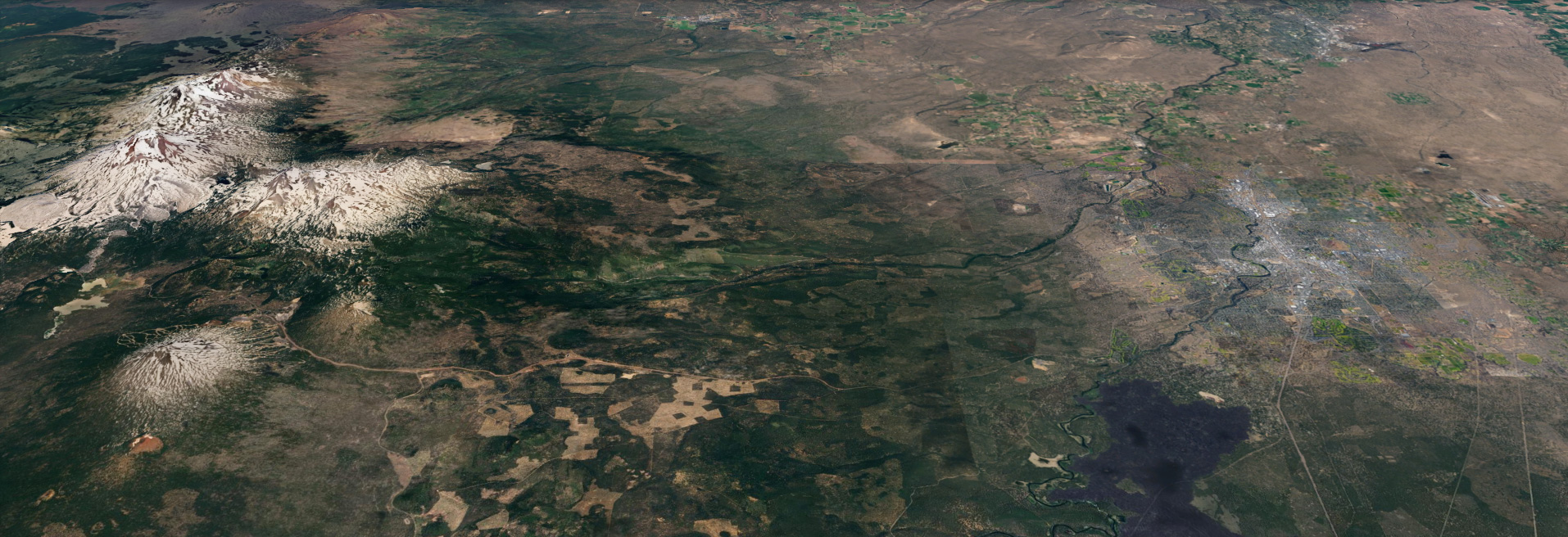
Explore each stop on our tour to learn more about the City’s high-quality water sources and the infrastructure we rely on to treat, store, and deliver clean and safe water to our community 24/7.
Dip your digital toe in by referencing each tour stop, then take a deeper dive by visiting the additional resource links. After you finish the Virtual Tour, try your hand at our water system trivia or get answers to frequently asked questions.
Water System Overview
For nearly a century, the City of Bend has been providing high-quality drinking water to residents, businesses, and visitors. From source to meter, the City works to protect our supplies, treat and clean our water, and maintain a network of pipes, storage reservoirs, and other facilities to deliver safe, reliable drinking water to customers’ taps. Learn more about our water with the Virtual Tour.
Tour Stops
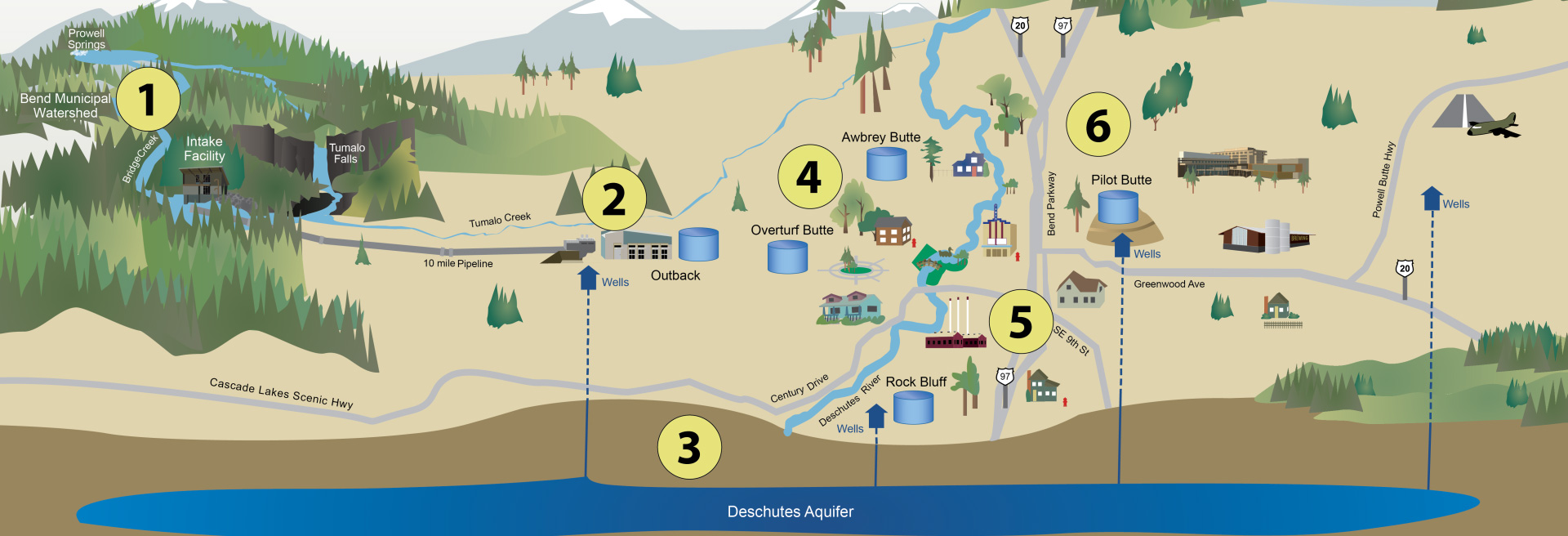
Tour Stop 1: Surface Water Supply
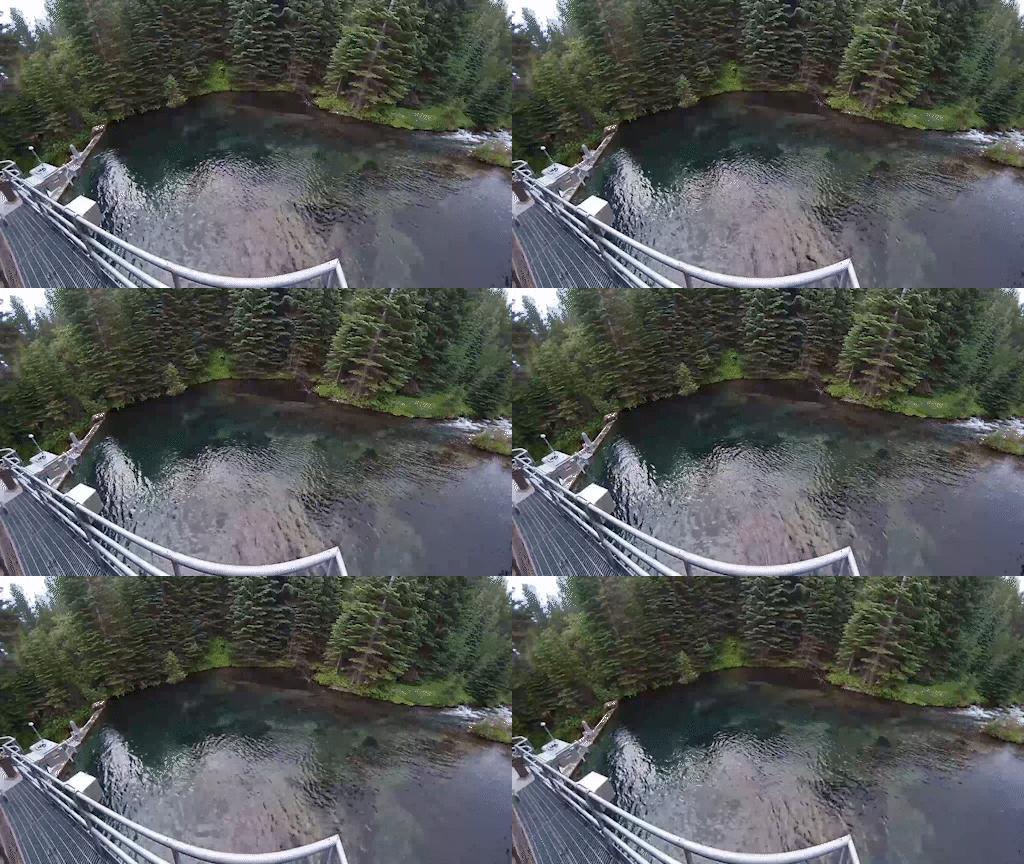
Since 1926, the Bend Municipal Watershed has been the City’s primary water source. Surface water from Prowell Springs (image below) flows by gravity down Bridge Creek through the mountains and valleys, making its way to our Bridge Creek Intake Facility. We work closely with the U.S. Forest Service to ensure this high-quality surface water source stays protected.
At the intake facility (image below), the Water Services Department continuously monitors water quality, temperature, and levels to protect and better understand our watershed. From the intake, surface water travels by gravity through a 10-mile pipe under Skyliner Road to the Outback Water Filtration Facility (Stop 2).
Take a Deeper Dive
Tour Stop 2: Outback Water Filtration Facility
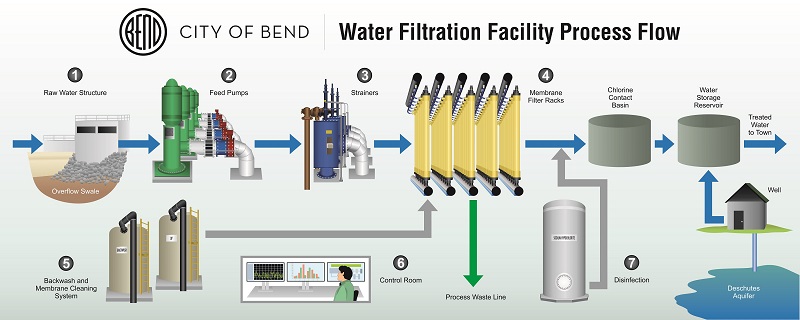
The City manages a robust treatment system to provide clean, safe drinking water and protect against future water quality risks. The Outback Water Filtration Facility is where pathogens and turbidity (sediment suspended in water) are filtered from our drinking water. The membrane filtration system filters up to 11.8 million gallons per day and uses multiple steps to remove particles too small for the naked eye to see. We also add a small amount of chlorine to deactivate viruses and bacteria while keeping our network of storage tanks and pipelines clean.
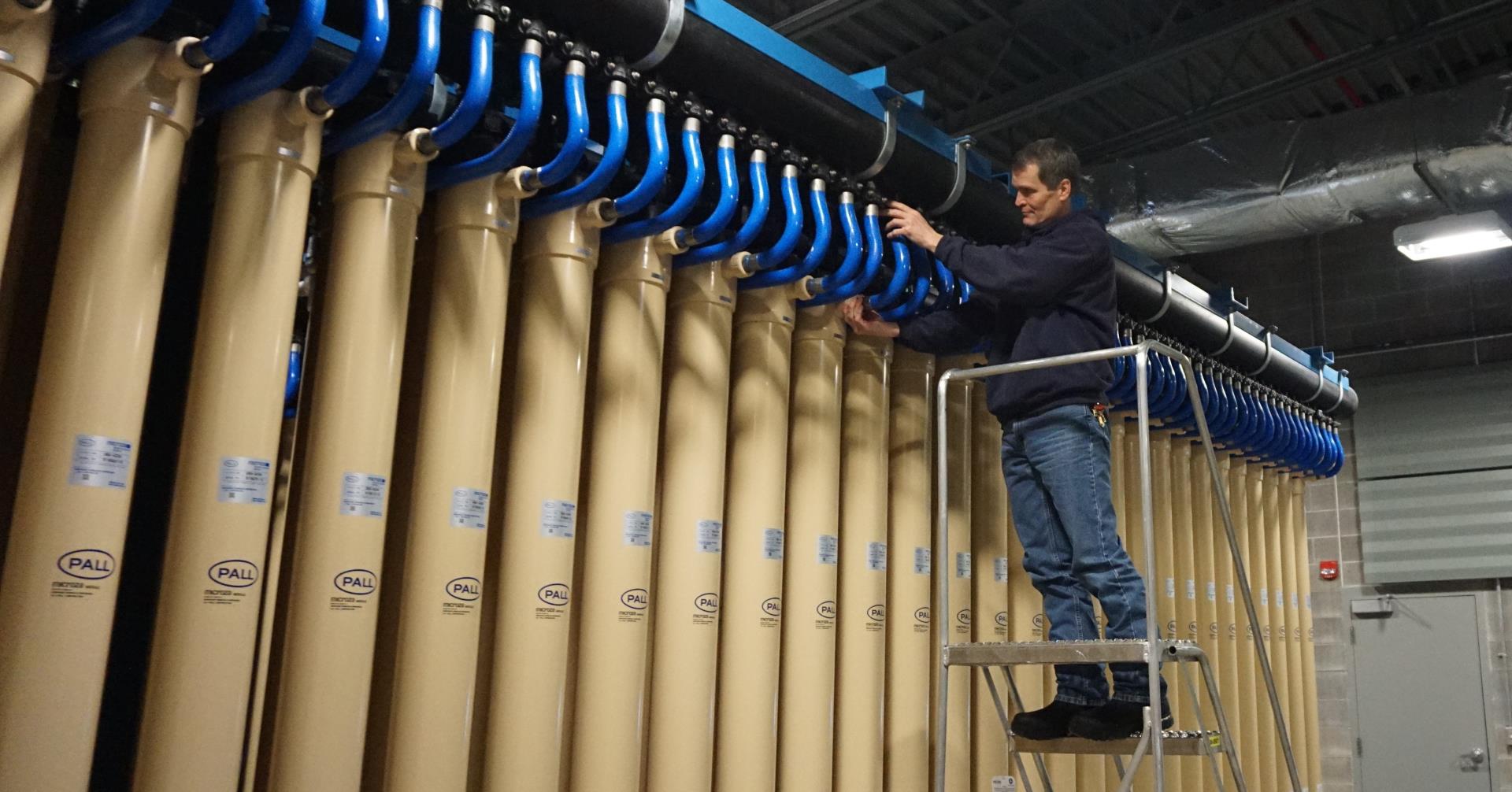
Staff maintaining membrane filter racks (above). Surface water treatment process map (below).
Looking forward, the City is planning to install pre-treatment at the Water Filtration Facility to improve system resilience to potential water quality events in the watershed like the 1979 Bridge Creek Fire.
Take a Deeper Dive
Tour Stop 3: Groundwater Supply
The City has a second high-quality water source that provides supply resilience for our growing high-desert community. During the summer months, we pump from deep groundwater wells connected to the Deschutes Regional Aquifer to supplement our water supply and meet peak demands.
The City maintains eight groundwater facilities with 20 active wells and large pumps to bring water to the surface. The groundwater is naturally filtered by layers of soil, volcanic rock, sand, and gravel and then small amounts of chlorine disinfection are added when the water is pumped to make it safe to drink.
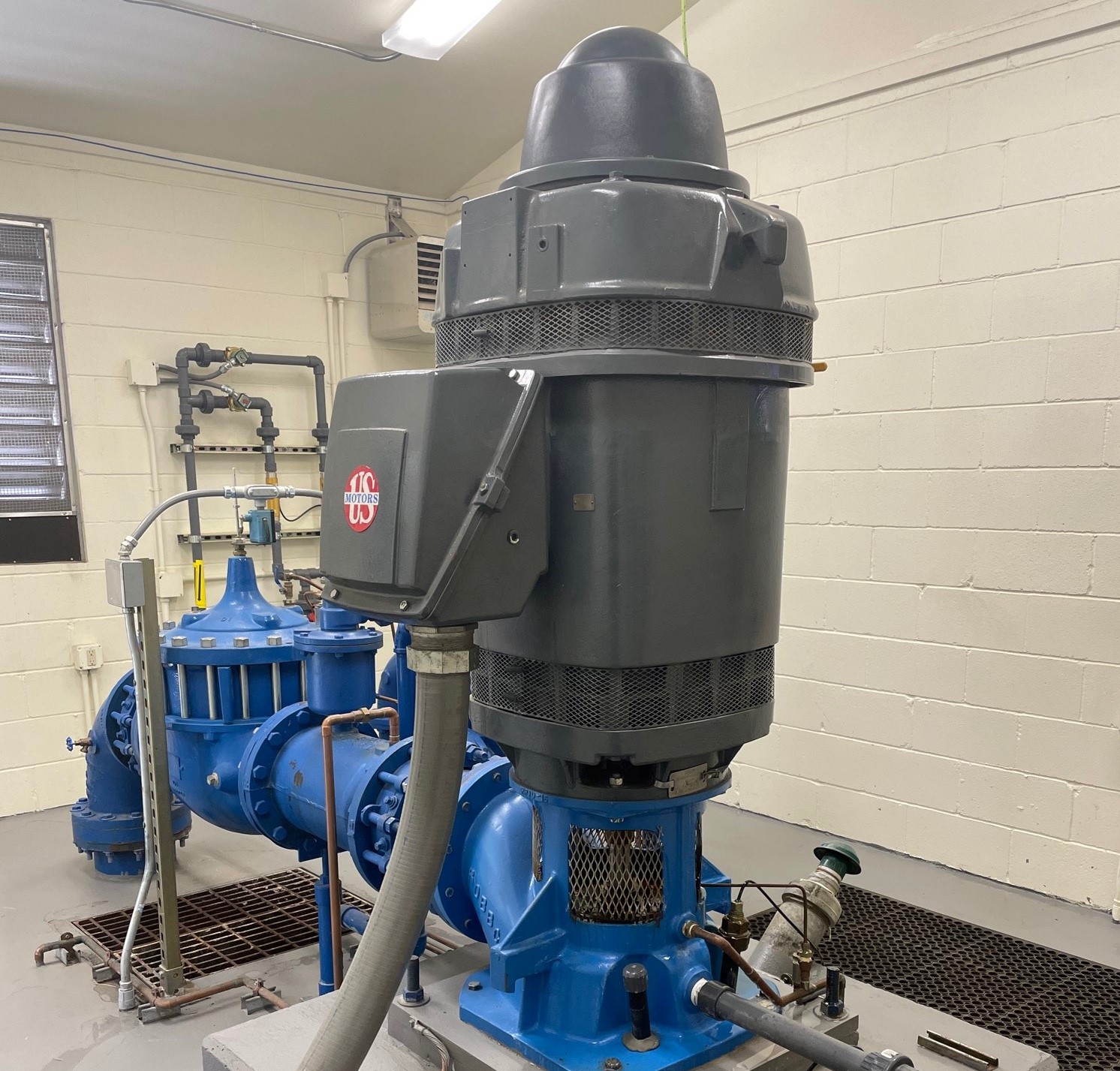
Powerful pumps pull groundwater from deep wells into pipes and reservoirs throughout the City.
Take a Deeper Dive
Tour Stop 4: Pipelines and Water Storage
The City maintains a network of pipelines and storage reservoirs to reliably deliver clean and safe water to homes, schools, businesses, and fire hydrants throughout Bend. Our system includes 15 storage reservoirs, 6 active booster pump stations, and about 440 miles of water pipes.
The storage reservoirs are on hills, so gravity helps produce consistent water pressure throughout the system. Combined, our reservoirs store up to 30 million gallons of water to serve the daily needs of the community and provide backup in case of fires or other emergencies.
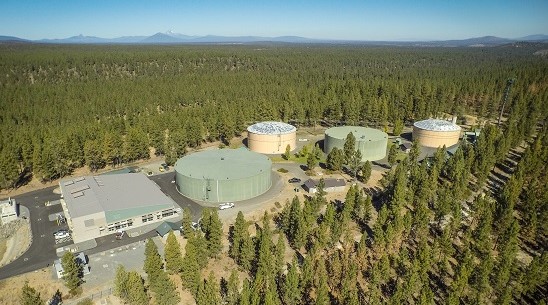
Outback campus: (left to right) filtration facility, chlorine contact basin and three reservoirs.
Photo credit: Scott Nelson
Take a Deeper Dive
Tour Stop 5: Customers’ Taps
From source to meter, Bend’s water is protected, filtered, and monitored to ensure the water is clean, safe, and reliable. The City’s water system provides drinking water 24/7 to about 25,500 service connections and 67,000 customers, serving residents, businesses, and visitors alike.

Take a Deeper Dive
Tour Stop 6: Planning for the Future
City of Bend is taking steps to plan for a reliable water future, including projects to enhance system resilience and ongoing efforts to improve water efficiency and help sustain supplies for our growing high-desert community.
- Outback Expansion Fact Sheet
- In-conduit Hydro Feasibility Study Fact Sheet
- In-conduit Hydro Feasibility Study-2024
- Outback Siting Study – 2021
The planning and investment we make today will help ensure safe, reliable water for current and future generations.
Take a Deeper Dive
Planning and Improving
- Long-term Water Resources Planning: Evaluating what steps are needed to continue providing reliable, high-quality water to Bend.
- Improving Water Efficiency: Prioritizing water efficiency to help save water and infrastructure dollars.
Partnerships and Preparation
- Regional Partnerships: Collaborating regionally to be responsible stewards and help protect and sustain our water resources.
- Drought Information and Preparedness: Managing our two water sources to help provide climate and fire resilience.
Tour Trivia Quiz
Thirsty for some fun? Answer the trivia questions below to test your knowledge of Bend’s drinking water system.
- Where does Bend’s drinking water come from?
a) Municipal watershed
b) Snow in the Cascades
c) Regional aquifer
d) All of the above - What portion of Bend’s water supply is from surface water versus groundwater?a) 10%
b) 70%
c) 80%
d) 30% - What does the City monitor at the intake facility?
a) Water quality
b) Water temperature
c) Water levels
d) All of the above - What does the City do to make sure water is safe to drink?
a) Source protection
b) Filtration and disinfection
c) Laboratory testing
d) All of the above - What’s the smallest particle our membrane filters can remove?
a) 2.1 millimeters
b) 0.1 microns
c) 0.075 centimeters
d) 350 microns - Why does Bend treat water with chlorine disinfection?
a) Deactivates viruses
b) Keeps pipes clean
c) Helps prevent waterborne illnesses
d) All of the above - Where does Bend store drinking water?
a) In reservoirs on hills
b) In a lake in the mountains
c) Underground
d) All of the above - How old are the oldest parts of Bend’s water system?
a) Less than 20 years
b) About 60 years
c) Nearly 100 years
d) Almost 150 years - How many customers does Bend provide water to?
a) 150,000
b) 25,000
c) 67,000
d) 58,000
Thanks for touring! We hope you enjoyed learning about the City of Bend’s Water System!
Frequently Asked Questions
Have questions about Bend’s drinking water? Check out these FAQs:
Bend’s water comes from two high-quality sources: surface water from the Bend Municipal Watershed in the Deschutes National Forest and groundwater from the Deschutes Regional Aquifer. The Upper Deschutes Basin absorbs snowmelt and rainfall, recharging the aquifer annually.
The City ensures our water meets the highest standards through rigorous protection, treatment, and testing. Each year, we publish a Water Quality Report with detailed testing results. You can also tour our Water Filtration Facility to see our treatment process in action.
The City regularly plans to maintain the reliability of our drinking water system. In 2021, we completed an Integrated Water System Master Plan, combining conservation, operations, and economic analyses to plan for the next 20 years.
Yes, based on recent analyses, our current water supplies and rights are sufficient to meet projected demands through 2040. The WaterWise Program and efficient water use will continue to be key in maintaining a reliable supply.
Bend benefits from two high-quality water sources, providing enhanced resilience. Our surface and groundwater supplies, combined with a commitment to conservation and efficiency, ensure we can meet needs during all water years, including droughts.
The City offers various guides, tools, and free resources to help improve water efficiency. The WaterSmart tool, for example, allows customers to track and manage their water use effectively.