Transportation
How we move matters. Transportation is one of the largest sources of greenhouse gas emissions in Bend, and reducing emissions in this area is a key priority.
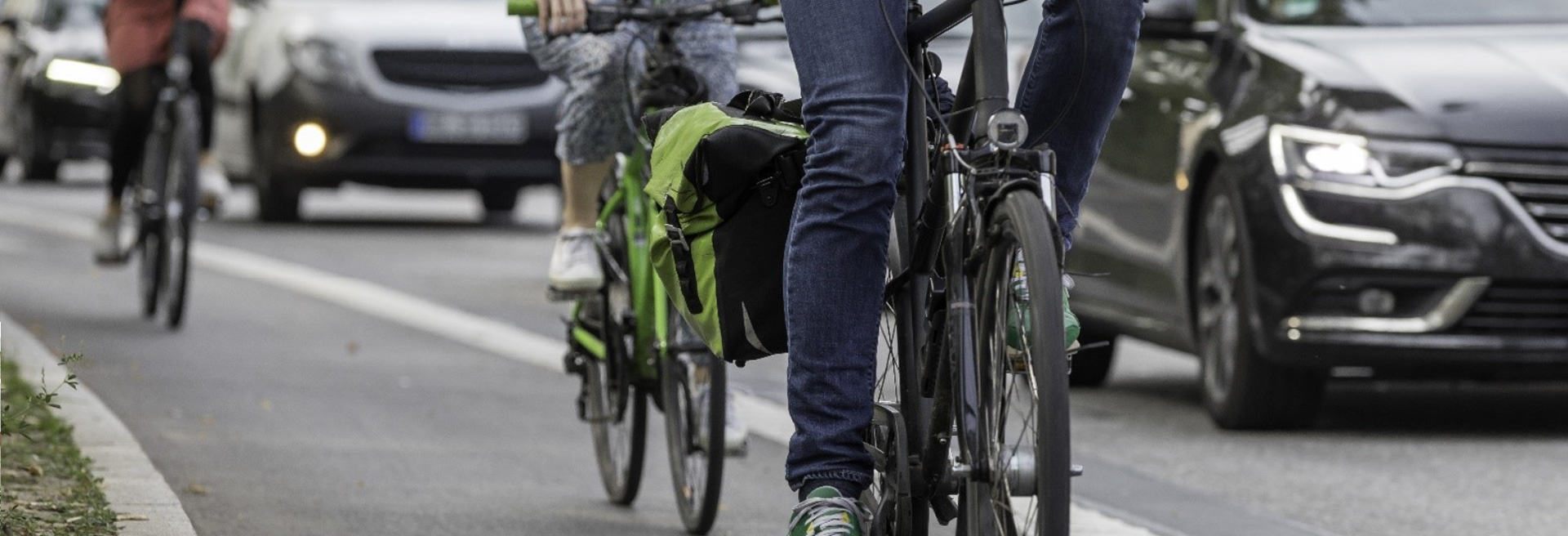
As Bend continues to grow, transportation planning plays a crucial role in shaping a sustainable and accessible future. We are working to make it easier and safer for people to walk, bike, take transit, and switch to cleaner vehicle options. The Community Climate Action Plan has set a goal to reduce transportation-related emissions by 270,000 metric tons of CO2e by 2050, which would account for 20% of the total projected emissions reductions.
Greenhouse Gas Emissions from Transportation
According to the City’s 2021 Community Greenhouse Gas Inventory Report transportation is the second-largest source of emissions in Bend, accounting for 44% of local emissions, primarily from passenger vehicles. Between 2016 and 2021, transportation-related greenhouse gas emissions increased by 28%, driven by higher vehicle usage and population growth. To reduce our reliance on fossil fuels and achieve our long-term goals, we are taking the following actions:
- Expanding electric vehicle infrastructure,
- Promoting active transportation, and
- Converting fleets to renewable diesel and hybrid or electric vehicles.
2021 Greenhouse gas Inventory Transportation emissions data with local emissions in green and imported emissions from air travel in magenta
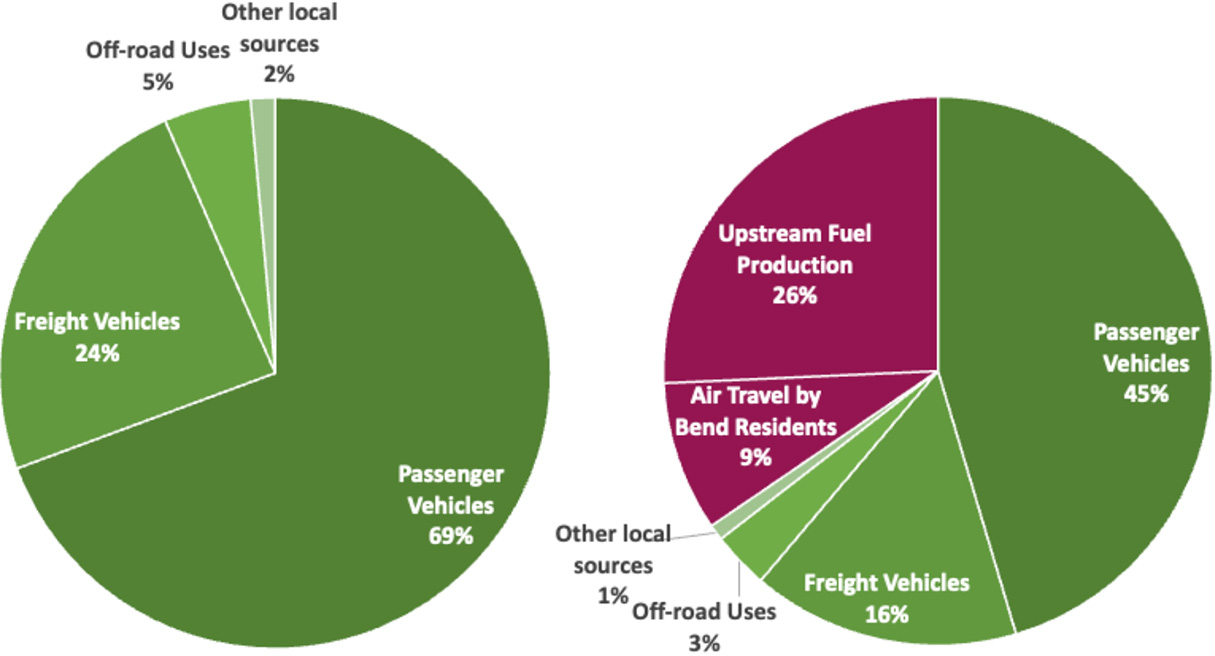
2016 Greenhouse Gas Inventory Comparison
What the City is Doing
In 2022, we created our Electric Vehicle (EV) Readiness Plan, providing a roadmap for widespread electrified transportation in Bend. The plan focuses on making sure everyone, particularly underrepresented and vulnerable communities, has access to charging stations. It includes an assessment to determine how many more charging stations are needed and outlines strategies to promote EV use. These strategies include public outreach and education, updating policies to encourage EV-friendly development, and adding more public EV charging stations for residents and visitors.
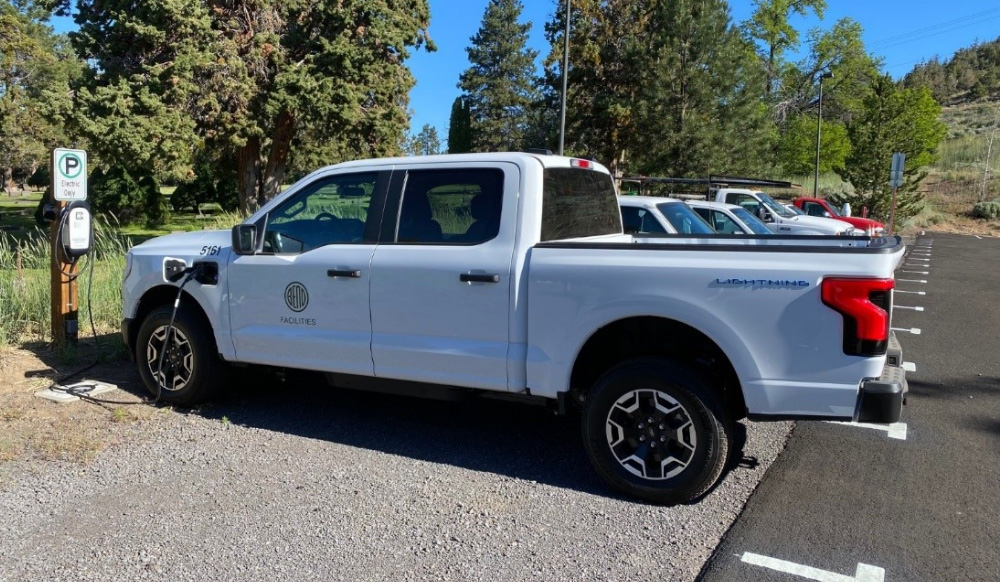
The City is also making strides in converting its fleet to electric and alternative fuels. Today, 16% of the City’s light and medium-duty fleet is hybrid (31 vehicles) or fully electric (six vehicles), with an additional 20 electric vehicles planned by 2028. Additionally, we have started buying renewable diesel (R99) and biodiesel to replace conventional diesel. R99 cuts greenhouse gas emissions by two-thirds compared to biodiesel and costs about the same. As of Spring 2024, 64% of the Water Services Department’s diesel fuel needs and 7.5% of the Transportation and Mobility Department’s fuel needs were met with R99, significantly reducing fleet emissions.
To encourage walking and biking as viable alternatives to driving, the City is investing in infrastructure improvements across Bend. The City has several specific bicycle and pedestrian projects underway and is also committed to improving bike and pedestrian safety on new roadway projects through People Streets designs. The Bend Transportation System Plan (TSP) includes a network of 12 Key Routes, designed to provide safe, low-stress connections for pedestrians and bicyclists. These routes link neighborhoods, schools, parks, and commercial areas through a combination of multi-use paths, protected bike lanes, and widened sidewalks.
A major component of this effort is the Wilson Avenue Corridor Project, the first Key Route to be built. It features Bend’s first protected bike lanes and a modern roundabout designed with multimodal safety in mind. Additional Key Routes will be developed over time, continually enhancing the safety and accessibility of non-motorized travel.
The Bend Bikeway Project is another major initiative that will establish a continuous North-South and East-West key route by June 2025. This project will build upon existing infrastructure by adding protected bike lanes and pedestrian-friendly pathways to make cycling safer and more convenient.
Public transit plays a key role in reducing transportation emissions by offering alternatives to single-occupancy vehicle trips. Cascades East Transit (CET) is working to expand bus routes, improve service frequency, and enhance overall transit accessibility. As part of its long-term vision, CET’s 2040 Transit Master Plan calls for a mobility hub system, which will integrate bus services with other forms of sustainable transportation, including biking, walking, and shared mobility options (i.e., bike-sharing, car-sharing).
The City of Bend, in partnership with CET and the Bend Metropolitan Planning Organization, conducted a Mobility Hub Feasibility Study in 2021, which led to the launch of a pilot program. As part of this effort, the City has leased land near Troy Field for its first Mobility Hub pilot site, which will include transit stops, bike-share facilities, lighting, and shelters. CET is looking to develop an additional mobility hub locations near US-97/Ponderosa and Cooley Road and redeveloping Hawthorne Station to incorporate more mobility hub elements.
What You Can Do
- Learn about different transportation options with Commute Options: Commute Options
- Plan your trip with Cascades East Transit: Cascades East Transit | Central Oregon’s Public Transit Provider
- Learn how you can save money through the Oregon Clean Vehicle Rebate Program for new and used vehicles: Department of Environmental Quality : Oregon Clean Vehicle Rebate Program : Clean Vehicles : State of Oregon
- Learn about incentives and resources available from Pacific Power: Electric Vehicles (pacificpower.net)
Resources and Tools
- Visit the GO Bond Dashboard to explore transportation projects and get latest updates.
- Visit Bend Bikes Road Maps to see various paths and biking streets in the city of Bend.