Appearance and Entry of Plea
If you received a citation, you need to let the court know how you want to handle it by the date shown on your paperwork. This page will guide you through your choices and the next steps.
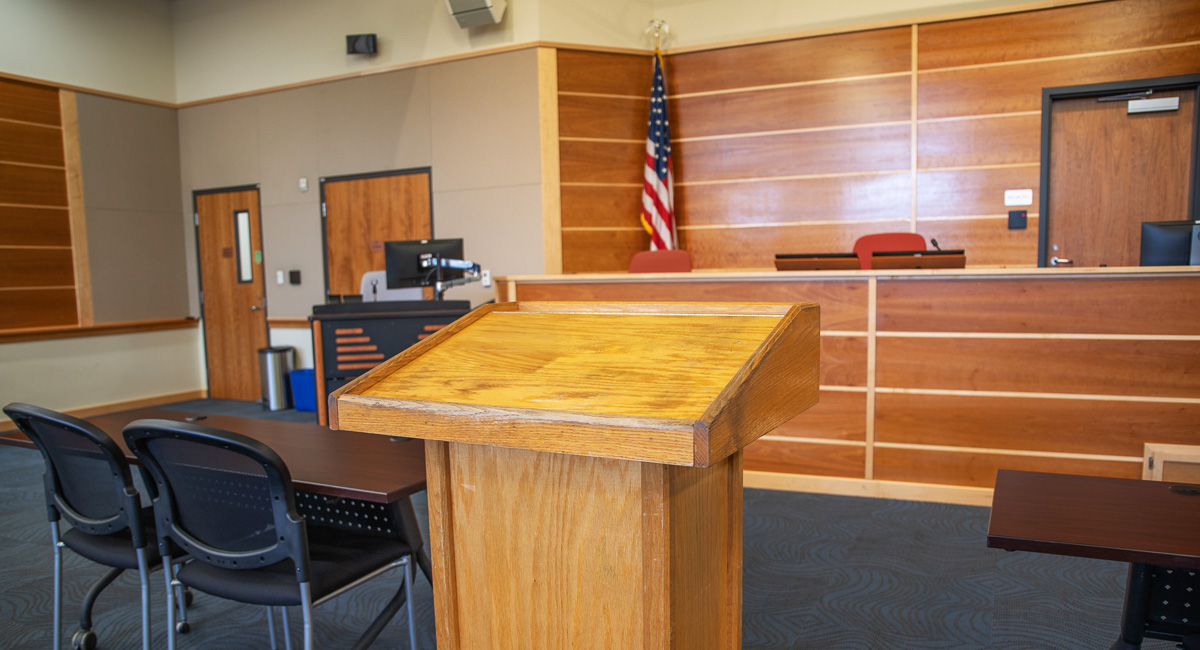
To resolve your citation, you must make an appearance with the court and enter a plea for each violation. You can do this either in person or in writing, and the sections below explain what each option means and what happens after you choose a plea. Reading through this page will help you understand the process and decide which path is right for you.
How to Appear
In Person
You may appear in person by visiting the Municipal Court at 555 NE 15th Street in Bend, Oregon. When you arrive, you may meet with the Violations Bureau Clerks, who operate under the authority of General Order 101 Violations Bureau. During your visit, you may complete either a Not Guilty Plea form or a No Contest Plea form. In many cases, the Clerks are authorized to consider fine reductions, Traffic Safety School, and other court programs based on your situation.
In Writing
You may also appear in writing by submitting your signed citation, a written statement, or a completed plea form to the court. These forms are available online and at the clerk’s windows inside the Municipal Court lobby. If you prefer to submit documents outside regular business hours, a secure 24‑hour drop box is located near the entrance ramp of the Municipal Court, allowing you to deliver your materials at any time.
How to Enter a Plea
You must enter a plea for each violation listed on your citation. Your plea tells the court how you want to resolve your case. You may choose to enter either a Not Guilty plea or a No Contest plea, and you may select a different plea for each violation on your citation (pursuant to Municipal Court Local Rule Chapter 10). The Not Guilty and No Contest plea forms are available as separate documents:
If you enter a plea of “Guilty,” the court will treat it as a No Contest plea. If you do not enter a plea, a default judgment will be issued on your citation. If the plea you submit is unclear, the court will send you a letter asking for clarification and will give you thirty days to respond. If you do not respond within that time, the court will presume that you have entered a Not Guilty plea and will schedule your case for trial. If you refuse to enter a plea, the court will enter a Not Guilty plea on your behalf and will set the matter for trial.
Not Guilty Plea
Entering a Not Guilty plea means you are telling the court one of the following:
- You did not commit the violation listed on your citation, or
- You did commit the act, but you have a legally recognized defense.
When you enter a Not Guilty plea, you may choose how your trial will be held. The court offers three trial formats. Each option is scheduled at least forty days from the date the court receives your plea. The court will send you a Trial Notice with the details you need, including the date, time, and instructions for your chosen format.
- In‑Person Trial
An In‑Person Trial takes place inside the courtroom. You will receive a Trial Notice by mail that lists the date and time you must appear. Both you and the officer or officers involved in your citation must be present at the scheduled time. The trial will be conducted before a judge, and you will have the opportunity to present your side of the case. - Virtual Trial
A Virtual Trial takes place online. The court will email you a Trial Notice with your trial date and time. About one week before your trial, the court will send a virtual meeting link to the email address you provided. You and the officer or officers involved in your citation must appear virtually at the scheduled time. You are responsible for ensuring you have a stable internet connection and access to the email address on file. - Trial by Affidavit or Declaration
A Trial by Affidavit, also called a Trial by Declaration, is a written trial. The court will mail or provide you with Declaration forms for both you and the officer or officers involved in your citation. You must complete your Declaration and return it to the court by the due date listed in your Trial Notice. The declaration deadlines are scheduled at least forty days in the future. After the due date passes, the judge will review both declarations and issue a decision by mail.
After the court receives your plea, a Trial Notice will be mailed or emailed to you with the date, time, and instructions for your trial. It is important to read this notice carefully so you understand what is required of you.
Before your trial, the court strongly encourages you to speak with an attorney and to read the code or statute that applies to your citation. This will help you understand what the City must prove at trial and what defenses may be available to you. If you plan to have an attorney represent you at any court proceeding, you must file a Notice of Representation with the court at least ten days before the proceeding, as required by Municipal Court Local Rule Chapter 10.
No Contest Plea
Entering a No Contest plea means you are choosing not to dispute your citation and want to resolve the matter without going to trial. A No Contest plea may result in a conviction and a fine. If you believe you qualify for one of the court’s programs, it is your responsibility to notify the court in writing or in person on or before the date listed on your citation. These programs may include the Traffic Safety Program or the Fix‑It Program, and participation in them may result in a dismissal of your violation. Each program has its own fees, and the court must review your request before approving your participation or granting any fine reduction.
Upon submitting your plea of no contest and requesting consideration, the court will review your case to determine the appropriate fine or whether you are eligible for a program. The final decision will depend on your citation, your eligibility, and the requirements of any program you request.
Failure to Appear
If you do not appear on the date of your original appearance, the court will issue a Default Judgment on your citation. When this happens, the following actions will occur:
- A conviction will be entered for the violation, or the infraction will be upheld.
- For traffic violations, the conviction and an order to suspend your driving privileges will be sent to the Oregon Department of Motor Vehicles.
- You will be responsible for paying the full presumptive fine for each violation.
- A fifteen‑dollar suspension fee will be added when it applies.
- A fifty‑dollar failure to appear fee will be charged for each violation.
- Your balance may be sent to a collection agency, which can add collection fees of up to twenty‑five percent of the total amount due.
- If you are under eighteen, your debt will be forwarded to collections after your eighteenth birthday.
- The judgment may be used to place a lien on any real property you own.