Water Reclamation Facility
Being a Good Neighbor, Biosolids & Odors
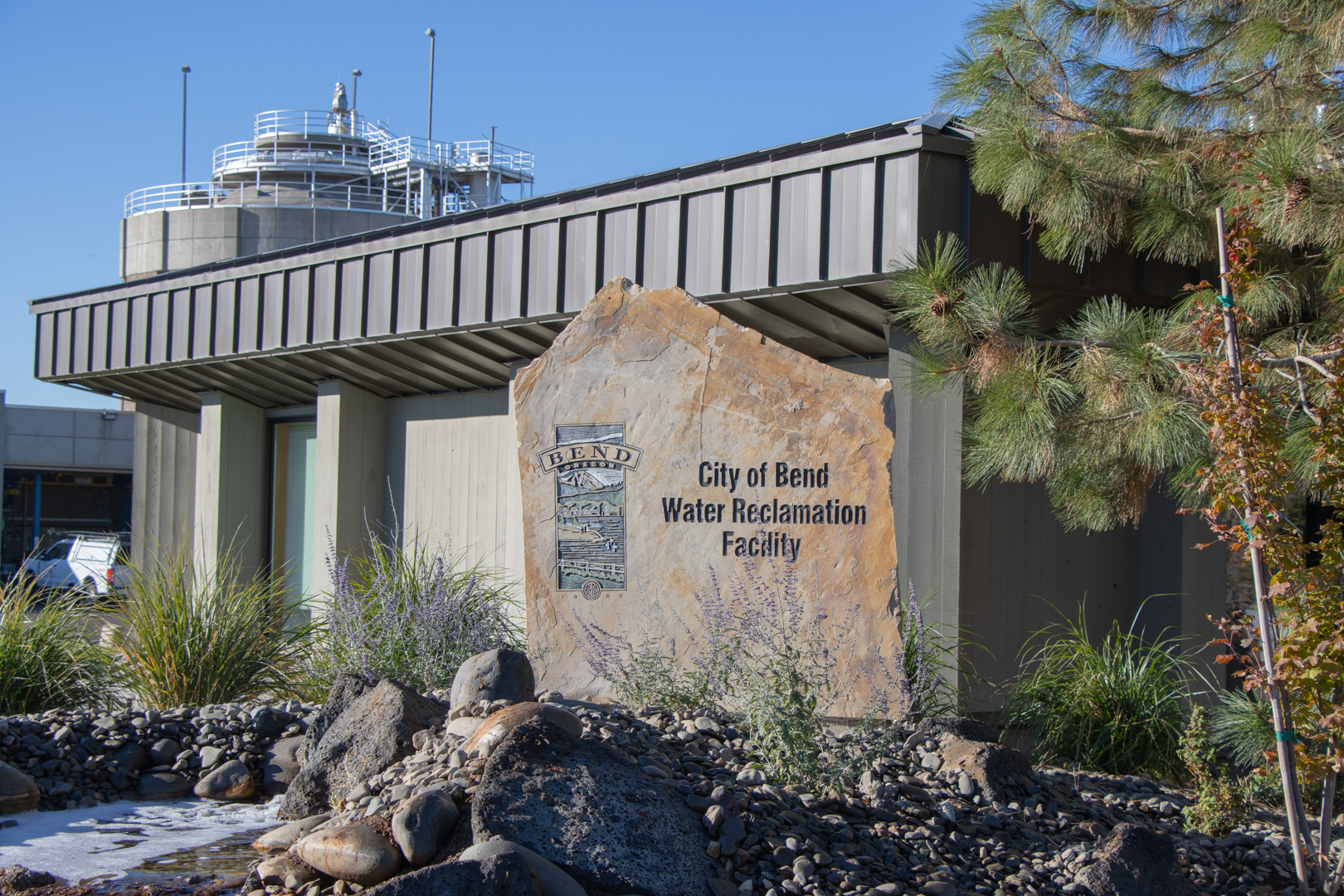
Since 1981, the City of Bend’s Water Reclamation Facility — the wastewater treatment plant — has been located off McGrath Road, about 5 miles northeast of Bend City limits, in Deschutes County. The facility occupies approximately 1,600 acres, including 32 acres of processing facilities, 242 acres of effluent evaporation/percolation ponds (Hatfield Ponds), 9 acres of biosolids drying beds, and 8 acres dedicated to a law enforcement gun range.
What we do
We clean the wastewater from Bend’s homes and businesses—serving roughly 28,000 residential and industrial customers. Wastewater collection and treatment play an essential role in protecting public health, our watershed and the environment. We remove harmful germs that could otherwise cause illness.
Each year, we treat approximately 2.3 billion gallons of wastewater. Most of the treated water is conveyed to the Hatfield Ponds, while about 150 million gallons are recycled for irrigation at a local golf course. In addition, roughly 2,500 tons of solids are beneficially reused as fertilizer on nearby farms.
Biosolids
One step of the wastewater treatment process involves removing solids from the wastewater.
These solids are processed in anaerobic digesters, which are large, sealed tanks that use bacteria and heat to break down organic waste, support digestion and reduce pathogens. The material is then placed on asphalt drying beds, where it is aerated and dried to further reduce pathogens.
The resulting biosolids—a nutrient‑rich organic material—are then used as fertilizer on agricultural lands in Central Oregon.
Wastewater collection and treatment play an essential role in protecting public health by removing harmful germs that could otherwise cause illness.
Why does it smell?
As long as the City processes waste—and it has been doing so at this location for more than 40 years—there is a potential for odors from time to time.
Often in the spring, when temperatures are warmer and when our equipment is used to turn the biosolids, there is some off-gassing that neighbors can smell. This is typically a brief and relatively minor inconvenience. The exact timing of these operations can change from year to year. In years with a mild winter, for example, this process can start earlier in the spring. Beginning the turning and drying process on the stockpiled solids sooner can reduce overall volume and speed up drying, with the goal of eliminating potential odors before the summer months.
Odors can occur for other reasons as well. For example, in May 2025, one of the anerobic digesters had to be taken out of operation for inspection and cleaning. With one digester offline, biosolids did not receive their usual treatment time before being placed on the asphalt drying beds, which temporarily contributed to stronger than normal odor from biosolids at the facility.
Reporting odors
We want to be a good neighbor. That includes communicating about our operations and listening to concerns that our neighbors have. It also means setting expectations about the nature of our facility and the work performed there. For more than 40 years, our operations have been vital to our city and county, but they can also cause odor. We work hard to minimize those impacts by following industry best practices, including maintaining healthy digesters and consistently aerating and turning biosolids.
We have been hearing from neighbors when they experience odors drifting and are interested in learning more.
Water Reclamation Facility Neighbor Comment and Contact Form
We appreciate hearing from you. Collecting data, including neighbors’ observations, over time, can help us better correlate our operations with reports of odors. If you are writing to report the detection of odors, please include details such as time of day, strength of odors, duration of odor detection, and other factors such as weather if possible. Thank you.