Climate Action Partner Grant Program
The Climate Action Partner Grant Program is here to support local organizations in Bend that are working to make a difference for our environment. This program offers funding to help groups take action on the goals in the City’s Community Climate Action Plan.
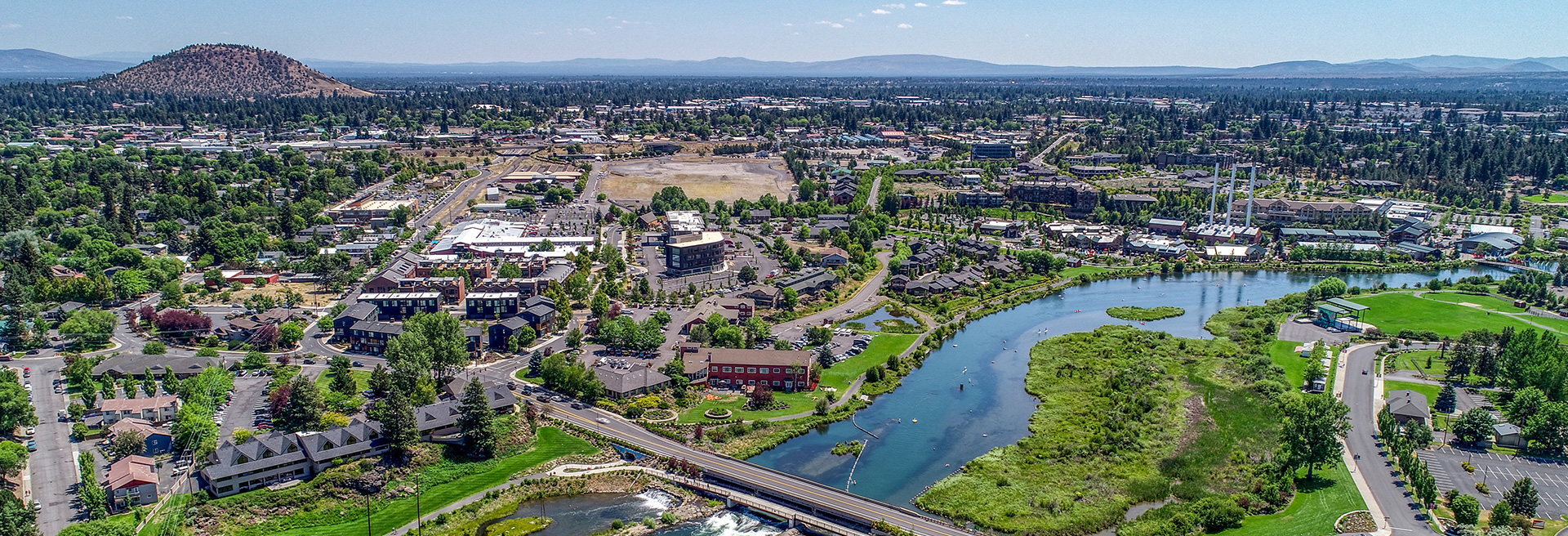
Helping Create a More Resilient Bend
The Climate Action Partner Grant Program supports projects that reduce pollution, protect our environment, and help Bend become more resilient to the effects of climate change. By partnering with local organizations, the City aims to strengthen our community and create a healthier future for everyone.
Through this program, local nonprofit groups and government entities can receive financial support for new or ongoing projects that align with the Community Climate Action Plan. Whether focused on reducing emissions, improving energy efficiency, cutting waste, or building climate resilience, these initiatives all contribute to a stronger, more prepared Bend.
Funding Available
A total of $150,000 is available through the Climate Action Partner Grant Program and will be distributed among eligible applicants. Each project may request a maximum award of $50,000.
Applications for this grant will close on September 8, 2026 at 11:59 p.m.
Who Can Apply?
To be considered for funding, your application must meet the following requirements:
- You must be a local nonprofit, government entity, or higher education institution. If you plan to work with another group, like a private company, that’s okay—but you’ll need to clearly explain that in your application.
- Your project must take place in Bend or directly benefit people who live in Bend. We want to make sure the support goes to programs that help our local community.
- Your project must support at least one Community Climate Action Plan action listed under “CCAP Actions Eligible for Funding”. This helps make sure all funded projects are working toward a cleaner, healthier future for everyone.
CCAP Actions Eligible for Funding
To be funded, a project must directly support one or more of the specific actions listed below from the Community Climate Action Plan (CCAP). These actions are a subset of the full plan and are distinguished by their explicit emphasis on collaboration with community partners.
- EB2A: Increase community education on energy efficiency topics and available incentives
- EB2B: Develop and deliver targeted outreach and education to builders, developers, and contractors on high performance building topics and incentives
- EB2C: Support and expand local workforce development programs in energy trades (i.e. renewable energy, electricity generation and distribution, energy efficiency, HVAC systems, etc.)
- EB2D: Develop programs that encourage residents and businesses to pursue energy efficiency, electrification, and other emissions reductions upgrades
- EB2F: Promote energy efficiency and load management through smart controls and demand response participation
- EB3B: Support and expand low cost energy audit programs
- T1A: Expand access to community-wide public EV charging
- T1B: Expand access to multifamily EV charging
- T1C: Expand workplace EV charging
- T1D: Conduct outreach and education to promote EV adoption
- T4A: Encourage carpooling to City and community events
- T4B: Partner with large employers to promote carpooling and vanpooling for daily commutes
- T2A: Prioritize Bend’s Bike, Pedestrian, and Complete Streets policies in the Transportation System Plan. These policies include expanding bike and pedestrian infrastructure
- T2B: Prioritize TSP projects and programs that develop safe alternate routes to schools
- T2C: Use crash analysis data to improve safety by implementing projects and programs from the Transportation Safety Action Plan
- T2D: Expand bicycle parking at mobility hubs and other key destinations
- MW1B: Improve multifamily recycling by expanding and improving outreach and education at multifamily buildings
- MW1C: Create a recycling and waste reduction program aimed at tourists, including hotels and resort communities
- MW1D: Work with Deschutes County and waste haulers to reduce recycling contamination through targeted outreach and education
- MW1E: Develop new programs to recover materials that make up the largest portion of the waste stream
- MW3A: Increase participation in and access to food waste collection services, particularly in multifamily and commercial sectors
- MW3B: Develop and deliver educational programs that teach and encourage residents to compost their food waste
- MW4A: Expand and develop new programs that increase the recovery of construction and demolition (C&D) materials
- MW4B: Encourage reuse of construction and demolition (C&D) materials
- MW5A: Conduct outreach campaigns to promote waste prevention and reducing consumption by connecting residents and businesses to local resources, like repair cafes
- MW5B: Implement industry-specific training programs to prevent waste, targeting sectors like building construction and food and restaurants
- MW5C: Promote and support the use of reuseable serviceware in food services
- MW5D: Promote reuse by supporting gearswap events, community garage sales, and neighborhood repair cafes
- MW5F: Research models of and support the development off centralized materials exchange forums
- MW6A: Conduct outreach campaigns that promote food waste prevention
- MW7B: Conduct outreach campaigns that promote low-carbon food choices
- ES3A: Increase community education about renewable energy and available incentives
- ES3B: Develop and deliver educational programs targeted at builders, developers and contractors focused on renewable energy, energy storage, and available incentives
- ES3C: Support and expand local workforce development programs in renewable energy trades
- ES3D: Develop programs that encourage residents and businesses to pursue renewable energy and energy storage projects
- ES4B: Support the development of local community solar projects that residents can subscribe to for access to offsite renewable energy
What Can Grant Funds Be Used For?
Grant funds may be used for:
- Professional services and consultants
- Employee time dedicated to the project
- Equipment, tools, and technology
- Marketing and communications
- Translation services
- Project supplies
- Event costs (renting space or providing food)
- Payments or thank-you gifts for participants
- Technical studies and assessments
Applicants are allowed to allocate up to 10% of their total requested budget to cover indirect or administrative costs. Other costs might also be covered, depending on the project. The City will review and consider each request.
How Applications Are Scored
Applications are evaluated and scored on several factors, including:
- Climate impact and community benefit
- Readiness to complete the project
- Project feasibility and budget
- Alignment with CCAP goals
- Equity and accessibility considerations
Category | Points |
|---|---|
Project Impact | 42 |
Organizational Capacity | 12 |
Feasibility | 12 |
Alignment with CCAP Goals | 12 |
Equity and Accessibility | 22 |
Total | 100 |
Ready to Apply?
The 2026 application cycle is now closed. Check back next Summer for the 2027 application round.
2025 Awardees
Our inaugural 2025 Climate Action Partner Grant Program supported incredible local organizations working to reduce emissions, build resilience, and strengthen our community. Explore the projects we funded and see what’s possible when Bend works together for climate action.
Commute Options: School Pool
Promotes sustainable student transportation by organizing safe walk, bike, and carpool initiatives across local schools.
“School Pool is about more than sharing rides, it’s about building connections between families while making school travel safer, simpler, and cleaner. This program shows how small, everyday choices can add up to meaningful climate action for Bend” – Brian Potwin, Commute Options Executive Director
Central Oregon Community College: POWER
The POWER Project helps build capacity and readiness within Bend’s residential construction and energy workforce by offering a stakeholder workshop and a half-day technical training focused on energy auditing, HVAC, and heat pump installation. These activities provided contractors and tradespeople with practical skills to implement energy-efficient best practices and access incentive program 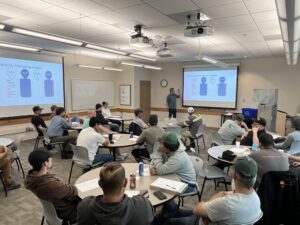
“Through the POWER Project, the Center for Business is helping build and support the skilled and diverse workforce needed to advance City of Bend’s climate goals. We are connecting local contractors and technicians with skills-based training that supports energy efficiency, innovation, and long-term energy resilience as the region’s energy demand continues to grow.” – Amy Knudsen, Program Manager, COCC Center for Business
BendNEXT Foundation: Waste-Wise Events Initiative
Establishes zero-waste standards for public gatherings by hosting sustainable events and publishing a digital waste-wise event planning guide for local organizers.
“We are so excited to partner with the City of Bend and the Climate Action Partner Grant program to outline and promote sustainable events for businesses throughout this community! Collaboration is key to amplifying the impact of sustainable initiatives. This waste wise resource for Chamber members and businesses throughout Bend represents partnership to impact real change and promote sustainable outcomes, together.” Chris Hart, BendNEXT Foundation Executive Director.
High Desert Food and Farm Alliance: Grow & Give
Supports local food resilience by connecting fresh produce from regional growers with community food relief efforts.
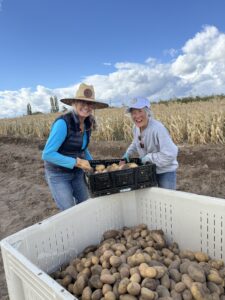 “Family Kitchen is a free meal site that serves our community nutritious lunches & dinners, 8 times a week. Servings per meal number 250 – 450; about 10,000 meals every month. The cost of food is our biggest expense, so donated food, like that from Grow & Give, makes a huge difference.” Grow & Give Participant
The Environmental Center: Reuse Bend
Diverts reusables from the landfill by deploying a reusable takeout cup system across local Bend coffee shops and expanding the “Borrow a Cup” network.
Bend-Redmond Habitat for Humanity: Climate Resilience Clean Air & Cooling Upgrades
Provides heat-pump cooling systems and Healthy Homes Assessments to income-qualified households, ensuring safety during extreme heat and wildfire smoke while boosting long-term energy efficiency.
“When it’s smoky and hot, a lot of families are stuck choosing between two bad options – keep the windows closed and the house gets unbearably hot, or open them and let the smoke in. We’re trying to make sure people don’t have to make that choice.” – Scott Nordquist, VP of Resource Development, Bend-Redmond Habitat for Humanity
The Environmental Center: Electrification Access & Education Zero-Interest Loan Program
Helps low-to-moderate income homeowners install energy-efficient heat pumps by combining a zero-interest loan program with targeted, multilingual outreach.
Frequently Asked Questions
This grant program offers funding to local nonprofit groups and government entities for projects that support the City of Bend’s Community Climate Action Plan. The goal is to help reduce pollution and make our community stronger and more prepared for the effects of climate change—through projects led by the people who live and work here.
You can apply if you are:
- A nonprofit organization
- A government entity
- A local higher education institution
Your project must take place in Bend or directly benefit people who live in Bend.
Your project must support specific actions from the Community Climate Action Plan. Here are some examples:
- Community Outreach and Education: Events, workshops, campaigns, or media that help people learn about climate action.
- Workforce Development: Programs that teach skills for clean energy, eco-friendly transportation, or waste reduction.
- Technical Assistance and Direct Service Programs: Things like home energy check-ups or tool lending libraries.
- Program Scoping and Planning: Early-stage work like research or design to prepare for a future project.
- A total of $150,000 is available.
- Each application can request up to $50,000.
- You might receive full or partial funding. If your project can be adjusted to fit a smaller budget, be sure to say so.
Yes, you may allocate up to 10% of your total requested project budget to indirect costs. This must be explicitly detailed in your budget breakdown.
You can find the full list of eligible actions in the program overview on the page above or listed here. These actions fall into four main areas:
- Energy Supply
- Energy Use in Buildings
- Transportation
- Materials and Waste
Yes. Applications may be shared with the public under Oregon law. If your application includes private or sensitive information, clearly mark those sections as “Proprietary” on the online application.
Yes. As part of the application, we ask applicants to identify at least three (3) measurable goals to assess your project’s impact and outcomes. Examples: number of community members engaged, amount of waste diverted, energy saved, trees planted, workshops conducted.
These performance measures will help track your progress toward project completion. You will be asked to report on these metrics during each reimbursement period and at project closeout. When submitting for reimbursement, you must include details on how funds were used and how the project is performing relative to the goals identified in your application. Rather than imposing a one-size-fits-all reporting framework, this approach is designed to be flexible and accessible. We recognize that projects will vary widely in scope and focus, so we ask you to define success in a way that’s meaningful and relevant to your work. This ensures that reporting is both applicable and useful—for you and for the City.
Reach out to our Environment and Climate program at climateaction@bendoregon.gov if you have questions or need help with your application.
Your application should clearly and simply explain:
- What your project is about.
- How the funding will help you carry out one more of the specific actions listed above from the Community Climate Action Plan.
- How your project will help reduce pollution or make Bend more prepared for climate change.
- How your project meets the goals and rules of this program.
- How much money you’re asking for and a basic budget showing how the funds will be used.
Stay Connected
Sign up for Bend’s Sustainability Newsletter to receive updates on environment related events, progress, and community opportunities.